Weird Girl Fiction Is for Everyone
Written by Sophie Abbott
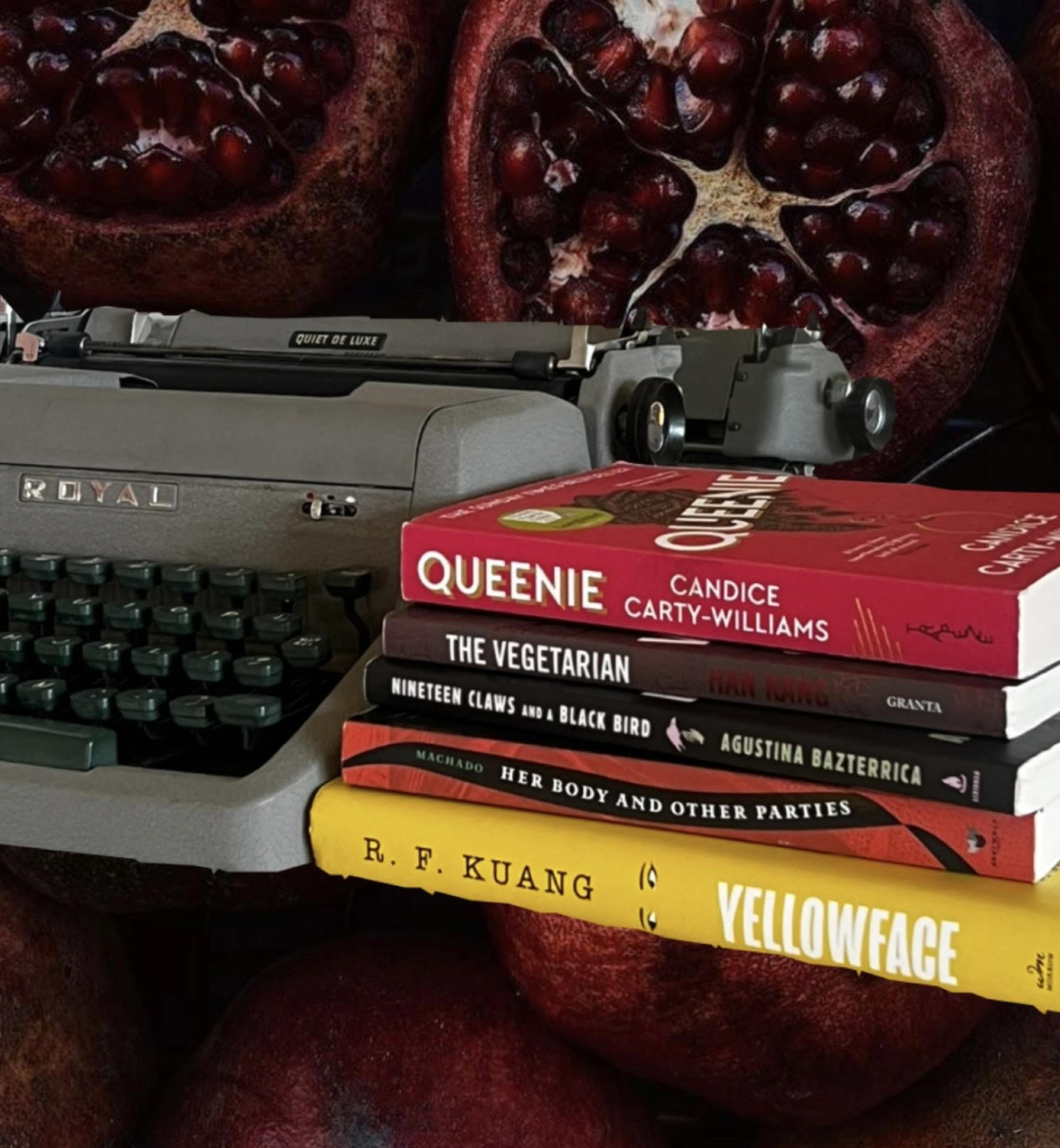
It doesn’t take more than a glance at my bookshelves to realize I seek out a specific kind of novel. What arguably began with Ottessa Moshfegh’s 2018 hit My Year of Rest and Relaxation has turned into an increasingly popular phenomenon:“ Weird Girl Fiction.” Rooted in Gothic archetypes, Weird Girl Fiction is a subgenre of literary fiction that focuses on unlikable female protagonists whose narratives explore everything from outrageous sexual proclivities to body horror to mystic, divine transformations. These characters are written to elicit a reaction -- sometimes unexpectedly relatable, sometimes delightfully gross -- not unlike watching Hoarders, or My Strange Addiction. They remind me that things could always be worse, and that it’s okay to feel as insane as I do about the female experience sometimes.
The problem, though, is that Weird Girl Fiction often focuses on thin, wealthy, attractive white women who move through the world unburdened by anything but their profound sadness. Whether this is purposefully used to create a sense of unlikability or not, their existence gets old. There are only so many allegories for pomegranates, Xanax prescriptions, and shallow homoerotic friendships a person can take before they start to feel exhausted by the Weird Girl in question.
“Weird Girl Fiction often focuses on thin, wealthy, attractive white women who move through the world unburdened by anything but their profound sadness. Whether this is purposefully used to create a sense of unlikability or not, their existence gets old.”
When it comes to many chart-topping titles, the Weird Girl is gorgeous yet disheveled, wraith-like in her misery, and protected from plot holes due to her mysterious funds and lack of parental intervention. There’s no shot in hell my Cuban mother would let me get away with ghosting my family in the pursuit of self-actualization. Nor would she let me forget that, though I’m white-passing, I got my body shape from Havana. Weird Girl’s thighs don’t chafe, and she’s probably never been to a family reunion of one hundred people, and she doesn’t seem pressured to be anything but maudlin. Her introspection is sometimes so self-absorbed and disconnected from the outside world that I don’t feel like I learn much from her at all.
Don’t get me wrong -- I still read this kind of fiction and enjoy its clever, subversive devices. I have nothing against the books that have spearheaded the genre in the past decade, and many of them have helped me shape my own writing voice. But it wasn’t until I started seeking out Weird Girl Fiction on a broader scale that I realized what I was missing. Here are six titles from my own library that I think are worth a read.
Nineteen Claws and a Black Bird by Agustina Bazterrica
A vivid, mystifying short story collection from an Argentine author, originally translated from Spanish. Bazterrica delves into the taboo and the female experience at breakneck speed. Each story is its own small miracle, but for me,“ Candy Pink” is a standout.
Queenie by Candice Carty-Williams
I was handed this title by a staff member at Daunt Books on Marylebone Street, one of the most iconic bookshops in London. She told me Queenie was a book she wished she’d had access to at nineteen, and I read it one sitting that night. Its titular character is a 25-year-old British-Jamaican girl who is having her worst year yet. It’s sharp, laugh-out-loud funny, messy, and undeniably relevant. Queenie’s cultural identity is the heartbeat of the novel -- when Bridget Jones comparisons started rolling in, author Candice Carty-Williams stated, “That’s how I thought of her in the beginning, too. But this book is also naturally political because of who Queenie is. She’s not Bridget Jones. She could never be.”
Her Body and Other Parties by Carmen Maria Machado
Queer horror through a feminist lens, written from the perspective of a Latina author. This collection is glitzy, guileful, and wholly alive. I was entranced by Machado’s deft experimentation with form and genre (specifically“ Especially Heinous” and“ Inventory”), but the whole collection is highly readable and scratches that Weird Girl itch.
Yellowface by R.F. Kuang
A sudden departure from her bestselling fantasy series, Yellowface is a biting satire from twenty-nine year-old Rebecca F. Kuang. It tears into the publishing industry with stomach-turning bitter truths, and the narrator (a white woman passing off her dead best friend’s manuscript about WWI Chinese laborers as her own) utterly deplorable. It’s a fascinating study in cultural appropriation, social media, and just how terrifying things can get when the two combine. The secondhand embarrassment was nearly unbearable for me, but that’s what kept me coming back for more.
The Vegetarian by Han Kang
Erotic, rebellious, and haunting, this South Korean novella explores the aftermath of a woman whose recurring nightmares about animal slaughter lead her to stop eating meat. As a result, she becomes alienated from society and unravels completely. If you’re a fan of Kafka’s Metamorphosis, you’ll love it! Proceed with caution, though -- I quickly became dedicated to Meatless Mondays after consuming this one.