We Need to Talk About Serena Williams’ GLP-1 Advertisements
Written by Erin Norton
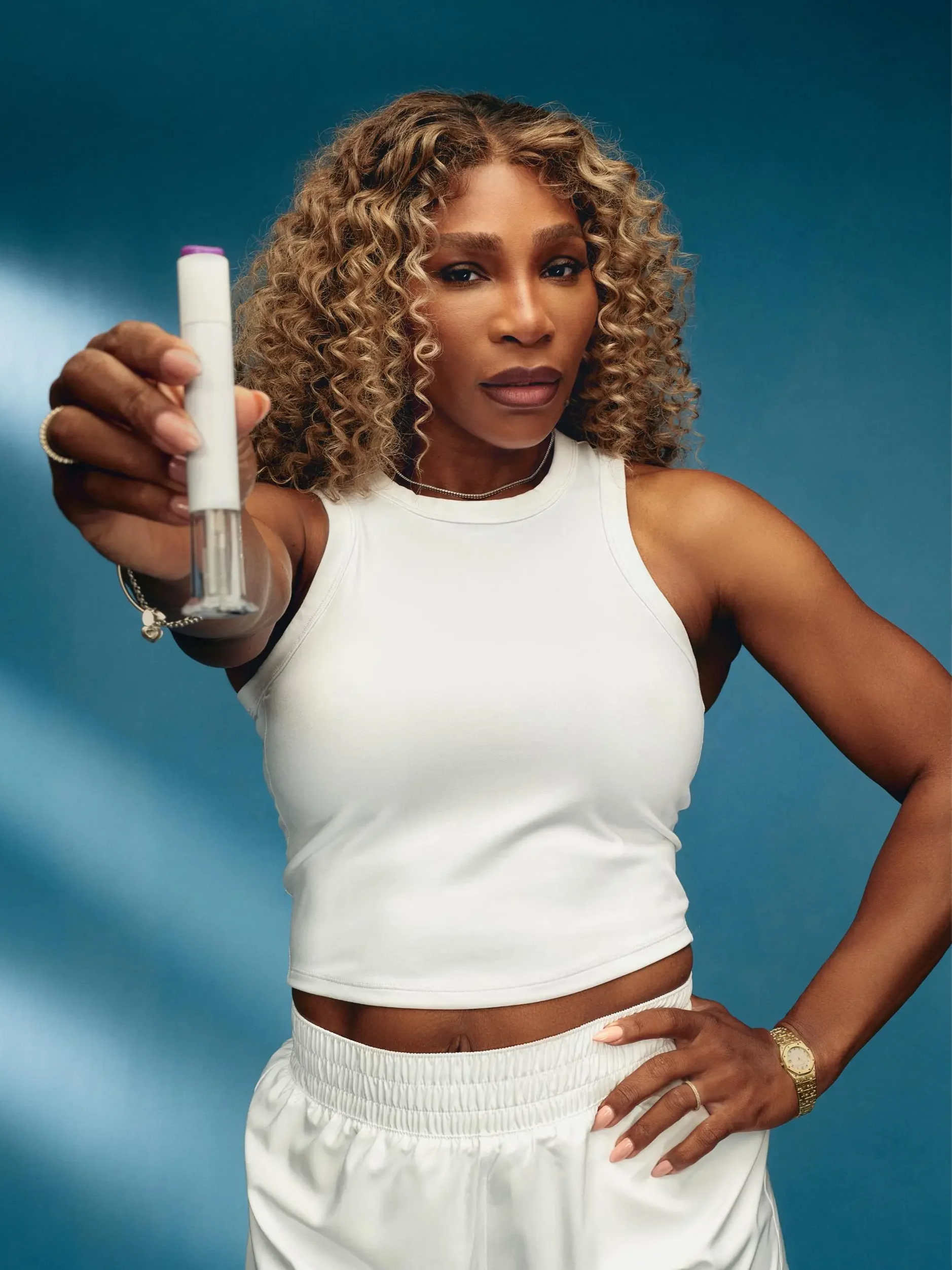
The GLP-1 ads have entirely taken over. I wish this statement was hyperbolic, but alas, they’re nearly inescapable. Not only are they on big billboards and three separate Super Bowl ads, but they have infiltrated my morning commute to work. Five different Serena Williams’ stare at me as I bite into my chicken and cheese empanada at 10:30am, and they are all scolding me for my last minute breakfast choice. The statistic proudly written in a soft neon green, 32 pounds lost, shines like a first place trophy. The marketing of Ro eerily matches Serena’s accomplished career and her tendency to win.
Every little girl growing up in the early 2000s looked up to Serena Williams. She was one of the first people to bring the idea of an accomplished female athlete to the mainstream. To everyone, she was known as a force to be reckoned with, a pioneer of Black women in sports. Her participation in culture completely shifted the zeitgeist and the general athletic canon. At this present time, she is retired from competitions and has seemed to take an interest in… GLP-1s?
Ro is a telehealth company that works to connect patients to online professionals in order to address issues such as hair loss, sexual dysfunction, acne, and most popularly, weight loss. Entering the world of companies that deal with wellness issues typically related to self esteem and body image, Ro has recently skyrocketed in popularity, now sitting amongst similar companies such as Hims & Hers. It’s clear that the prevalence of such services are more in demand than ever before. There were three separate commercials advertising GLP-1s during the 2026 Superbowl, infamously the most competitive and expensive ad placements in American television. And now Serena Williams is the face of the very popular company, Ro.
As many consumers expressed their disappointment with this new partnership, interviews with Serena began coming out, many of which were published in y highly read and woman focused publications including, but not limited to, Vogue, Harper’s BAZAAR, and People magazines. The common thread connecting all of these interviews were Serena’s outspoken intention to destigmatize weight loss via Zepbound, that using a GLP-1 isn’t“ cheating” in the same way that sports enhancement drugs are. She also explains that as a female athlete, she gets backlash no matter what her body looks like. However in her current form, she feels the healthiest she’s ever been. I want to be clear that I am not critiquing her newfound comfort in her body, but I am aiming to acknowledge her presence in Ro’s inescapable advertisements, and all GLP-1 ads for that matter, as predatory, rather than empowering.
First of all, I think it’s important to address one article in particular. Though the majority of the articles featuring Serena’s voice have also included statistics offering that“ [l]owering cholesterol can reduce one’s lifetime heart disease risk. Heart disease remains the leading cause of death in the U.S., driven in part by increases in obesity, diabetes and high blood pressure among adults. Black adults are 54% more likely to die of cardiovascular disease than white adults, according to a 2023 study.” This quote from NBC is disappointingly left without any context. Without further explanation, and only lazily linking the study, the author of the article is simply reinforcing stereotypes often used against Black people. It is clearly outlined within the study, that it is due to stress related to societal factors such as “unemployment, low family income, food insecurity, lack of home ownership, and unpartnered status” that Black people are more vulnerable to hypertension, weight gain, and cardiovascular diseases. More often than not, people cannot and should not be held responsible for weight gain. They are simply trying to survive.
While there have already been numerous articles written detailing the“ excellence” of GLP-1s, which can typically be easily avoided, the new prevalence of public ads have made weight and health an inescapable topic for everyone. This is personally bothersome to me because I’m not one to care about weight, specifically my own, until I am forcefully confronted with it. For example, I used to date a girl who would count her calories in front of me. She had a little app she would use to log everything from half of a cheesestick to two and a quarter hard boiled eggs. She was meticulous to the point of ruthlessness, something that made me think about my own eating too much. Though I asked her to not count her calories in front of me, she“ couldn’t help herself.” I was curvier than her, so her efforts to lose weight made me feel insecure. Anytime I felt critical about my own body and expressed it, hoping she could affirm any kind of beauty I possessed that I was temporarily blind to, she would respond by telling me that I could improve myself by going to the gym or eating better. Seeing these ads so often brings up this complicated emotion, and I’m certain I’m not alone in feeling this way.
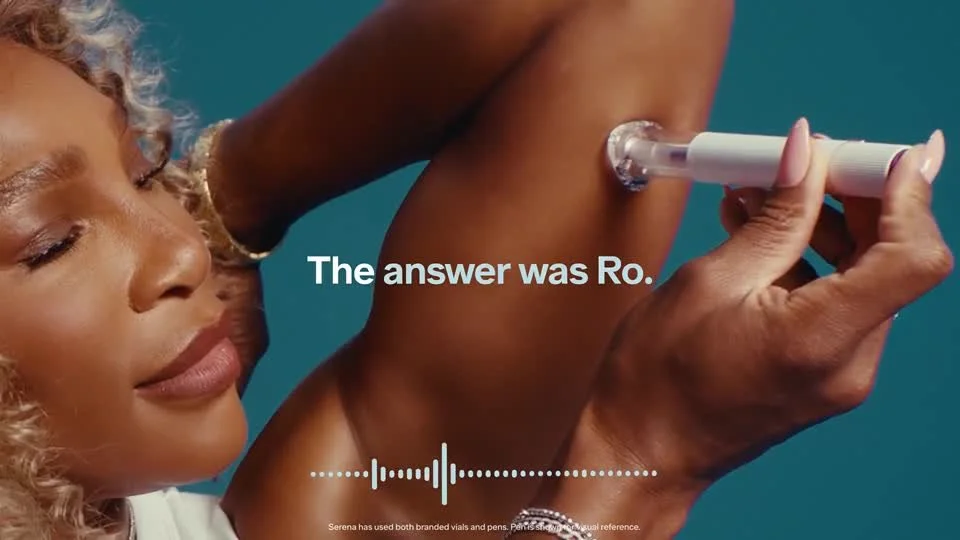
It’s also worth mentioning that GLP-1 ads only focus on weight loss. Instead of being treated as a medicine, GLP-1s are being viewed as somewhat of a miracle drug. Did you know that GLP-1s are used to treat those who suffer from Type 2 diabetes? Instead of using an insulin pump like a Type 1 diabetic would, GLP-1 injections are used to trigger insulin release from the pancreas. For many, this kind of injection is life changing, and sometimes even life saving. However, due to its popular use amongst celebrities and the wealthy, this kind of medicine is becoming less available at an affordable cost.
Perhaps the reason why the use of GLP-1s amongst celebrities and public figures is so prevalent is because of the scrutiny they receive about their bodies. Famously beautiful and curvy figures have been forever altered due to GLP-1s: Mindy Kaling, Rebel Wilson, Adele, just to name a few. If this is what it takes for them to improve their own mental image of themselves, who am I to judge? Regardless, it is still extremely disheartening to bear witness to. Instead of addressing food insecurity, the hypocrisy of the FDA, chronic illness, etc, everyone is forced to critique their own weight on the daily because of these advertisements.
“ Taking care of yourself isn’t a weakness, it’s a power” - Serena Williams via her Instagram.
Weight loss isn’t necessary for taking care of oneself. It’s discouraging to see just how many people believe that self care and wellness are only worthwhile when changing your body is at the forefront. Serena Williams is an athlete first and a celebrity second. When someone who is supposedly so in tune with their own body advertises a GLP-1 only as a method of weight loss, it sends the message that being healthy has a specific look. I don’t see the trend of weight loss dissipating any time soon, in fact, it is diet culture’s next big thing. First it was Weight Watchers and Noom, now it’s the injection that shrinks your appetite. It’s only going to get more dystopian from here.