Turning Red is the Quintessential Movie About 2000s Girlhood—Why Is It Still So Underrated?
Written by Nia Crichelle
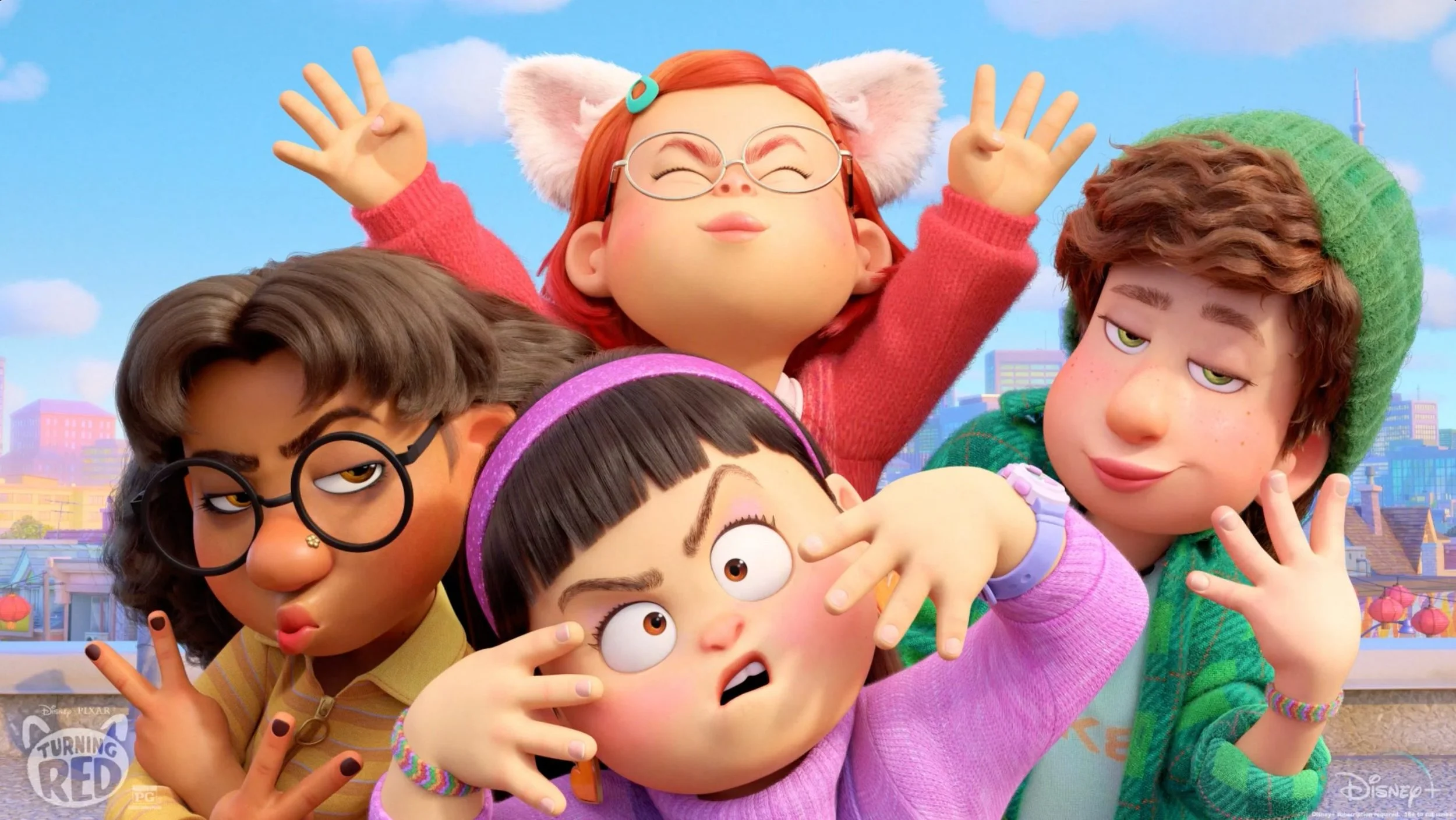
Turning Red is the quintessential movie about 2000s girlhood, and I’m here to make sure it gets the recognition it deserves. For those who haven’t seen it, Turning Red tells the story of Meilin“ Mei” Lee, an overachieving, dorky, and confident 13-year-old Chinese-Canadian girl living in the year 2003. Her life is picture-perfect, as she balances school, friends, and family obligations with ease, until she wakes up one morning as a giant, smelly and emotional red panda. Complete with Tamagotchis, shiny sticker-adorned journals, and teen idol boy bands, the movie is a 2000s time capsule that evokes instant nostalgia in anyone who lived through the era. Turning Red also perfectly distills the experience of female adolescence—the depth of early friendships, the pressure to appease overbearing parents, and the conflicts you encounter as you grow into a new person—within a 1h 40 minute runtime.
I can’t watch Turning Red without crying multiple times. Everytime I see it, I feel like I’m stepping into a portal of sorts, transporting back to my pre-teen and teenage years. When I see Mei and her friends goofily sing their favorite boy band’s songs—all absolute bangers written by Billie Eilish and Finneas, btw— I think about singing Cheetah Girls with my childhood besties on the playground. When she draws“ sexy pictures” of her crush, I think about my“ fashion sketches” of women with big boobs and men with 8-packs. And when she screams at her mom to leave her alone after she offers up supplies for her first period, I think about the time I slammed the bathroom door in my mom’s face when I was asked the same thing (so sorry, mom, it haunts me to this day). The movie is such a beautiful, honest homage to girlhood and the experience of growing up. When the credits roll, I feel an ache in my heart, because it feels like I’m waving bye to that era of my life, to my childhood friend group, and to the dorky, funny, overachieving girl that I was.
Embrace the Panda, a behind-the-scenes documentary about the making of the film, provides an inside look at what makes the movie so authentic: it was produced by an all-woman leadership team led by Director Domee Shi, Production Designer Rona Liu, Producer Lisa Collins, and VFX Designer Danielle Feinberg, all of whom represented a broad spectrum of womanhood: queer, straight, mothers of teens, mothers-to-be, women of color, etc. Turning Red’s success not only illustrates the capability and general badassery of women-centered work environments, but also the importance of lived experience in media production. They brought expert details from their own experiences to the film, whether that be as mothers, immigrant children, young people navigating first crushes, or awkward, quirky girls who subverted convention.
“Turning Red’s success not only illustrates the capability and general badassery of women-centered work environments, but also the importance of lived experience in media production.”
It’s also a testament to their love for each other. In the doc, Liu tells Shi she would go to the ends of the Earth for her because she has such a brilliant mind. The women complimented and uplifted each other often throughout production, creating an atmosphere of support that convinces me that matriarchy and women-centered leadership are most definitely the answers to most of our problems. It’s genuinely heartwarming to see. Plus, that sisterhood translated into the movie: Mei and her friends are the ultimate girls’ girls, relentlessly supporting, accepting, and loving each other—even if one of them is a red panda.
The movie championed self-representation, had a groundbreaking woman-led production team, and was generally considered a critical success. However, even the greatest films can fall victim to patriarchy and misogyny. Turning Red was a box-office bomb, grossing only $21 million on a $176 million budget. This is partially due to its COVID-19 era limited theater release, but also to online discourse from parents who ran to Reddit and IMDb to argue that its focus on puberty and mentions of adolescent sexuality was inappropriate, prompted“ premature sexual conversations”, and was pushing“ woke communist agenda” because of its subtle hints at queerness (which is especially hilarious). The general message sent by consumers was this: periods are icky—we do not talk about them unless we have to—and we are not interested in platforming women or queer stories, especially when they involve puberty. This hypercriticism towards girl-centered stories has been present for decades—think about Are You There God? It’s Me, Margaret, a classic girls’ coming-of-age story that is one of the most widely censored and banned books ever.
To say that Turning Red is niche or inappropriate for general (boy-inclusive) audiences is not only absurd, but patriarchy in action. Cultural critic Jonathan McIntosh argues that Pixar’s unwillingness to make movies centering girlhood after Turning Red is due to concerns that young boys would struggle to see themselves in the girls onscreen. Ding! Ding! Ding! We love a male critic of patriarchy. Our society would much rather accept this inability to empathize than question or work to change it. Men and boys are coddled by a world so geared towards them that narratives are shaped and sanitized in their favor, leaving them ignorant and uninformed on important issues. The“ uncomfortable” topics are avoided for as long as possible. You talk to your daughter about puberty and her period when she gets it, and if you have a son, they don’t need to know about it at all. How strange is that? People with periods don't experience periods or puberty in isolation—they're experiencing it right alongside men and boys in their classrooms and other shared spaces on a daily basis.
“Men and boys are coddled by a world so geared towards them that narratives are shaped and sanitized in their favor, leaving them ignorant and uninformed on important issues.”
I got my first period at 10. Before that, I knew virtually nothing about them. When I saw the blood for the first time, I thought I was broken. I got all the standard period material—Are You There, God? It’s Me, Margaret and the Your Growing Body books—after it started. I don’t blame my mom for not having the conversation earlier because she probably thought she had more time (like Mei’s mom did in the movie), but it would have benefited me greatly if I’d had that uncomfortable conversation or seen a movie like Turning Red before. Leaving girls unprepared for their own development, and boys unaware of their experiences, because the conversation is“ uncomfortable,” is a direct result of patriarchy. No one benefits from ignorance about it.
Also, let’s be real: who cares if something doesn’t appeal to boys? Girls deserve to see themselves represented, period (wink), regardless of the significance to another audience segment. If you’re greenlighting media that appeals to a specific audience, do it with your whole chest! Think in the opposite direction: every girl doesn’t like Hot Wheels or Pokémon, but they can. Similarly, every boy may not like Turning Red, but some might, and that should be enough.
Lastly, Turning Red captures exactly what girls—and adolescents in general, for that matter—are like. In middle school, I was goofy and funny. I was horny and flirty and drew“ sexy pictures”. I imagined my future life with members of boy bands (Joe Jonas was my dream man of choice, but I regret that now). And I also dealt with feelings of not being good enough for my parents, especially my mom. No matter how much folks don’t want to believe or acknowledge what adolescents, pre-teens, and teenagers are like, I can say from experience: this is it, and our stories deserve to be told on screen.
Turning Red is a tale that highlights puberty , with all the emotional chaos that comes from being a little human grappling with big hormones and big changes. It acknowledges the existence of periods and burgeoning childhood sexuality. But at its core, it’s a movie about, as Liu says,“ growing up, finding out who you are, and embracing it”, and that’s universal.
“at its core, [turning red] is a movie about, as Liu says,“growing up, finding out who you are, and embracing it”, and that’s universal.”
The more we normalize conversations about and break down the taboos surrounding girlhood and puberty, the better children’s (and parents’) experiences will be. Turning Red and stories centering women and girls deserve better. I’m pretty sure the boys can handle it.