This Shit Ain’t Free: Fast Fashion and Generative AI
Written by Marion Johnson
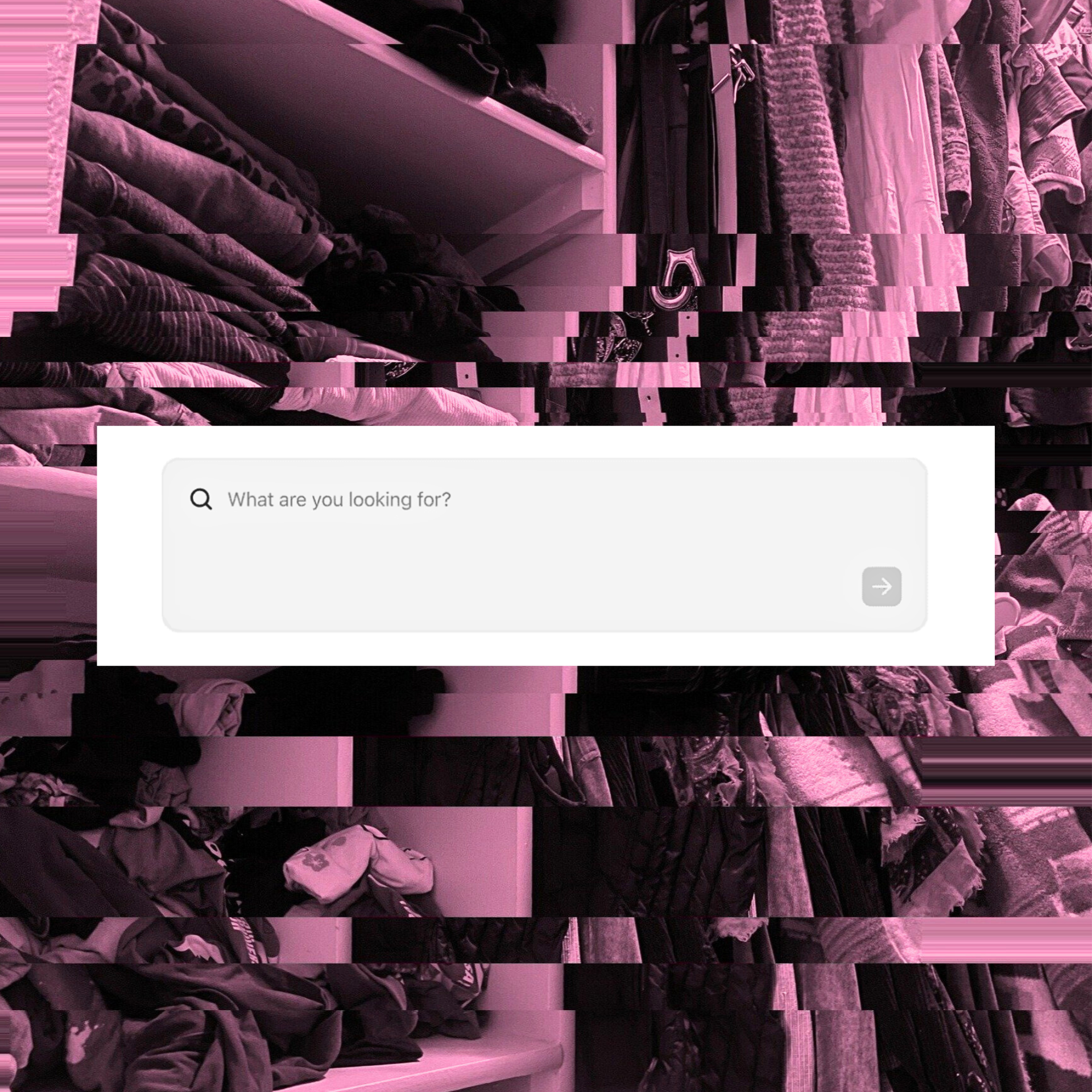
Image courtesy of Marion Johnson
I was in eighth grade when the YouTuber I was watching plugged her sponsorship with Romwe, a popular fast fashion website. I cannot express how wild Romwe was to me when it first came onto the scene: stylish and trendy clothes for nothing but a few bucks. I ordered a long-sleeve black crop top with a one-line alien abduction desert scene screen printed on the front. It read“ we’re not really from here” or some Tumblr bullshit like that. It was definitely one of the first things I’d ever ordered online, and I was so excited for my shirt to come in the mail. There’s this thrill any tween gets when a package arrives, and their own name is on the shipping label.
I wish I could go back in time and warn myself that the shirt would be too small, super itchy, stinky, see-through, and basically plastic. After that, I never ordered from a fast fashion website again, which meant I (luckily) got out of the game before Shein took over the internet. Shein and Romwe weren’t all that different; their websites were practically mirrors of each other. For years I avoided that website like the plague, arguing with Shein apologists online, and trying to reason with people who simply wanted a pair of pants for five dollars. It was a hard fight to win. Shein’s social media presence catapulted it to relevance, and laid the foundation for the fast fashion final boss, Temu.
A couple of months ago I was on Instagram reels and saw a Temu promotion for ONE HUNDRED PERCENT OFF. Curiosity got the best of me. After typing in the website, I was greeted with a spinning wheel of varying discounts, and how lucky was I when the needle landed on 100% off? After losing interest in the free stuff I found myself scrolling through their regular offerings. I was shocked that a lot of their clothes were $20-$50. That was not the fast fashion I remembered, which used to list clothes for a few dollars. That’s when I realized that the fast fashion companies had finally accomplished their goal. No matter how many child labor, dangerous work conditions, or environmental degradation allegations they faced, fast fashion had successfully roped in Americans. Fast fashion websites have become so normalized that their prices don’t have to be sensational anymore. What’s even scarier is that their prices are comparable to in-person stores now, presumably because so many companies either sell fast fashion as well, or go bankrupt trying to keep up. Even a solid brand like Doc Martens has faced accusations of using cheaper materials, leading to a supposed decrease in quality. Using freeness or cheapness to normalize unethical consumption has become less of a concerning pattern and more of a glaring warning sign.
Just before I started to write this piece, I was trying to opt out of Google’s AI Overview search results. I almost lost my mind. Not only was the AI overview of how to get rid of the AI overview WRONG, but the YouTube video I watched had an AI summary in the caption. This transition into using AI features has been anything but seamless. In fact, it’s really quite aggressive. Generative AI has found its way into my life, causing plenty of tension and distress. The only“ seamless” thing about the implementation of AI is that it’s free. There’s no membership fee, no subscription, no paywall, no nothing. I know I’m not the only one suspicious of Sam Altman’s gracious charitable donation of large language models (LLMs) to American citizens. At least to me, it is clear that ChatGPT is free to increase its accessibility, so that it can train the LLM with seemingly infinite users, validate its data mining, and normalize its use to young children, students, adults, and the boomers who, without such exposure, would’ve been angry with how much this new technology clogs up their Facebook feed. Beyond critiquing AI for being wrong or getting on my last nerve, all I can think about is how unlike fast fashion, AI has been forced onto all of us, even the people who vehemently oppose it.
I am not scared that one day LLMs will start charging money and people will then have to pay for misinformation and their own loss of critical thinking skills. I am scared of the normalization of generative AI through features like the AI Overview. I am scared of diminished quality control. I am scared that we will have no option to opt-out. Just like Romwe, Shein, or Temu, these conveniences of AI that seem“ too good to be true” may be a wolf in sheep's clothing (100% polyester).
We must remember the cost of these conveniences and who will pay for them. In thinking about Shein's labor-rights violations and egregious carbon emissions, I need not remind people of the 60 Minutes story that aired in 2024, which explained that Kenyans were getting paid $2 an hour to train AI for Meta and OpenAI, or the countless city councils fighting against AI data centers in their neighborhood because of the unsustainable environmental impacts.
In a world where all we have is our dignity and our health, we must come to terms with the fact that this shit ain’t free. There is a human and environmental cost to these conveniences being forced upon us, and something will have to change. I am a lifelong thrifter, and even when I relinquished any guilt associated with shopping fast fashion, I was humbled in 2024 when I attempted a“ no buy year”, which included second-hand purchases. I had to get off my high horse and confront my own relationship with consumerism and consumption. I have no doubt that rejecting AI will come with its own series of confrontations beyond disdain and avoidance. Whether it’s fashion or LLMs, we should all be conscious of how low costs or free access to conveniences can entice us into something we will all eventually end up paying for.
“Whether it’s fashion or LLMs, we should all be conscious of how low costs or free access to conveniences can entice us into something we will all eventually end up paying for.”
As of today, you can add“ -AI” to a Google search and it will free you from the AI Overview. I also recommend turning off AI recommendations on the Apps you use. I recently turned mine off on Pinterest by going to Settings > Refine your recommendations > GenAI Interests and turning off every available option. This shit ain’t free, but resisting it is.