Sanjita Pamidimukkala Designs For The Soul: All About Satchy
Written by Daphne Bryant
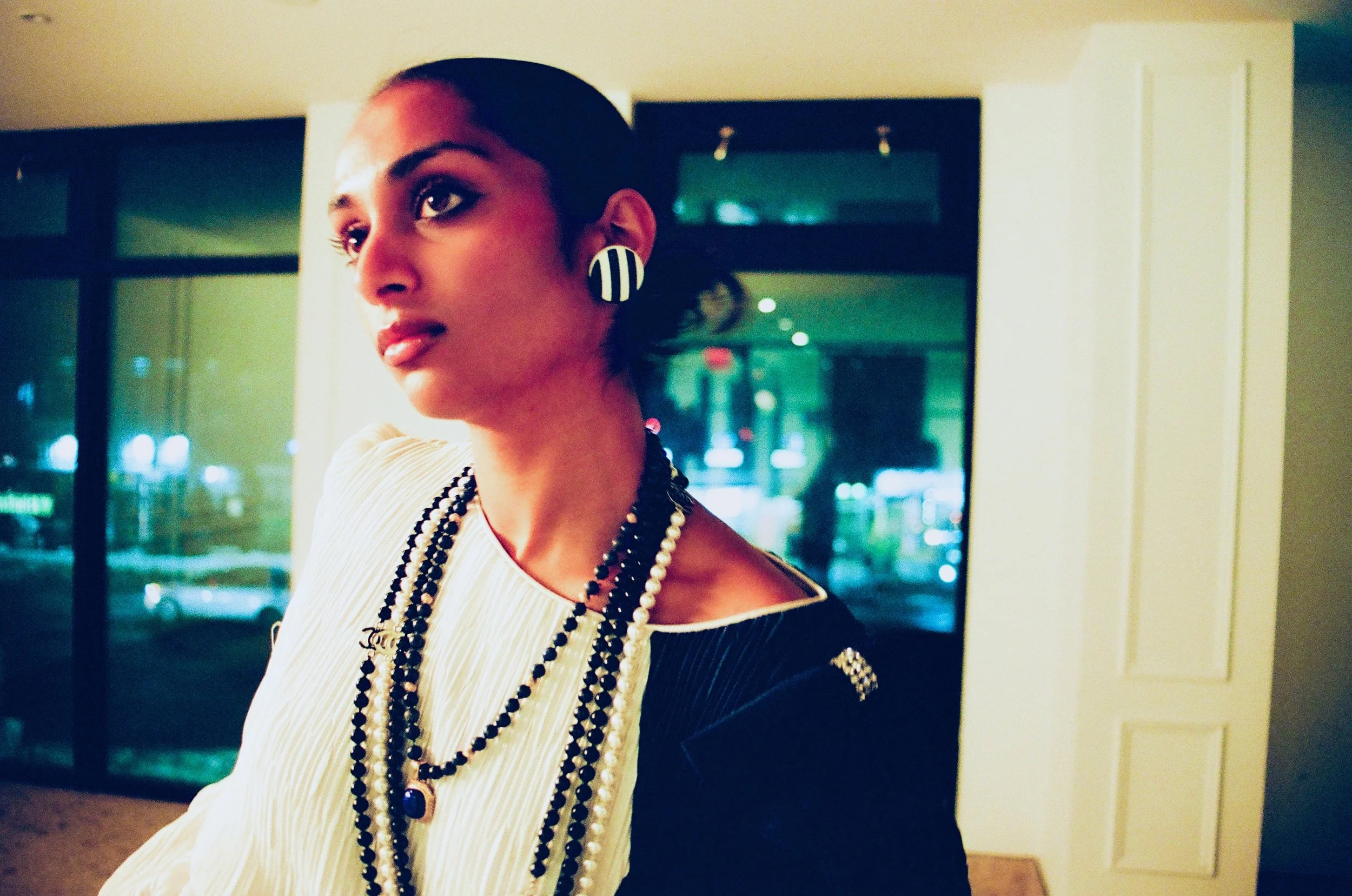
Image courtesy of @manicpicturedreamgirl
If Satchy was a soundtrack, it’d be filled with buzzy PinkPantheress bangers (“ she just loves a funky outfit and a funky tight”), and Tyla’s confident afrobeats. At least, that’s what 22-year old founder Sanjita Pamidimukkala would put on a playlist for the hottest new clothing brand on the market.
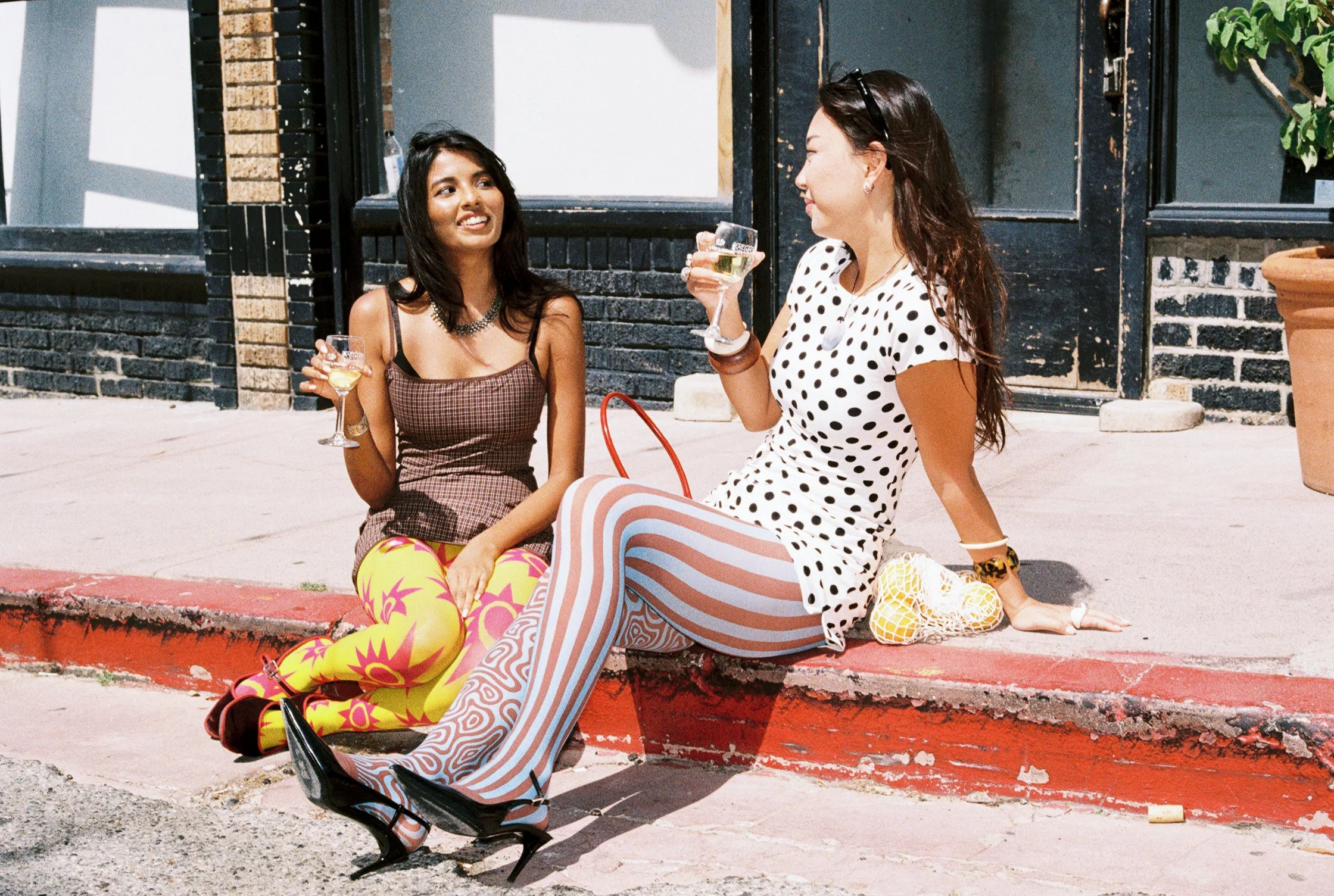
Image courtesy of @flicksdeski
For Pamidimukkala, starting her own apparel company is a life-long dream that has finally materialized and blossomed before our eyes. Satchy, a color-first and maximalist brand, was created to shift narratives around South Asian identity in American media and bring Indian craftsmanship West with care, respect and intention. Why now?
Currently Pamidimukkala works a full-time job in tech and is surrounded by engineers, a very different crowd from the creative minds at her alma mater, UCLA. While her corporate position provides stability, Pamidimukkala (who has always been an artistic kid) found herself craving more.“ After starting my job, I just knew I needed a creative outlet, and it felt like the right time,” says Pamidimukkala. Luckily, the risk was worth the reward.“ I always tell myself [that a two] thousand dollar investment in myself and my vision right now is not going to mean anything to me in 10 years.”
One day last October, the idea for a pair of tights came to life.“ I literally sat down that night and I designed them, and I reached out to a bunch of manufacturers. I was already going to India the next month with my family, so it was kind of perfect timing,” says Pamidimukkala. The daughter of immigrant parents, Pamidimukkala spent her whole life immersed in Indian culture.“ I don’t necessarily consider myself a religious person, but I grew up going to a lot of these kinds of cultural exchanges and cultural ceremonies, and a very big part of that for Indian folks is the attire.” On trips to India, she would also accompany her mom to the tailor, a cultural cornerstone.“ Getting your clothing custom-made is a very common thing [there], even for people that aren’t super well-off. It’s just something everyone does, [like]‘ hey, we’re gonna go get this stitched and [pick out the] fabrics that [we’re] gonna use, and the trims and [whatnot].” The inspiration for Satchy very simply and beautifully comes from Pamidimukkala seeing her mom, her grandma and all of the female family members in her life create these elaborate pieces and hone their artisan craft.

Image courtesy of @flicksdeski
If you haven’t noticed the global renaissance of South Asian fashion (runway, festivals, and beyond), then you’re simply living under a rock.“ Right now people [are] super into Indian art and craftsmanship, and I wanted to be able to bring that over, and my knowledge on that and my experience with that, in an ethical way, because I think there’s a lot of brands that are co-opting that without giving credit where credit is due,” says Pamidimukkala. She implores people to shop small and ethically, pouring their funds not into say, Free People or Dior, but Indian designers. She isn’t the first Indian creator to speak on this; this year’s most recent Coachella looks were ruled by bindis, bangles, mini sarees, beaded skirts and more, but South Asian artistry and influence has always been here—it’s just finally taking center stage in the West, with authentic designers and creators advocating for it. In a recent interview with Forbes, influencer and feminist Seerat Saini says“ I would love to see girls from all different backgrounds wearing Indian or Pakistani designers, but don’t repackage it as being from Ibiza or the Scandinavian scarf, or‘ boho!’” Call South Asian fashion what it is: iconic. Pamidimukkala adds on to the renaming discussion:“ It’s the same trend, basically, of when a brown or Black woman does something, and it’s labeled as, uncool, or dirty, or just too much, and then when a white woman does it, or a big brand in America does it, it’s viewed as completely different, and it’s mislabeled, and just completely stolen.”
The truth is, it can be tough seeing an insane amount of white people praise your culture when just a few years back it seemed your culture was the brunt of every bad race joke. A lot of people who haven’t had the experience of their culture being appropriated, or growing up and resenting your culture, don’t understand just how jarring this phenomenon can be.“ I think there’s a big wave of appreciation and appropriation for Asian cultures right now that we really didn’t have when we were kids. It was the complete opposite,” says Pamidimukkala. She hopes that, with this new wave, people respond to the young people who are re-shaping conversations and starting ethical businesses, so that we can grow our brands to become as big as the brands that are taking the culture and making it something it’s not.
“I think there’s a big wave of appreciation and appropriation for Asian cultures right now that we really didn’t have when we were kids. It was the complete opposite.”
Pamidimukkala recalls talking to her mom about the effects of British colonialism, that in more colonized parts of India, the British came and labeled certain things as“ gaudy, or unprofessional, or uncivilized, and a lot of that had to do with the attire that people in India wore.” She explains that people used to tie saris in a completely different way before British colonialism, that there was a huge rise in minimalism as a result of British colonialism. This type of story is familiar to people of color all over the world: from languages to clothing, our culture is often sanded down in favor of becoming“ more polished”, though the marker of what’s“ good” and what’s not has traditionally been set by these imperial white forces. To hell with that! With Satchy, Pamidimukkala is determined to educate people on the colonial influence that the British had on India, and pay homage to the way things were before.“ I wanted [Satchy to] be an ode to reclaiming [our Indian roots] and bringing awareness to that [history], and I’ve just always been an anti-minimalist.” With passion, Pamidimukkala describes her walls, which are always covered, and her favorite things to wear, tracing it all back to the way she was brought up.
“I wanted [sactchy to] be an ode to reclaiming [our Indian roots] and bringing awareness to that [history], and I’ve just always been an anti-minimalist.”
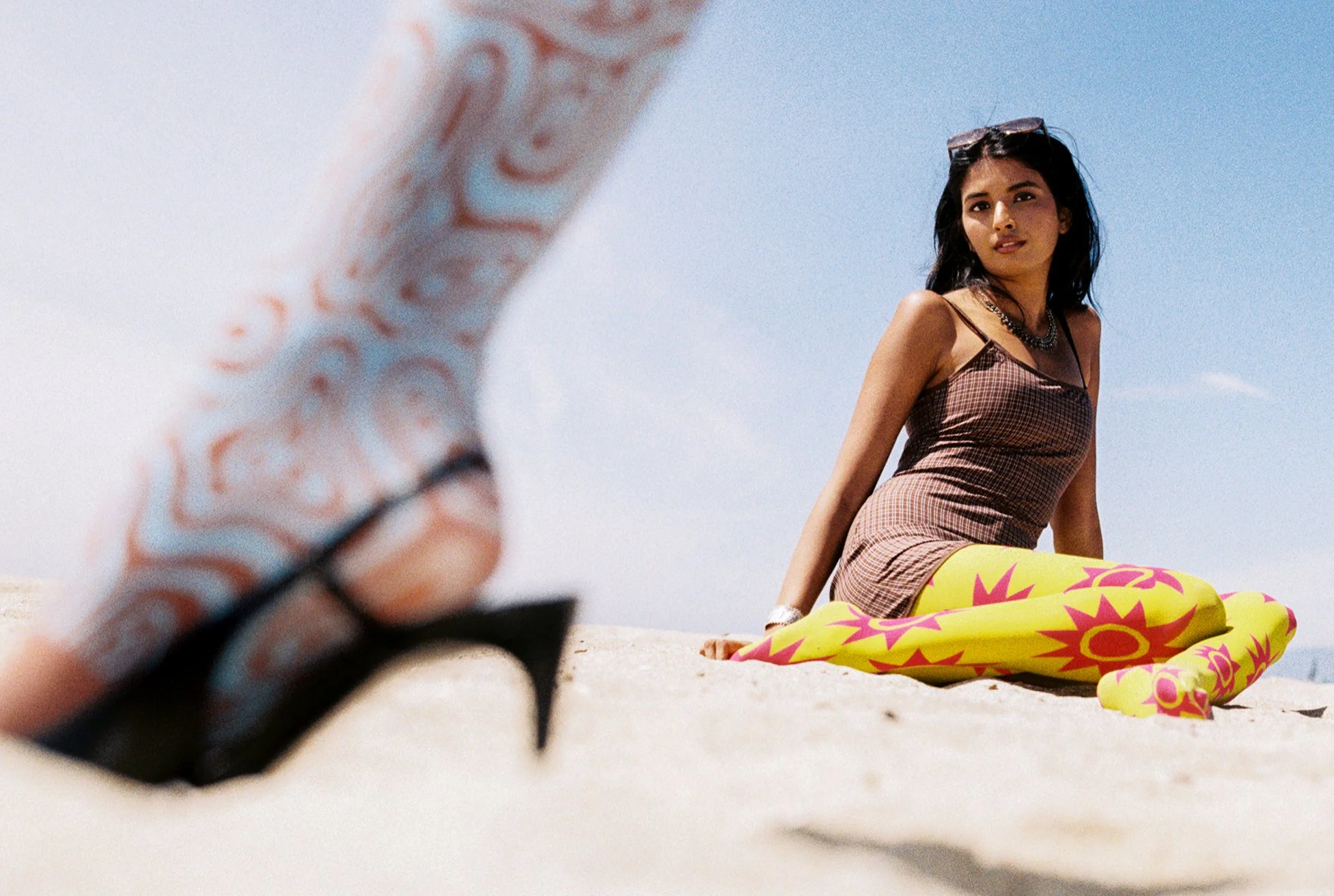
Image courtesy of @flicksdeski
Apart from reclamation and representation, another huge element of Satchy are the dynamic colors and patterns. For example, the Ulta Pulta Tights’ design reinterpetes ancient Indian stripe and check traditions, where vari stripes and kattam checks are among the oldest textile motifs rooted in handloom heritage and daily wear. Meanwhile, the Taara Tights are rendered in vibrant pinks, magentas, and chartreuse, a color story also deeply rooted in Indian textile tradition. Both of the Chakr scarfs from the Spring Collection put a cultural twist on what many of us may perceive as mere“ polka dots”, drawing from ritualistic symbols such as the ones found in Kolam or Rangoli art. Satchy’s pieces are not just gorgeous, they have meaning tied to distinct heritages and customs.
The process of making Satchy a reality kicked off pretty organically.“ When I first started designing my pieces, I knew that I wanted everything to be made in India, so I did a lot of research. [I] basically compiled a very large database of manufacturers that had the producing capabilities for what I needed, because I knew I was specializing in knits and hosiery. I knew that I’d have to build up a database of relationships with different manufacturers, but I also knew, obviously, that I wanted to do it right,” Pamidimukkala says. Every single day she was messaging and calling factories, battling massive differences in time zone and paying attention to everything from what their unionization was like to their sustainability certificates:“ Someone receiving a sustainability certificate in India is not exactly the same as in China or America.” Ultimately, Pamidimukkala gravitated towards female-led and heavily female-staffed factories.“ I wanted to make sure that, in terms of labor rights, the people that were overseeing the operations had the best of intentions. In India especially, there’s still a lot of gender disparity, and young women artisans can be taken advantage of in these situations.” Pamidimukkala took the time to meet with a couple factories that took her through their entire design and sampling process, as well as all their ethics—whether it be pay and hours or recycling measures. Some might perceive Pamidimukkala’s approach as overly meticulous or detail-oriented, but if anything it shows just how committed she was and is to producing quality work with heart and care. The authenticity radiates off of Satchy in infectious waves.
During our conversation, Pamidimukkala confesses that her mom was never the most fashionable woman in the room:“ A friend [of mine] would pull out, like, a vintage blouse and be like,‘ Yeah, this is a Dolce & Gabbana blouse that my mom wore in college’ and I’m like:‘ My mom literally doesn’t even know what that is, and she has no American clothing that she’s passed down to me.’” Admittedly, as a younger girl Pamidimukkala had almost a resentful relationship with Indian wear and the fact that it was what her mother wore (as opposed to Western designers and looks).“ Now I [so appreciate] the work that goes into making [Indian] clothing, and just how beautiful the fabrics and the handwork are,” says Pamidimukkala. As time passed, Pamidimukkala’s mom became a huge inspiration for her—when in India, the two of them go shopping together often, and her mom is tapped into the culture there in ways that she is not here, in the States.“ [Shopping with my mom] is not an experience I really had growing up, so it’s something that I treasure a lot, and especially now with the clothing brand, it’s made us even closer, because she has so many insights about tailors and different styles of embroidery, and all the intricacies of working with people in India.” While, growing up in America, Pamidimukkala feels like she culturally raised herself, as an adult she openly recognizes the struggle of immigration and how much her parents gave so that she could live the life she has now.“ I’m really glad that [in] having this brand, I’ve been able to look to my mom’s closet for inspiration and look to her for guidance on this, because that’s just never something I’ve been able to do before.”
“I’m really glad that [in] having this brand, I’ve been able to look to my mom’s closet for inspiration and look to her for guidance on this, because that’s just never something I’ve been able to do before.”

Image courtesy of @flicksdeski
Pamidimukkala also loves LA; as far as her creative practice is concerned, she credits much of her growth and development as an artist to the time she spent there.“ I [came] into adulthood in LA and just met a lot of creative people, like photographers and models and just people chasing their dreams in creative fields that I feel like I needed to be around,” Pamidimukkala says. If you want to do something creative, and own something or pursue a DIY career of sorts, you just have to go out there and do it. For Pamidimukkala, LA was a catalyst for helping her enter that headspace and pursue a multifaceted path. Now, Pamidimukkala lives in NYC, where the hustle culture similarly motivates her.“ For where I’m at right now, just being in New York and being around people hustling and having fun, being young, and taking risks, it’s a great place to do that.” She shouts out the amazing group of friends she met post-grad, and mentions the leap she took with modeling.“ I submitted digitals and got signed to a modeling agency, so I met a lot of people here through that, which has helped a lot with starting Satchy.” Like all smart business owners of our generation, Pamidimukkala utilized TikTok to get her name and personal brand out there even more. Social media like TikTok opened Pamidimukkala up to a lovely network of creatives who resonated with her branding and were eager to help out just because. Community is everything, and Satchy has an amazing one.

Image courtesy of @flicksdeski
Platforming POC has always been of importance to Pamidimukkala. While in LA, Pamidimukkala realized the people that she was seeing in positions of power in creative industries, whether it was brand officers or creative directors, were for the most part white. This discrepancy is of course tied to systemic discrimination, but Pamidimukkala offers up more food for thought:“ I think a lot of it has to do with not having mentors or role models to look for [and] look to in those fields. Culturally, [if] you come from an immigrant family, a lot of times those fields are viewed as unstable or risky; they want to prioritize safety [and stability] instead.” In order to provide more visibility, Pamidimukkala worked on a project called Studio 003 with one of her high school friends, Lina. The pair went through a lot of iterations of what Studio 003 could look like—mentorship, events, highlighting people; really, the possibilities were endless. It started out as a consulting company that would consult for POC-owned brands and, over the past year, has evolved into an events brand.“ [Studio 003] has changed so much, and in the middle of that, I started Satchy. I knew that with this brand, working with artisans in India, it was very important for me to continue to carry the mission that I was doing with Studio 003.” Pamidimukkala excitedly announced that Lina, who works for Adidas in their marketing department and is very tapped into the scene in LA, would be coming on to help her with creative work at Satchy. She also gushed about all of the diverse models she’s gotten to collaborate with, in turn building their portfolios.“ I want to try to work with and give opportunities to as many other POC creatives as I can, because all it takes is for [one person] to bet on you.” Going forward, Pamidimukkala plans to merge the world of Satchy with that of Studio 003, through a podcast and newsletter and the overall uplifting of people that look like her, and me.
“I want to try to work with and give opportunities to as many other POC creatives as I can, because all it takes is for [one person] to bet on you.”
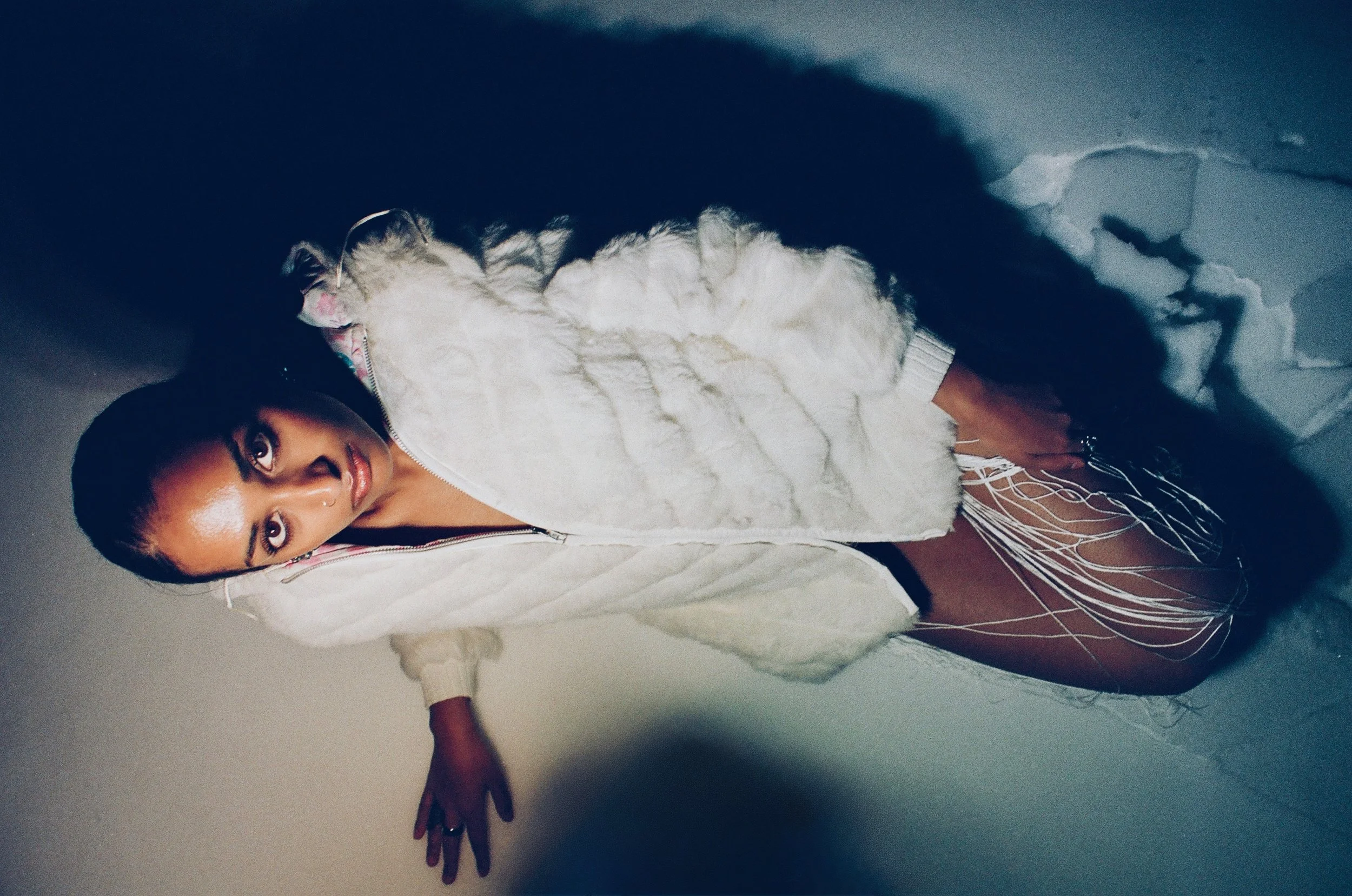
Image courtesy of @manicpicturedreamgirl
Being a small business owner, Pamidimukkala finds great joy in the simple act of sharing her work and getting it out there in the world: “ There’s no better feeling than packing an order and knowing that somebody invested in [me], and [purchased] something that [I] created, and something that means so much to [me]. Just being able to share that is an incredible feeling.” Last week, Pamidimukkala was able to send tights to none other than singer-songwriter Remi Wolf:“ she loved them, and her agent was talking to me, and that is such a surreal thing.” Satchy’s founder lets DWG readers in on a little secret: she’s not great at sitting down, slowing down and celebrating her wins.“ It’s nice to be talking to you right now, because I am just a very ADHD, fast-moving person, so it’s [great] to have opportunities to reflect,” says Pamidimukkala. Wolf was one of her favorite artists during COVID, and having listened to her for so many years and being touched by her music, knowing that Wolf is mutually touched by Pamidimukkala’s art is the best feeling in the world.
Want more from Satchy? A hand-beaded collection, with more flowy but still colorful pieces, will be dropping soon, just in time for summer. Pamidimukkala is excited to expand on Satchy’s brand story, and excited to make some more magic this year.