Desi Rococo: Reimagining Rococo through a South Asian & Sapphic lens
Written by Daphne Bryant
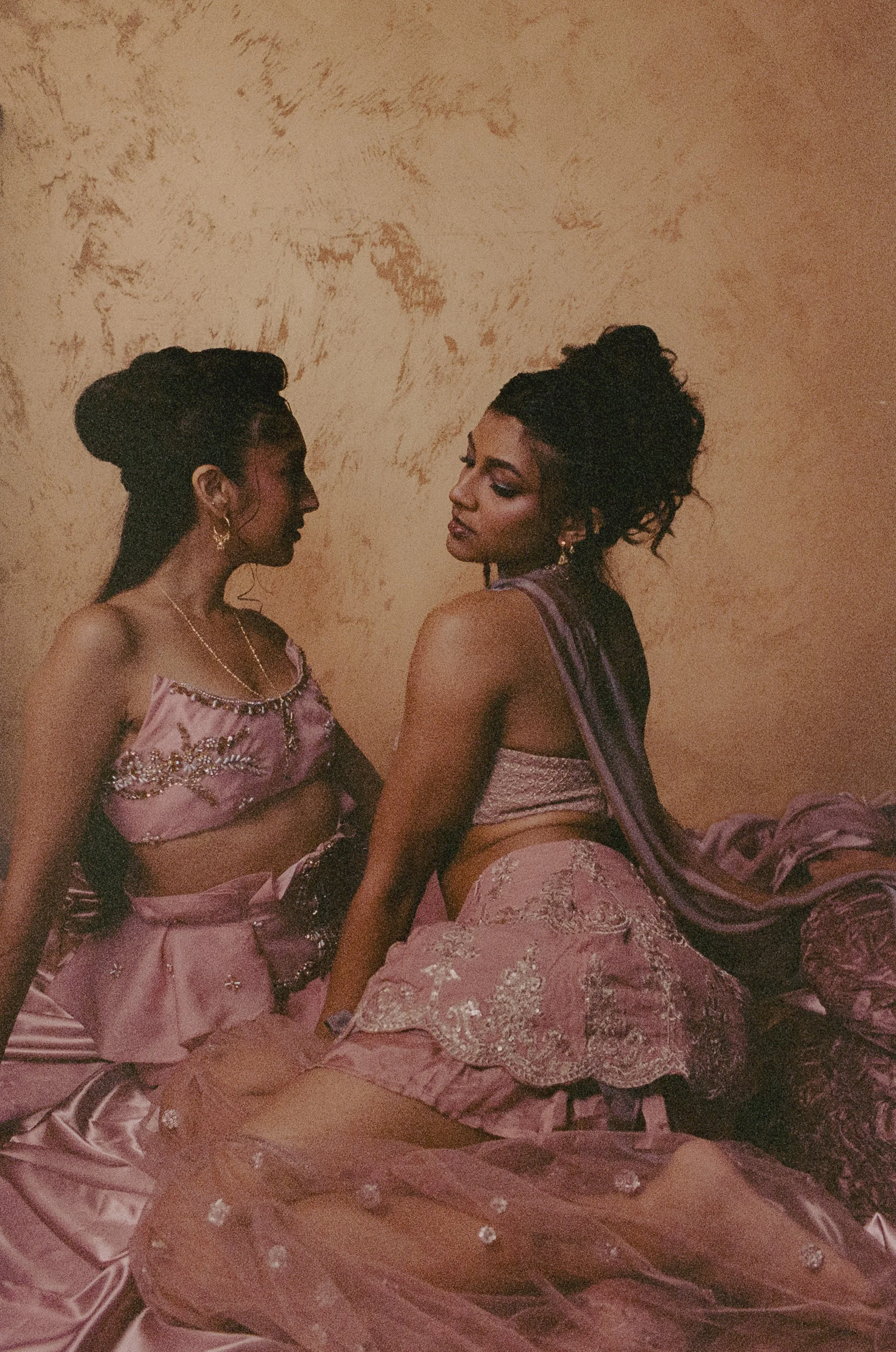
Image courtesy of Zayira Ray
At first glance, 18th-century French Rococo and classical South Asian adornment share a love for extravagant, unapologetic maximalism. Yet history has rarely sat them at the same table, let alone featured the intersection through a sapphic, diaspora-led lens.
Enter Desi Rococo, the landmark fifth campaign collaboration between Indowestern jewelry brand Kaju Studios and Junk Flower Films, a femme and queer-led commercial production company co-founded by director Keya Saxena and cinematographer Rose Knopper. Featuring fine-art portraiture by photographer Zayira Ray and starring musical muses Raveena and Avara, the project is a masterclass in high-concept storytelling. Set against sheer canopies, painterly lighting, and custom looks crafted from South Asian textiles, the campaign reclaims opulence while honoring the butterfly-inducing euphoria of new love.
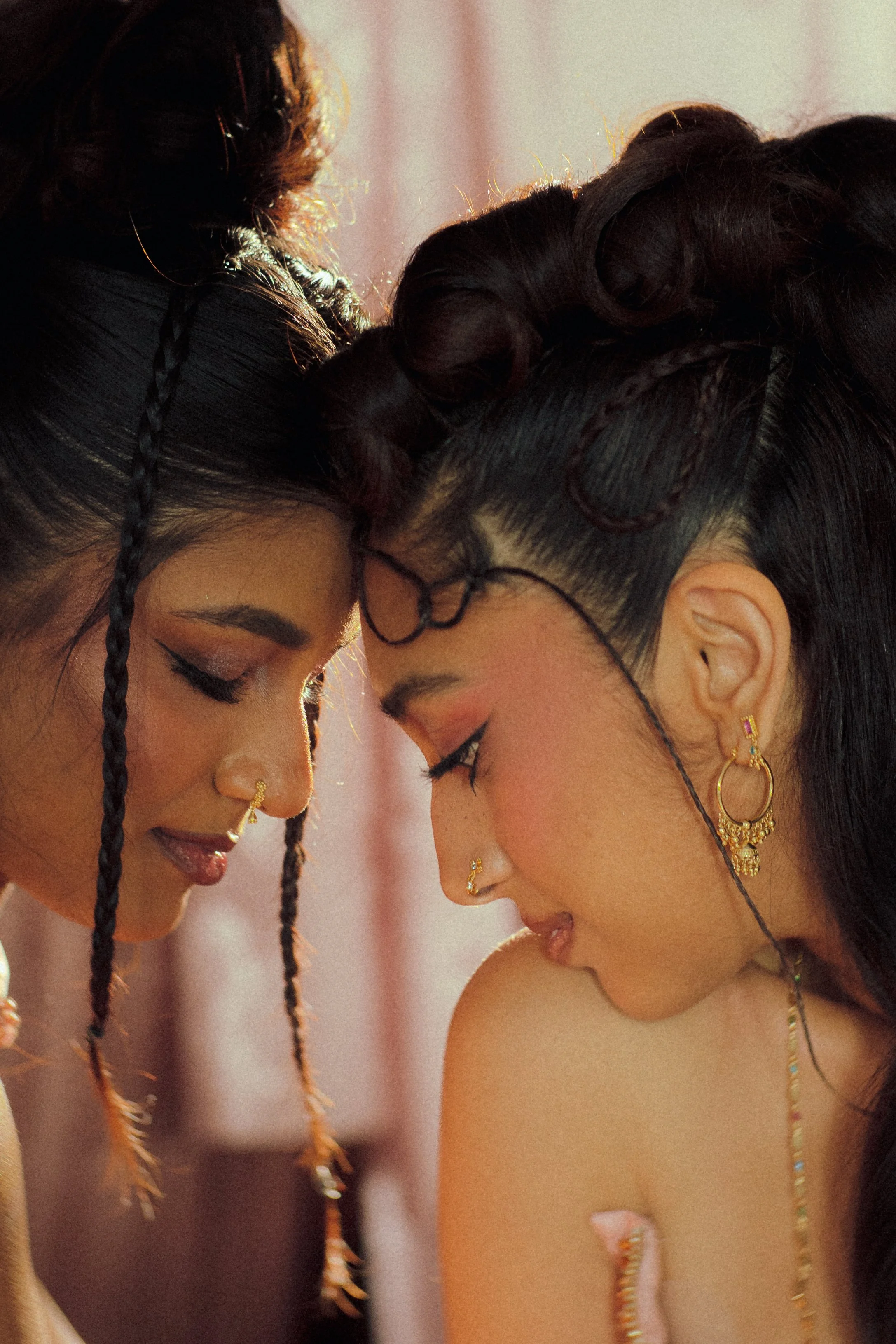
Image courtesy of Zayira Ray
For Kaju Studios founder Tara Bhikha, the drive to create Kaju Studios emerged from a long-standing personal need for representation and cultural connection. Growing up as a second-generation Indian-American in Austin, Texas, Bhikha spent a decade of her formative years as the only brown girl in the room, an alienation that ultimately fueled a desire to reconnect with her heritage.“ At times, my connection to India has felt more like hunger than a steady tie. The easiest way to learn about a culture is to choose an area of personal interest, and I’ve always been fascinated by art and fashion,” says Bhikha. In order to bridge the gap she turned to creative mediums, and became transfixed by the rich Indian tradition of ear stacking. When she couldn’t find everyday jewelry on the market that offered ornate detailing and abundant gemstones, she founded Kaju Studios.
Bhikha defines Indowestern jewelry as a genre that seamlessly weaves traditional South Asian design elements with modern Western styles. As a three-time founder, her core philosophy centers on radical authenticity:“ If you’re trying to light a fire about a concept you feel lukewarm about, you’re going to have a tough time creating a spark!” As she designed the Desi Rococo collection, Bhikha sought to recontextualize luxury through her own unique cultural lens.“ When I think of luxury, I immediately think of my Indian heritage. From the layers of gold jewelry to the heavy embroidery and beading and even [down] to the decadent spices, South Asia knows how to do luxury.” Historically, Rococo celebrated European aristocratic opulence, romance, and carefree joie de vivre, and the Desi Rococo campaign expertly reframes the themes and motifs of this iconic art movement. To embody this“ everyday exuberance”, the team brought on musical artists Raveena and Avara as muses.“ For this campaign, I really wanted to capture [what it’s like to be] enraptured with a new lover, as this feeling is emblematic of Rococo. Both artists’ have songs that evoke this feeling for me, and when we were brainstorming, they immediately came to mind,” says Bhikha. Bringing such a high-concept vision to life required a production team that understood the South Asian diaspora in all its nuance. Keya Saxena, co-founder of Junk Flower Films and director of the campaign, draws heavily from her own upbringing as an immigrant daughter moving between India, Hartford County, and New York City.
“When I think of luxury, I immediately think of my Indian heritage. From the layers of gold jewelry to the heavy embroidery and beading and even [down] to the decadent spices, South Asia knows how to do luxury.”
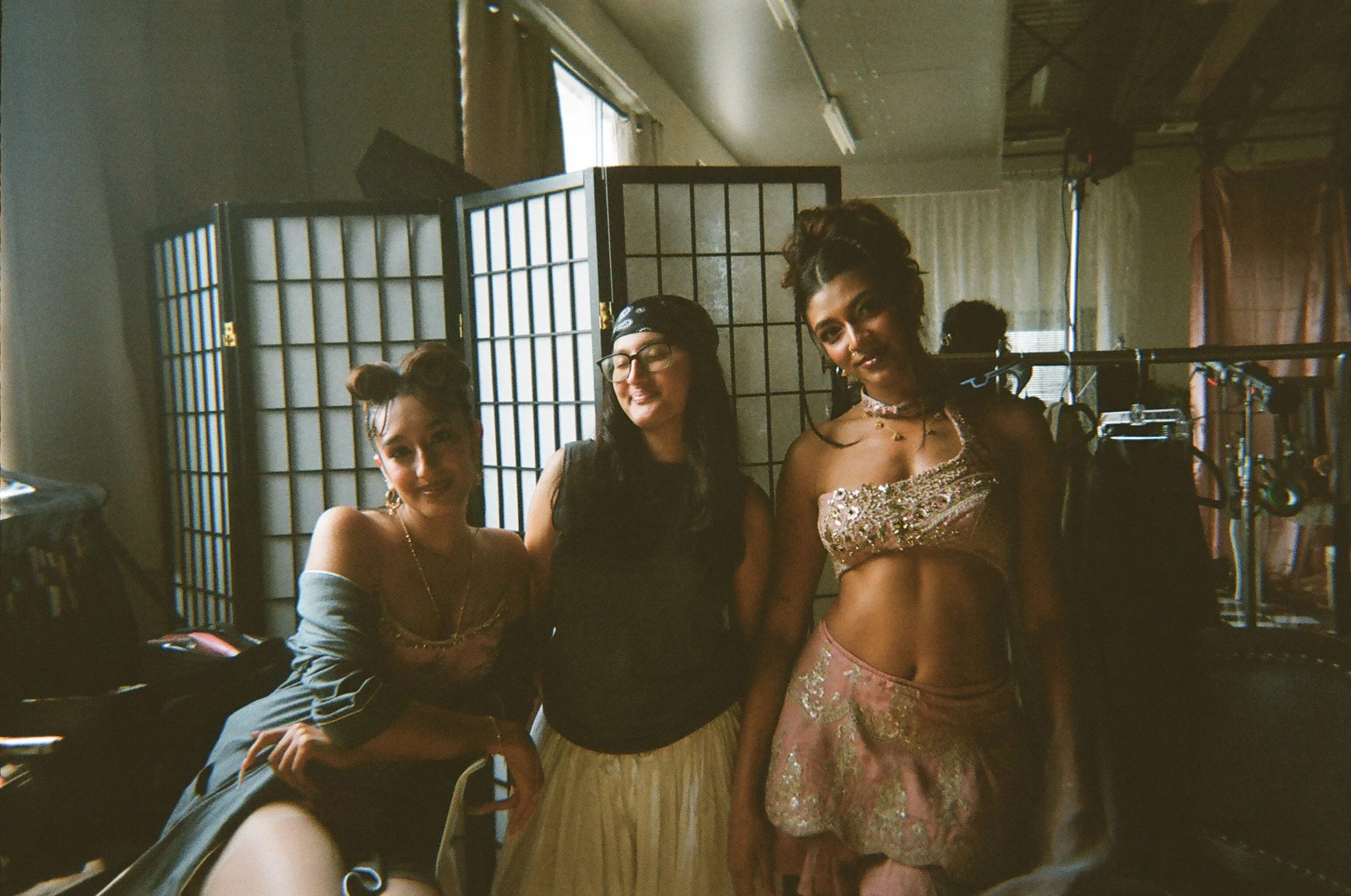
Image courtesy of Michelle Biagi
Saxena emphasizes that navigating a traditionally gatekept film industry requires supportive networks:“ It’s really about bridging that gap, building community, and investing time and resources into the incredibly talented artists around us.” On the set of Desi Rococo, 100% of the hired cast and crew identified as women of color and/or queer. This intentional hiring created a calm, trusting atmosphere where crew members could focus entirely on their craft, and for Junk Flower Films, this representation is the norm.“ God I love my friends! Honestly, more importantly than them being women or queer creatives, they are genuinely the most talented people I know and everyone should work with them in every lifetime! Check the credits, hire them!” says Saxena. Adding on, cinematographer Rose Knopper emphasizes how when she started working in film six years ago, she was usually one of the few non-male people working behind the camera. Now, she’s worked on multiple sets where there have been no cis men on the job, and she’s come across a lot more women and women of color working in technical roles.“ It’s relieving to see representation both in front of and behind the camera, and I believe it always makes the outcome of the piece much stronger,” says Knopper.
“more importantly than [the crew] being women or queer creatives, they are genuinely the most talented people I know and everyone should work with them in every lifetime! Check the credits, hire them!”
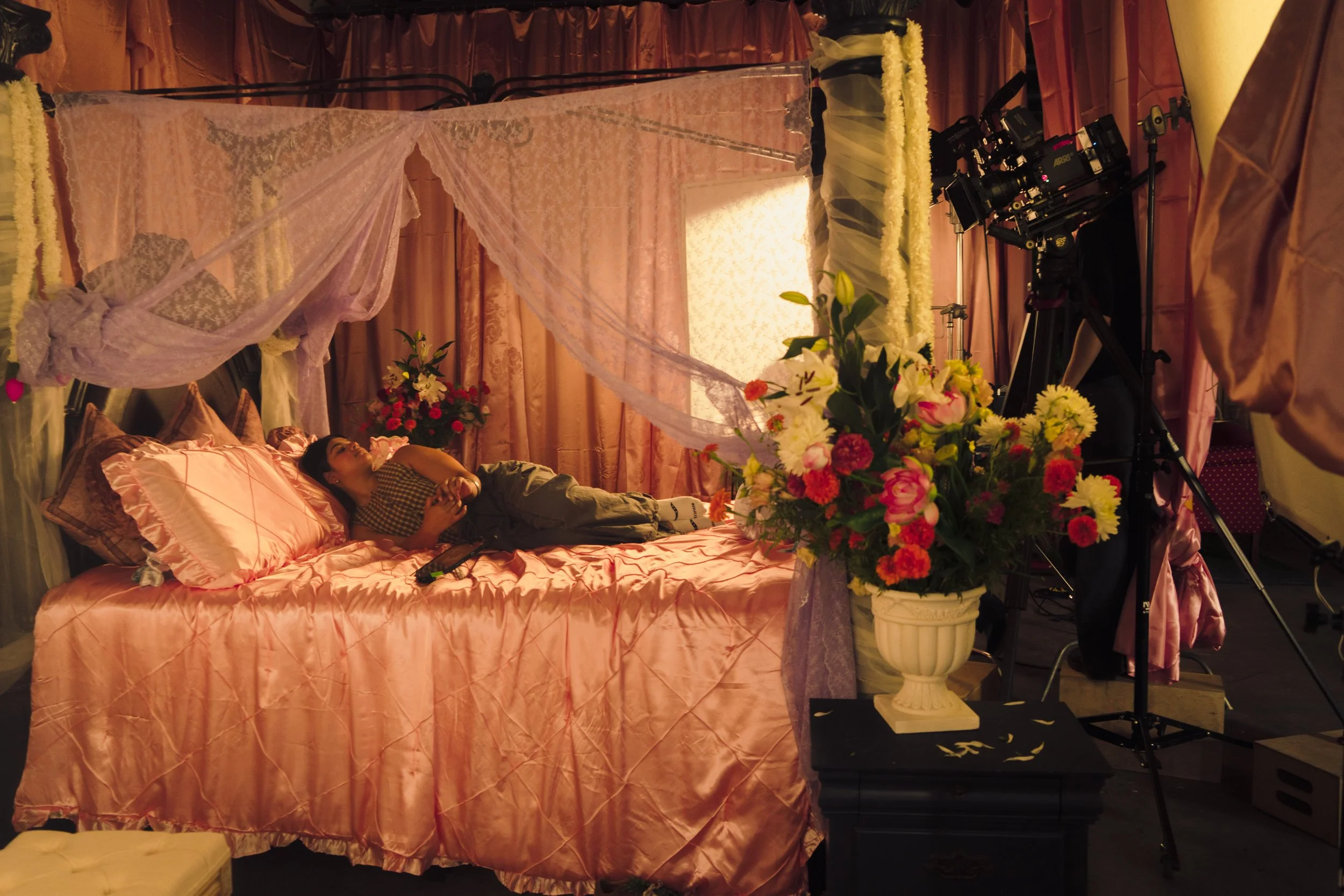
Image courtesy of Zayira Ray
Developing the visual identity of Desi Rococo’s campaign presented a unique challenge, as almost no historical precedents exist for blending South Asian aesthetics with Rococo motifs. During the research phase, Saxena drew heavily from a legendary still in Deepa Mehta’s 1996 film Fire—one of the first mainstream sapphic films in Indian cinema—which features two women sitting on a bed together, framed behind a sheer canopy. By anchoring the campaign in this lineage, the team bridged historical artistic movements with contemporary queer representation.“ It’s so important to acknowledge the women who came before us and created not only space, but also an audience for projects like Desi Rococo to exist,” says Saxena. Working alongside production designer Elsa Wong, Knopper, and photographer Zayira Ray, Saxena began to scout locations and make mockups and decks with the exact color palettes, fabrics and tones the team had initially envisioned. Glam leads Rumsha Hassan and Lydia Jakubowski were onboarded and created custom looks using South Asian fabrics in a Rococo silhouette. “ With every piece and person together, and hundreds of references, we were able to create & deliver a visual campaign that we’re all so proud of.”
“it’s so important to acknowledge the women who came before us and created not only space, but also an audience for projects like Desi Rococo to exist.”
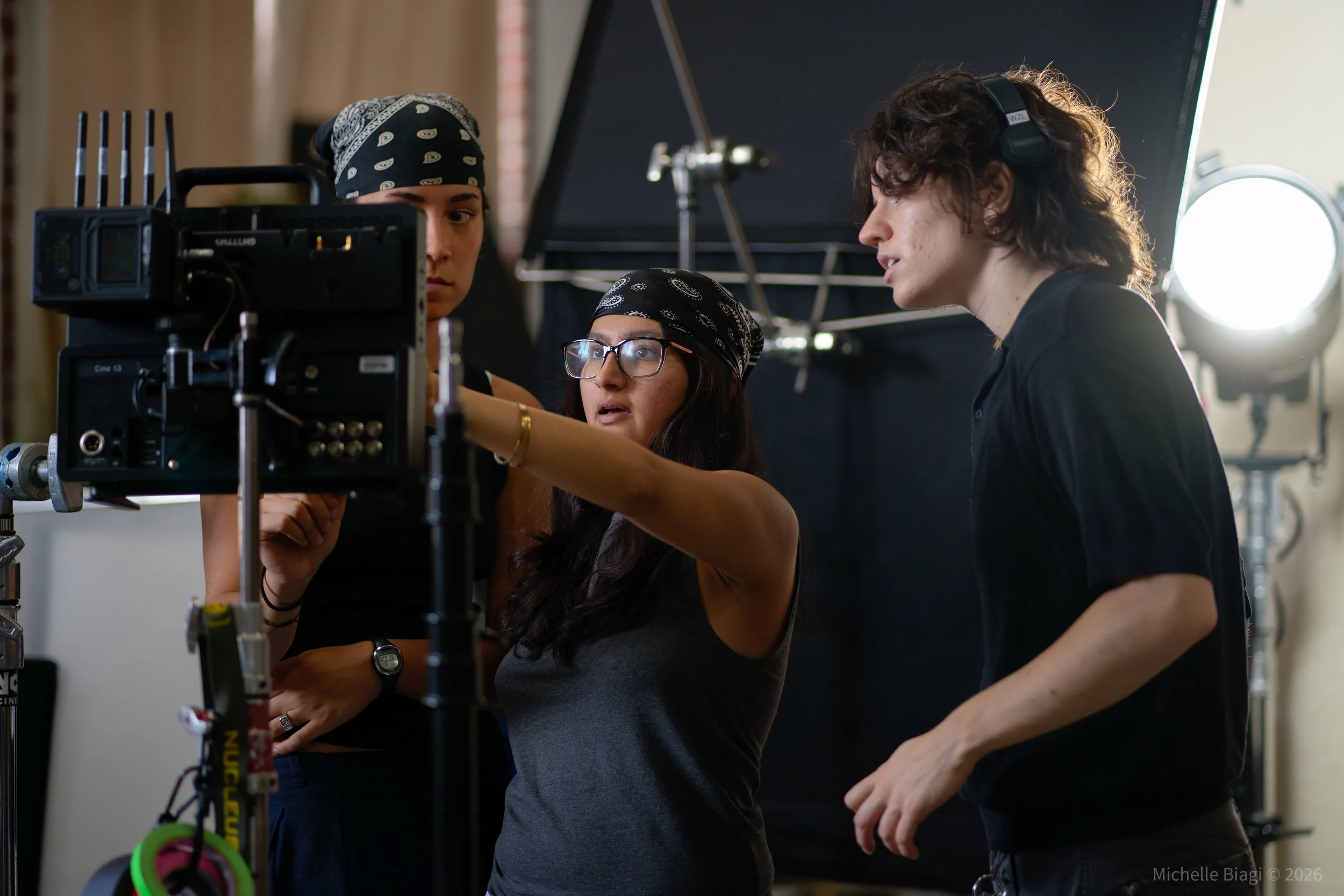
Image courtesy of Michelle Biagi
As Desi Rococo’s cinematographer, Knopper drew directly from her background in classical portrait painting“ For [this campaign], I got to revisit Rococo paintings. We talked about creating soft, painterly lighting with backgrounds that were darker than the foreground, as well as highlighting the opulent details of the production design,” says Knopper. When asked what drew her to the collection, Knopper praised Kaju Studios and their dedication to highlighting queer themes. For her, shooting this campaign meant straying away from commonly used techniques that center the male gaze.“ I think it’s important for the camera to not feel voyeuristic.” Desi Rococo shows queer intimacy in a sweet and realistic way, and Knopper played a big part in shaping that tone.
The responsibility of photographing the campaign fell to Ray, whose fine-art work has been featured everywhere from Vogue India to The New York Times and MoMA PS1. Ray’s approach relies on rapid trust-building through earnest kindness and respect.“ When I photograph someone, I am only focused on them. I think that genuine admiration can be felt, and that’s where intimacy begins,” says Ray. No matter who her subject is, Ray’s approach to connecting with and photographing people always remains the same.“ Human connection and love are the foundation of everything I create.”
“Human connection and love are the foundation of everything I create.”
Despite strict time constraints on set, Ray and her assistant Tarishi Gupta transformed a single strip of wall into a glowing backdrop, capturing striking portraits of Raveena and Avara within a brief one-hour window.“ It was such a comfortable, fun, and safe environment to play, giggle, and dream. It’s truly a testament to the importance of having a team that reflects the ethos of the larger vision, and of creating a process where everyone has a seat at the table.”
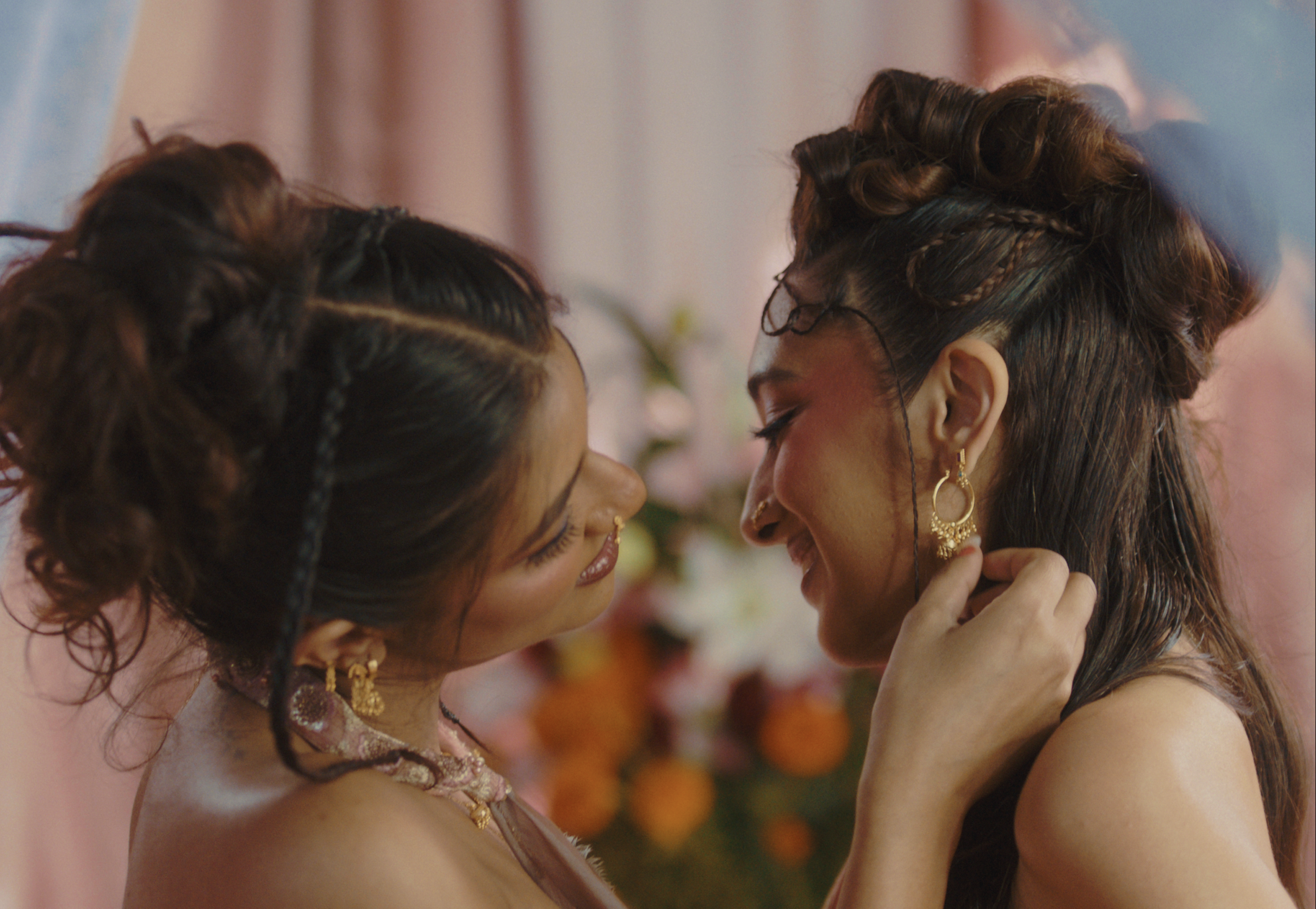
Image courtesy of Rose Knopper / Junk Flower Films
Ultimately, Desi Rococo sets a bold new precedent for commercial art. By pairing high-concept cultural commentary with a femme-led crew, Kaju Studios and Junk Flower Films actively demonstrate that commercial campaigns can honor heritage, subvert traditional storytelling, and deliver luxury on their own terms.“ It’s really special being able to see how far we’ve come from our early days,” says Bhikha.“ I’m so excited for our future and what we’ll continue to create with each other!”