Why Does Everyone Love Hello Kitty?
Written by Daphne Bryant
Growing up, one of my best friends had a Hello Kitty themed bedroom. It literally looked and felt like something straight out of a 2000s Sanrio store, and I loved going over to her house and being surrounded by stuffed animals, posters, and archival pieces.
While I can’t remember having a shrine of anything other than books, little me definitely resonated with the Hello Kitty character and thought she was so cute. As an adult, I like her even more (and I’m not the only one who thinks so). Hello Kitty, with its $80 billion empire, is one of the most successful and recognizable brands in the entire world. But...did you know she’s an anthropomorphic cat girl (?) that lives in London’s suburbs and is 5 apples tall? And have you ever wondered how she got so popular in the first place?
It all begins in Japan, circa 1974. Hello Kitty (whose real name is Kitty White) was first designed by a woman named Yuko Shimizu, and added to the lineup of early Sanrio Characters. Shimizu got the name Kitty from Lewis Carroll’s Through the Looking-Glass, in which Alice plays with a cat called Kitty. Sanrio decided to make Hello Kitty British, as Britain was particularly trendy in Japan at the time. Physically, Hello Kitty is characterized primarily by her red bow, white fur and lack of a visible mouth. In most depictions, she has the personality of a cute, bright, sweet, and pure-hearted girl who can do anything she sets her mind to.
Hello Kitty was officially launched in 1975, increasing Sanrio’s sales sevenfold. Many Japanese children gravitated towards the associated products (which makes sense considering the popular emergence of kawaii culture). UNICEF named Hello Kitty as children’s ambassador to the United States in 1983, children’s ambassador in Japan in 1994, and gave her the title of UNICEF Special Friend of Children in 2004. At first, Hello Kitty was only marketed towards children and pre-teen girls, but beginning in the 1990s, the brand found commercial success among teenage and adult consumers as well. From that point on, Hello Kitty cemented herself in pop culture as a lovable symbol that defied boundaries of age and region.
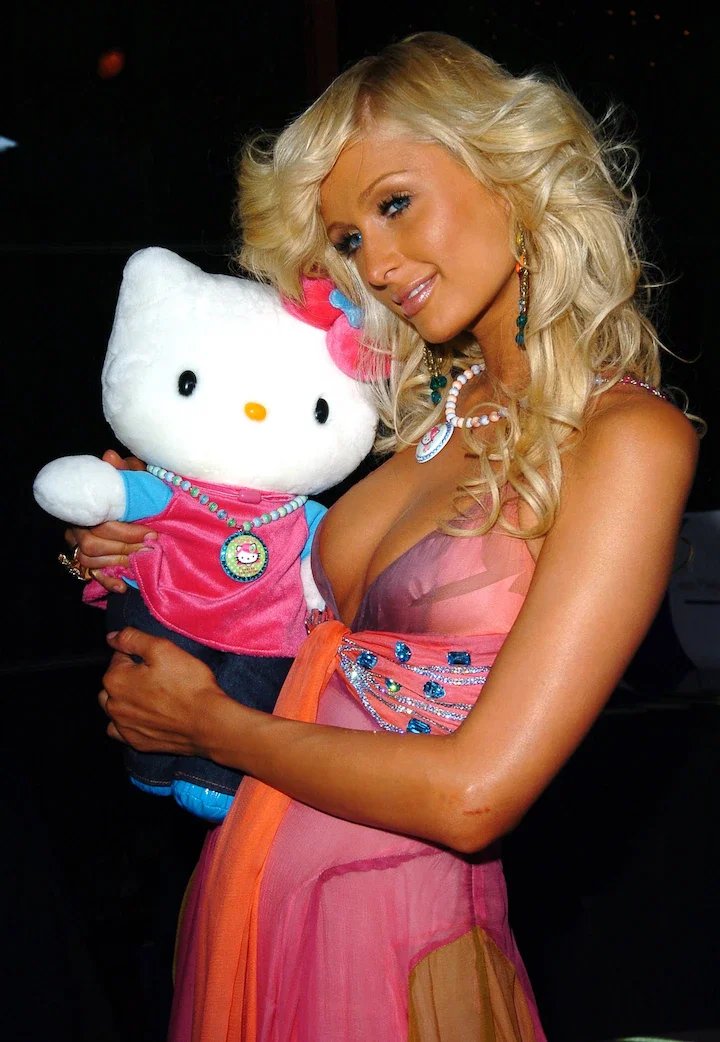
In the early 2000s, celebrity endorsements and collaborations with iconic designer brands such as Heatherette and Judith Leiber only helped the brand grow! Hello Kitty was no longer just a character that could sell toys and merchandise, but a trendy fashion statement and multi-generational emblem. Everybody loves Hello Kitty!
I think part of Hello Kitty’s appeal is her simplicity. She’s adorable, but she’s also a versatile blank canvas that can fit with so many different aesthetics: for instance, look at the difference between Punk Hello Kitty and Sea Paradise Hello Kitty. While Hello Kitty's first signature color was red and she often wore blue overalls, she has since evolved and experienced eye-catching changes in design, colors, and accessories.
I also think Hello Kitty is proof that young women make pop culture. After all, that’s who the character was originally for: young girls and women. It makes complete sense why my childhood bestie was so drawn to her and her story, and after writing this piece, I too find myself craving a plushie! Throughout time, Hello Kitty has prevailed as a nostalgic reminder to embrace the whimsy, be kind and take yourself out on an adventure!