The Art of Becoming: Tianyun Lan on the Memory of Garments, Building Cross-Cultural Narratives and More
Written by Daphne Bryant
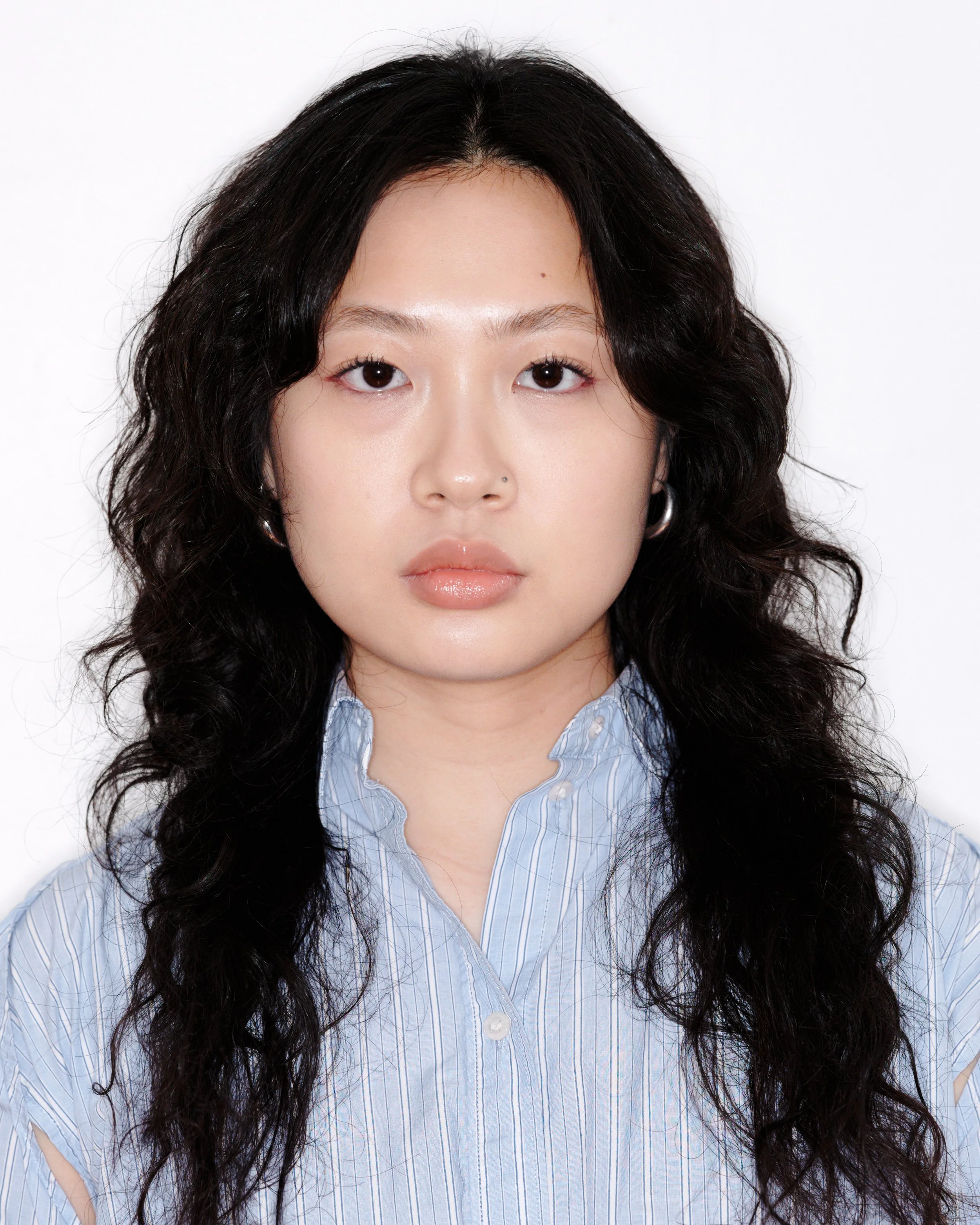
A couple weeks ago I had the great pleasure of sitting down to chat with Tianyun Lan, a New York-based stylist, visual artist and multidisciplinary creative whose enchanting work has been featured everywhere from i-D to Elle. Lan’s professional experience includes styling and creative collaborations with renowned brands such as Swatch, Collina Strada, The Webster, and Elie Tahari. Most recently, Lan served as Fashion Director and Show Director for the DRG China Program and as Casting and Styling Director for the New York–based brand ISEDER. Working across editorial, runway, and creative direction, Lan’s visual narratives and cross-cultural outlook are beyond refreshing and exciting! During our interview, we spoke about the power of immersive garments, zodiac signs influencing our artistry, how a few stains in your sweater isn’t the worst thing in the world, and the importance of staying curious! Read the full interview below <3
Naturally, as our conversation took place on April 1st, I had to start by tackling the matter of pranks. Lan laughs, reminiscing on her morning:“ I woke up to a bunch of, like, random April Fool’s Instagram posts. One was like,“ Oh, Jacob Elordi [has been] selected as the next creative director of Bottega Veneta. And I was like, what is going on? I saw a bunch of things like this, and it was confusing the hell out of me, and then I realized it’s April Fool’s Day. I don’t think I like [this holiday] very much.” While this particular day of clownery isn’t her cup of tea, the return of spring has brought Lan the promise of new work. “Now [that] it’s getting warmer, the creative scene is getting busier as well. I have three creative editorials on my calendar and I also have fashion artwork that’s being presented at [the AWITA] Gallery. It’s all very exciting!”
Lan is inspired by change, such as a shift in the weather or in day-to-day life. When it’s sunny outside, people are braving the city streets, and there are more events going on, it leaves more room for experimentation, and play.“ I think spring or summer always brings this feeling of openness as well. It helps bring people together and helps them collaborate in unexpected ways. That always happens in warmer weather for me,” says Lan.
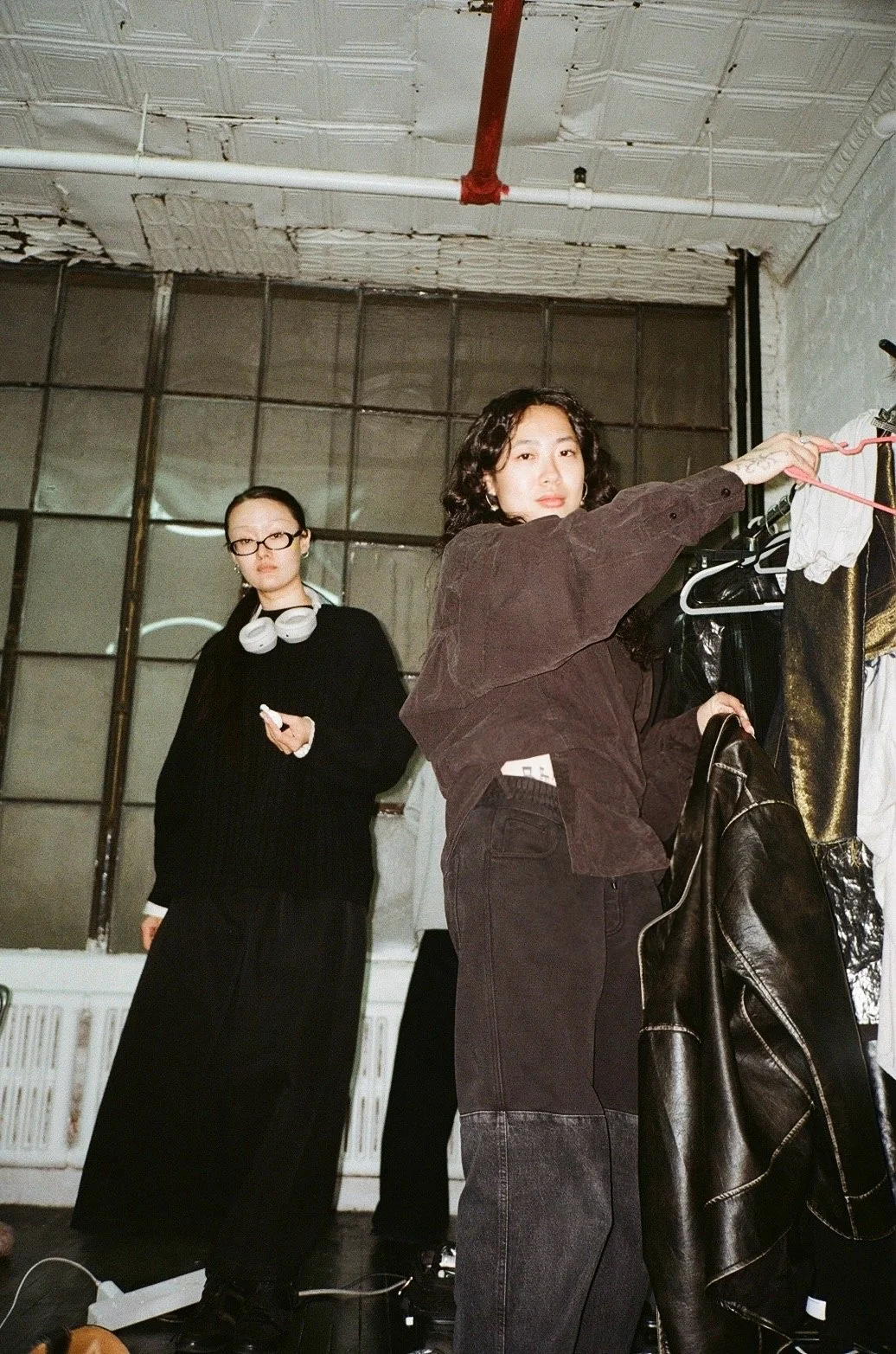
When Lan first fell in love with fashion, she was a young girl playing dress-up with Barbies and making up elaborate stories for them in her head.“ I would dress [the dolls] for the occasion, or the story. I feel like that [was] a very stylist thing for me to do,” says Lan. Her parents immediately picked up on Lan’s artistry and nurtured her talent, putting her in a number of art classes outside of school. Still, she didn’t truly know she wanted to do fashion as a career until she moved from her hometown, Chongqing, to LA and started meeting people in the industry.“ Something just clicked. I realized that fashion wasn’t just something aesthetic. It’s more a form of expression, almost like a language.”
Moving and traveling around the world has always been part of Lan’s life. Her parents loved seeing the world, and while she was growing up they would take her to a new destination every year.“ Putting me in school in the U.S. was life-changing. I [lived] in LA, New York, and then made a [personal] choice to move to London for an exchange program, and spent time in Athens, Greece [as well]. [All of those experiences] exposed me to very different ways of thinking,” Lan says. According to Lan, fashion is not universal in the way people sometimes think it to be. The same look and image could be interpreted in a completely different way, depending on where you are. Having lived and worked across China, the United States, and Europe, Lan brings a distinctly global perspective to her practice and translates cultural narratives into visual storytelling through fashion. Working across continents and cultures has certainly influenced and inspired Lan’s work, and taught her how to communicate nuanced ideas.
Lan starts by using Asia as an example: “ Working in Asia and working in the Western world [can] be very different in [terms of] pace and expectations. I think in Asia, you always have to be on your phone, or you’re expected to quickly respond when you get a message from someone, whether it’s for work or personal. The U.S. and the Western world [in general] is more laid back, more relaxed, [and] people are expected to have a personal life that they can sometimes prioritize over [their] work life. So it’s very different.” As a stylist, Lan intimately understands these differences in work style, incorporates them into her own, and uses fashion as a form of translation.“ I’m translating between people, cultures, and contexts.”
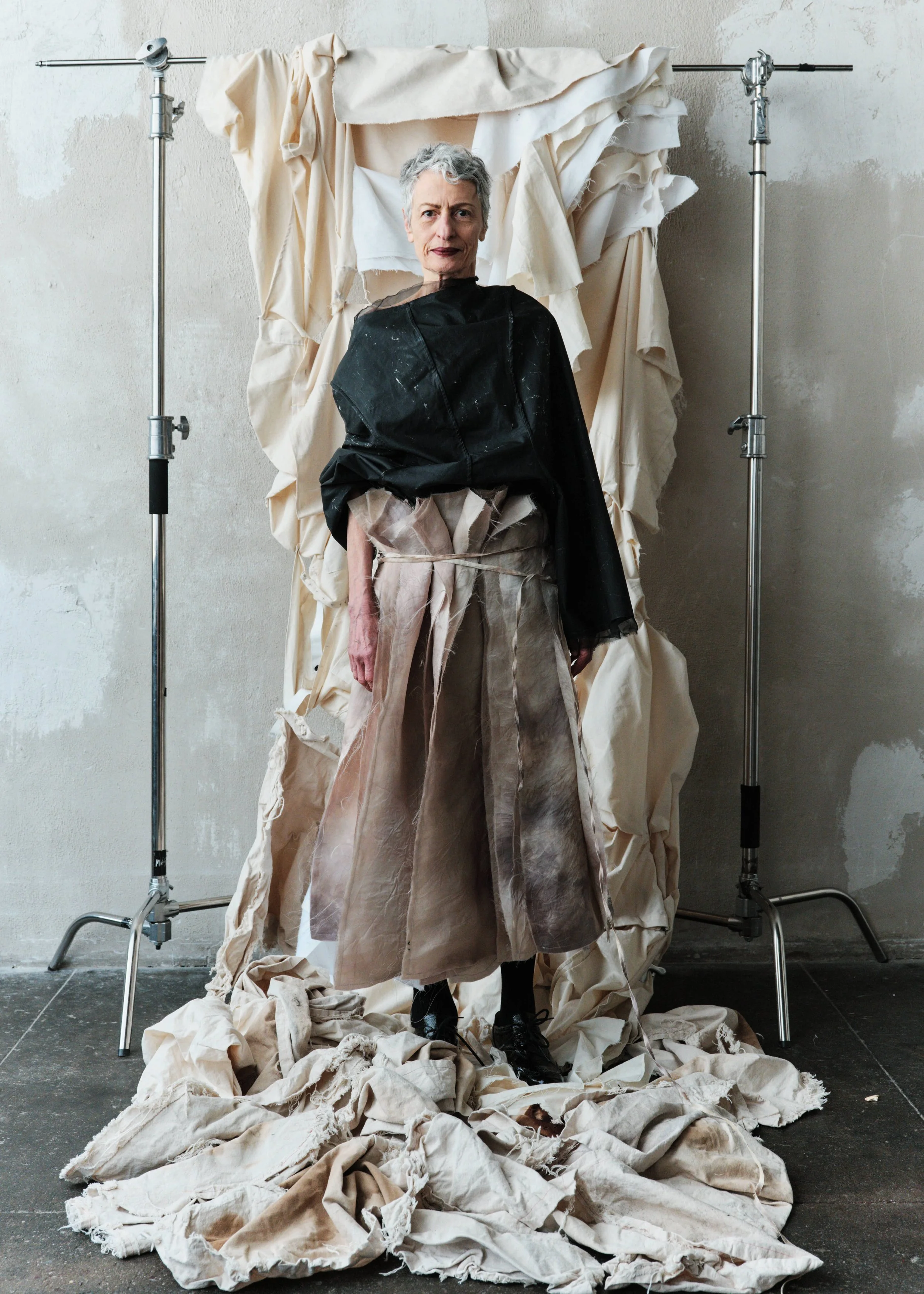
From Lan’s Impermanence Collection
As far as inspiration goes, Lan credits Yoko Ono as one of the biggest influences on her practice. In her work, Ono explores the relationship between people and objects in a way that feels very conceptual, and that mindset has shifted the way Lan views and interacts with garments and clothing. One exhibition that Lan saw at the Tate Modern was especially pivotal:“ You essentially [became] part of [Yoko Ono’s] artwork, and that immersive experience really made me think:‘ Wait, what should I do with my art, with clothing?’” Lan decided right then and there that she didn’t want to just make clothes that people could wear; she wanted to help people see clothing in a different way. As a graduate of Parsons School of Design at The New School, Lan continues to explore the lifecycle of garments through her styling and creative direction, challenging traditional notions of perfection and permanence.“ I think a lot of times when people buy something, they think‘ the condition that I’m buying this t-shirt in, it’s gonna stay that way.’” If it gets stained, people will try and clean it up. If it gets ripped, they’ll sew it up.“ I just wanted to challenge the idea of perfection.”
Lan’s latest fashion collection asserts that it’s okay to have stains, rips and even wrinkles from the wash. A garment has many lives, and we as a society should appreciate the journey, as opposed to erasing the memories and experiences our clothing holds.“ [Although it originated during my studies, this project was deeply personal], and I would have pursued it independently as part of my creative practice,” says Lan. She describes a sweatshirt that she always wears when she travels, how it’s been to so many places with her. The prints are coming off, the threads are coming undone, and there’s a huge pasta stain on the front. And yet? Every time Lan sees it, she’s reminded of when she was in Europe and how fun that trip was. She drives home the idea of memory collecting: that without technology, without our iPhone photos or Instagram dumps, we would still need a way to memorialize moments. Clothing, being an extension of our body and representation of our selfhood, can do just that, and it’s a sentiment Lan takes into her work everyday.
On set, Lan believes the role of a stylist is to be the storyteller and image maker. Everything, from clothing to accessories, from makeup to hair, builds the visual look for a photoshoot. Lan also emphasizes problem-solving:“ Styling is 80% problem solving, and then 20% image.” Something unexpected will always happen, whether it’s missing pieces, last-minute changes, or just high pressure for the entire week, so it’s important to adapt and find fast solutions.“ Putting outfits together is also very physical. For big [clients], I’ll have to go to, like, 10 different places in the city, grab a huge garment bag at each location, and bring it all back to my studio, which is in my house. It’s insane!” Lan explains. For her, being a stylist is just as creative as it is practical, and the work ethic needed to perform well is insurmountable. Of course, work that’s hard is also fulfilling.
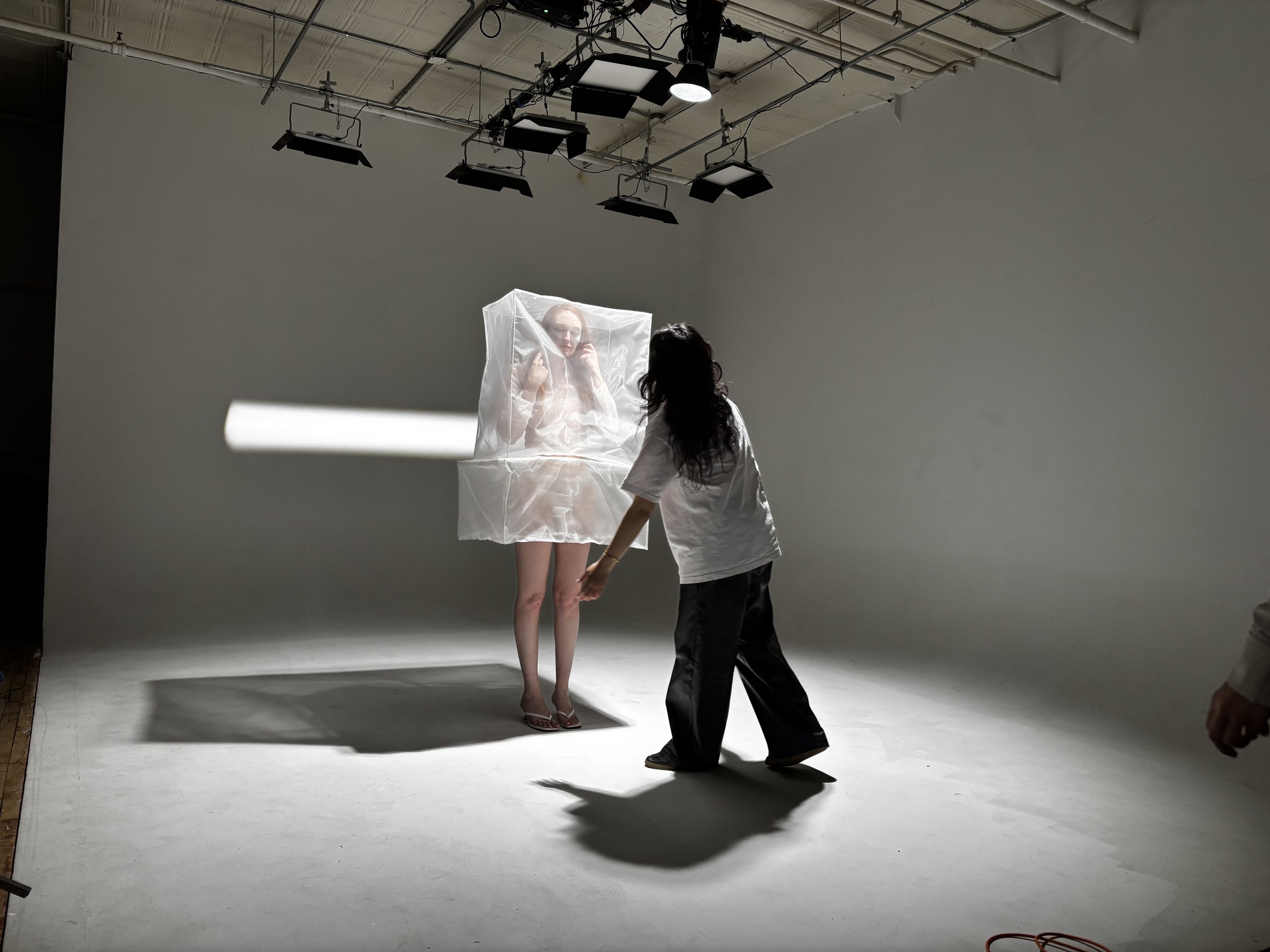
When it comes to big productions versus smaller ones, Lan genuinely loves and oscillates between both “ Bigger production usually means bigger teams, and it’s more structured as well. [There’ll be] producers on set, and they will try and plan out everything ahead of time. I think a lot of people like that more, just because it’s more organized. There’s a very clear end goal and it’s result driven,” says Lan. On the flip side, smaller productions are more chilled and often feel like hanging out with friends and fellow creatives. There also tends to be more space for creativity. “ Like, say, if I wanted to change something last minute, I usually will get the permission to do so. It’s more personal, and you can form very personal relationships when you go on smaller sets.”
Let it be known that I’m a firm believer in astrology influencing your creative habits, and was elated to learn that Lan is a Cancer.“ Most of my friends in the industry, or in the creative scene, they’re usually water signs!” says Lan. The talented stylist is also a Sagittarius Rising, an adventurous, sociable sign that almost directly rivals her sensitive Cancer Sun.“ [I] could be one or the other, just depending on the day. [It] really plays into my work as well. Professionally, I feel like sometimes I love to be [at] social events and connect with everyone, but other times I just want to be a Cancer and stay at home, or be very introverted and wait for someone else to come to me and start a conversation.”
Just like her astrology, Lan’s personal style is fluid and intuitive.“ Overall I would call my personal style gender-neutral, and balanced. I try to incorporate balance in everything I do,” says Lan, who embodies a mix of feminine and masculine.“ [I’ll] throw on [an] oversized t-shirt, like what I have on right now, and then oversized pants, but I like to [add] feminine touches, like jewelry and rings.”
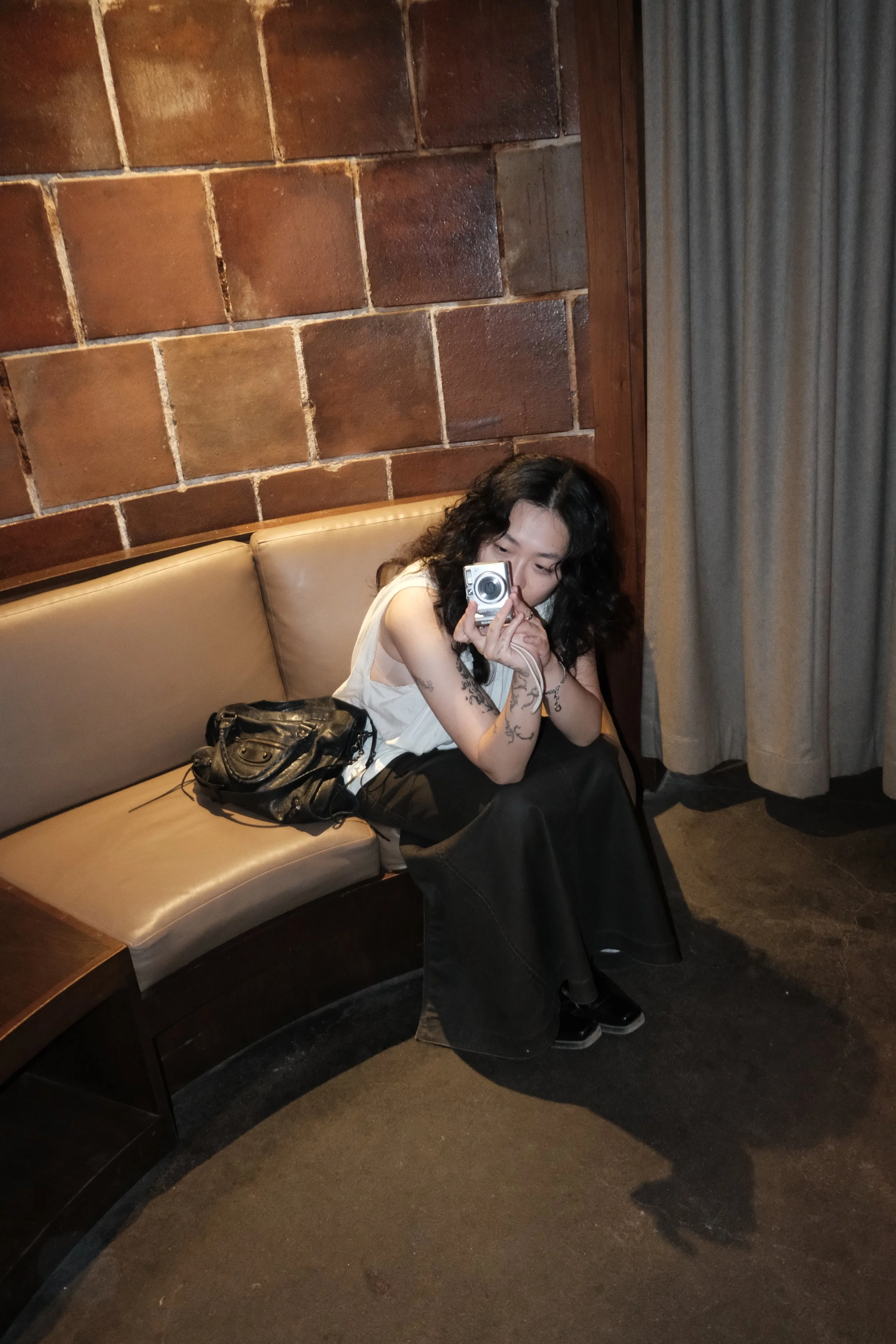
For any aspiring stylists out there, Lan’s advice is simple: don’t define yourself too quickly. A lot of people come into the industry with a solid idea of what they want to do, but that wasn’t the case for her.“ When I first started in the industry, I was working at different fashion studios, and helping out with the entire design production process. I thought that’s what I wanted to do growing up, and once I was there I realized that it's really not what I imagined, and I wanted to do something more physical,” says Lan. Exploring was key. Lan worked in many different parts of the industry before becoming a stylist: PR, marketing, casting, and it was casting that actually got Lan her first styling gig.“ I was working at this modeling agency and they were looking for stylists to do these little test shoots. I think they were struggling to find people all the time, and then the director looked at me, and said‘ You study fashion, right? Can you style?’ And I was like…‘ I haven't done it, but I can try, like, that sounds pretty fun!’” After that, the ball kept rolling, and with her resources and cross-industry connections, styling just made the most sense.
Exposing oneself to different roles and fields within fashion is nothing other than an advantage: it helps you understand the industry on a profound level.“ Also,” Lan adds,“ Stay curious. Even if you’re in fashion, your visual voice doesn’t need to come from fashion. It could come from how you observe the world, the people around you, different cultures, and different forms of art. That’s what makes it personal, that’s what makes it you.”