Sapphic Summer Reading Starts Now, with Sonia Feldman’s Debut Novel Girl’s Girl
Written by Sara Fergang
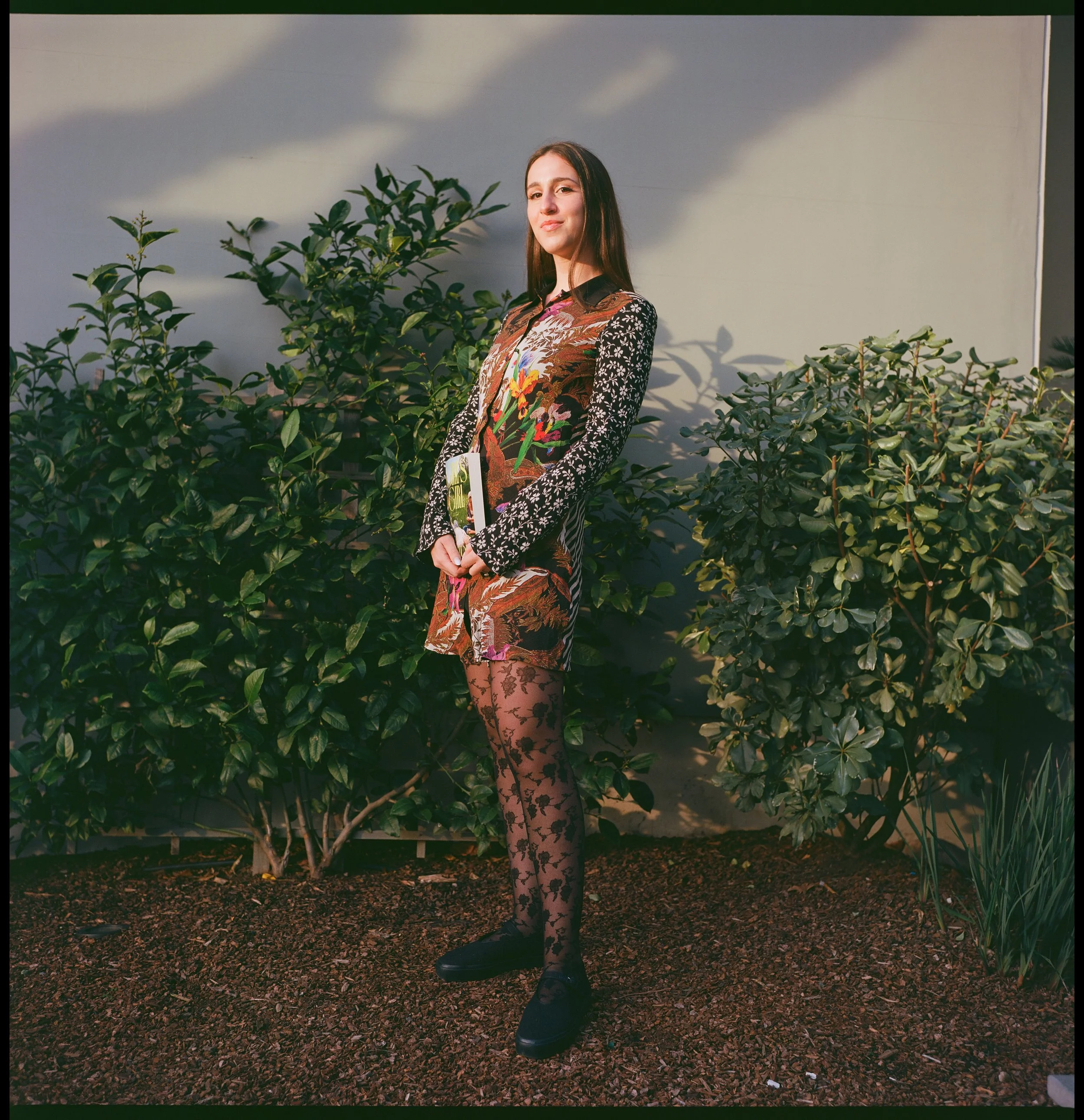
All images courtesy of Lizzy Montana Meyers
In the sticky, sweltering heat of a midwestern summer, the most important part of fifteen-year-old Mina’s life are her best friends: Margaret and Eleanor. Set in the backdrop of dewy suburbia, Sonia Feldman’s debut novel Girl's Girl examines what happens when an unexpected kiss between Mina and Eleanor changes the trio’s dynamic. As tensions rise, Mina’s relationships with each girl, herself, and her sexuality shift throughout the novel. Feldman’s coming-of-age debut portrays the quintessential experience of growing up: it’s nostalgic, it’s girlhood, and it’s quite possibly one of the best books I’ve had the privilege of reading.
I was even luckier to speak with Feldman and learn about her and the writing process behind Girl's Girl, how she crafted a novel that perfectly captures sapphic longing and friendship.
Like her characters, Feldman is a midwestern girl. Growing up in Cleveland, Ohio, reading and writing were always a central part of her life. Although she didn’t always want to be an author, her love of books prompted her to write a novel. And, thank goodness she did! In 2023, her debut short story won the PEN America PEN/Robert J. Dau Short Story Prize for Emerging Writers, and aside from fiction, her poetry has been published in The Southern Review, the Missouri Review, and Beloit Poetry Journal. Feldman also has a popular email newsletter where she shares one poem a week, along with analysis.
Feldman knew how important it was to write about girlhood before she was too far from that lived experience. She explained it was a“ race against the clock,” that she wanted to be as“ close to embodied reality” as possible. When reflecting on why she wrote Girl's Girl, Feldman told me,“ I’ve always had really close friendships with girls … emotionally close … physically close … very involved relationships.” In this novel, Feldman explores these intimacies from an adult point-of-view. Feldman especially wanted to know“ … what happens to the intense physical and emotional intimacy between girls when erotic desire is not just felt but actually acted upon … what happens when we move beyond the space of yearning … and ambiguity and into … the existing reality of their [Mina, Margaret, and Eleanor’s] friendship, and their relationships, and their relationships to their family … what does that actually look like?” By deep diving into these questions and searching for answers, Feldman was able to capture teenagehood without talking down to her readers.

The hum of an overheated laptop from a continuous game of the Sims, the feeling of loose strands of hair from a french braid brushing against your neck, a bedroom blanketed with the scent of mom’s perfume, and leftover powder blush caked onto the bathroom counter. As I was reading Girl's Girl, I was transported back to those sluggish and clammy adolescent summers, where each day melted into one another and group hangouts ended with mandatory loitering at the local Walgreens. Mina’s voice and experiences were relatable. Feldman explained to me that she wanted to depict Mina operating from a place of not knowing:“ A teenager has the full intellect of a human being, they just don’t have the experience to temper or interpret that innate intelligence.” The inner life of a fifteen year old isn’t frivolous or unimportant, Feldman understands that, and this is why Girl's Girl works so well. Feldman wanted to ensure that Mina’s voice was one of“ deep analysis and preoccupation.”
One of my favorite aspects of the novel was how it examined questions about queer identity and sapphic longing without pressures of homophobia. Mina’s sexuality is just a part of her character, and while it fuels the conflict of the book, it’s not the main conflict.“ Mina is not up against homophobia, she’s not up against violence, nobody in her life would receive her sexuality as bad news … that is the starting place, and yet the presence of queer desire is incredibly disruptive to the social rules of her life and she still needs to go through the process of figuring [that] out within the context of this friendship,” says Feldman.
“Mina is not up against homophobia, she’s not up against violence, nobody in her life would receive her sexuality as bad news … that is the starting place, and yet the presence of queer desire is incredibly disruptive to the social rules of her life and she still needs to go through the process of figuring [that] out within the context of this friendship.”
With Girl’s Girl, Feldman investigated how social scripts for heterosexuality versus homosexuality, especially as one is growing up, can change one’s personal narrative. The social script regarding queerness and queer desire is more ambiguous. Feldman felt it was important to show Mina in different states of intimacy with both Margaret and Eleanor, and how one draws the line between intimacy and sexuality when it comes to self-exploration. She also wanted to break the mold, sick of reading stories where the interest between each girl is justified by violence or abuse. Feldman’s goal was to ensure her book was complicated and emotional without the looming threat of death.“ It was very important to me to lay out a sapphic love story where the characters do get together and aren’t punished … we just have to keep living the next day, and the next day is quite complicated.”
“It was very important to me to lay out a sapphic love story where the characters do get together and aren’t punished … we just have to keep living the next day, and the next day is quite complicated.”
Another plus? The settings in Girl's Girl are so atmospheric. I relish the trio swimming in Margaret’s pool, laying in an open field, galavanting at a midwestern fair, and dressing up for casual dinners at a local restaurant. Pulling from her memories of growing up and now living in northeast Ohio, Feldman wanted to show that romance and transcendence could happen anywhere. Girl's Girl is truly Feldman’s love letter for the place she’s from. She explained to me that the settings are a mix of multiple realities from her memories and made a point to include animal life and ambient natural life. Readers will find an Ohio-specific easter egg in the novel: the phrase “tree lawn.” According to Feldman, this is what native Ohioans call the stretch of grass between the sidewalk and street. Although the girls in the novel are in a confined setting, Feldman did this intentionally, toying with all of the locations her characters could access on foot and on bicycle. In most coming-of-age novels, the young protagonist reaches transcendence by escaping their hometown and making something of themself, but for Girl’s Girl, Feldman knew it was important for readers to know you don’t have to leave everything you know to become a person. Here, tension and desire are explored in a domestic, familiar environment.
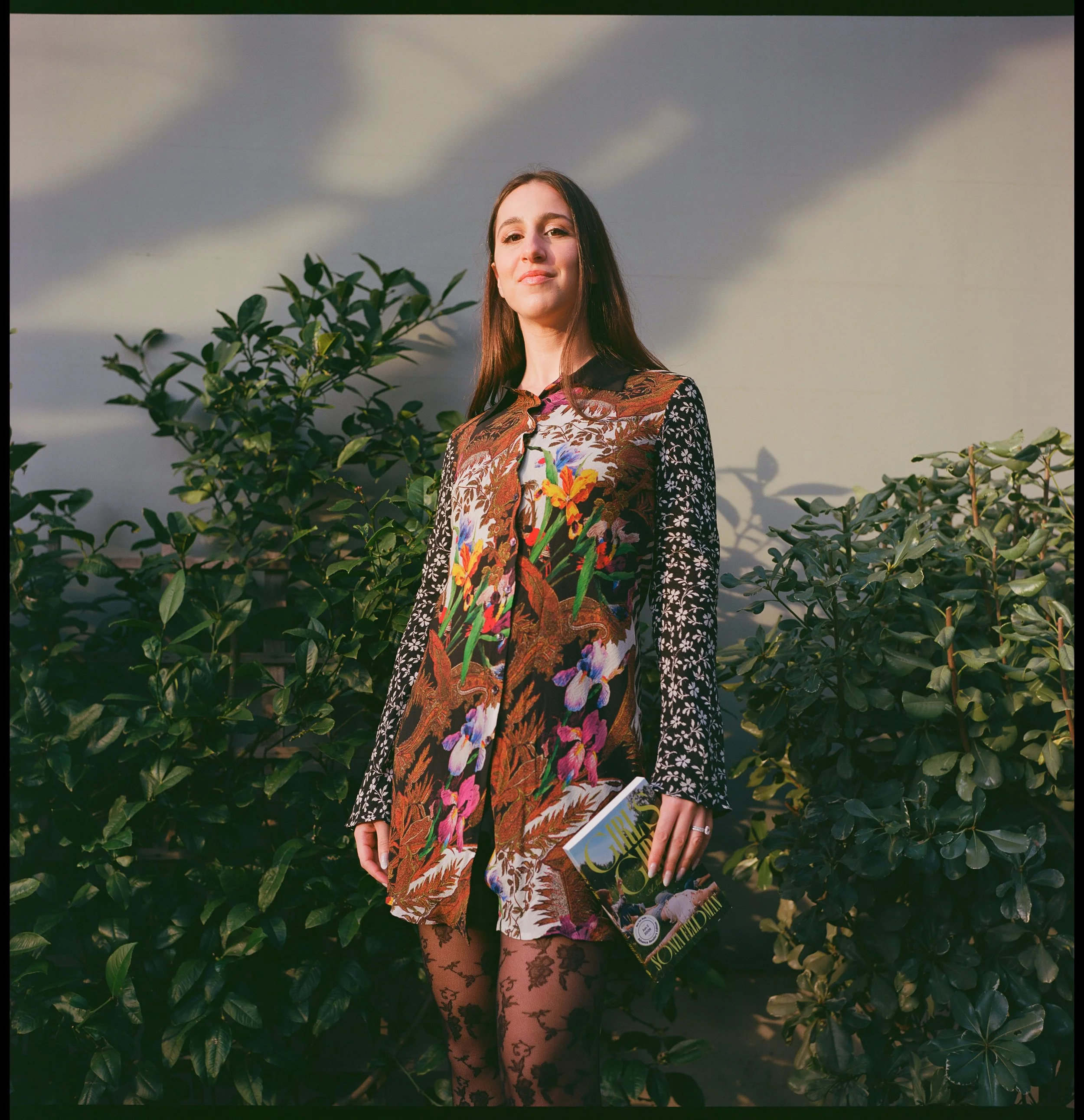
According to Feldman, Girl's Girl“ is a book about different ways of loving: romantic, familial, amicable, sexual … there’s all these different threads of love that are running between the characters. Recognizing that different types of love inform each other and teach us who we are and teach us how to love each other better … there’s modes of care that reappear under different context between the different relationships.” Feldman wanted the novel to depict how loving another person changes who you are and teaches you how to not only love others, but yourself. The novel isn’t just a snapshot of the adolescent experience. No matter what stage of life the reader is in, they can take a lot away from the lessons in Girl’s Girl and how vital a backbone of love is in our relationships with one another and overall sense of self.
The first time Feldman wrote down the characters of this novel was in 2016, and ten years later, the world is getting to know Mina, Eleanor, and Margaret intimately. As stated earlier, Feldman’s been sharing her writing with readers through her newsletter:“ Sonia’s Poem of the Week.” This weekly newsletter is sent out every Friday with a poem, occasional interviews with contemporary poets, and commentary. When I asked her about her future as an author, Feldman told me that she’s also working on writing another book, which I will be not-so-patiently waiting for. And currently, to go along with her debut, she’s created this adorable snail mail campaign for one-hundred readers who preordered the novel. Seeing an author so passionate about her work and the publishing process is just so inspiring and helps to build its much-deserved hype. Reading books by debut authors is super important, so please check out Girl’s Girl at your favorite indie bookstore or local library. You can also order a signed copy here.