Bridezillas and Bust-ups: The Nightmare Weddings of 2026
Written by Lara Abbey
Back in January, model-photographer-chef extraordinaire Brooklyn Beckham announced his estrangement from his parents—the definitively early-aughts power couple David and Victoria Beckham—via Instagram Stories, claiming a pattern of controlling and manipulative behaviour. What seemed to pique the public’s interest most of all, however, were the events that Brooklyn alleged occurred at his 2022 wedding to Nicola Peltz, including Victoria dropping out of designing Nicola’s dress at the last minute, and reportedly calling Brooklyn and Nicola“ evil” for having nannies sit at their table instead of their parents. The internet was set ablaze with theories on what constitutes‘ inappropriate mother-son dancing’, alongside Victoria’s single‘ Not Such an Innocent Girl’–over twenty years old, and reaching No. 1 on the charts for the first time.
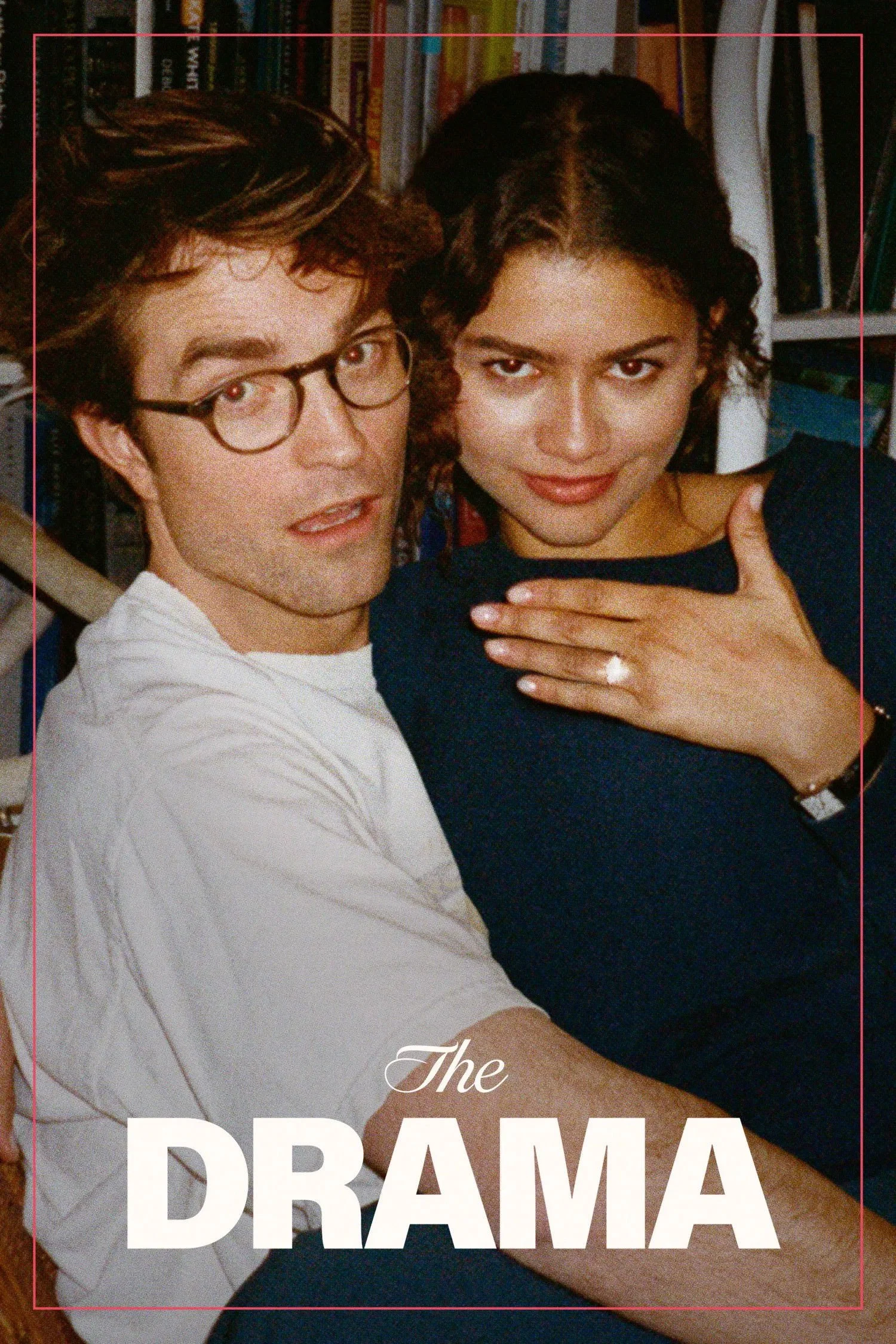
The widespread coverage of this fallout seems to have prefigured the most talked-about fictional weddings so far this year, with The Drama, Cassie and Nate’s wedding in Euphoria, and Something Very Bad Is Going to Happen forming a real nexus for some of our most pressing societal fears: social division, the return to conservative values, the cost of living crisis and heterofatalism.
The Drama centres around a couple’s picture-perfect wedding that is derailed when the groom, Charlie, discovers a shocking secret about his bride, Emma (to spoil it, the secret is that Emma planned a school shooting when she was a teenager). Afterwards, the wedding and the events leading up to it operate as a site of social divides across practically all lines.
At the beginning of the film, Charlie rehearses his speech with his best man Mike, which is intercut with Emma and her boss/maid of honour Rachel; the viewer can tell they exist very‘ separate spheres’. There are plenty of other moments related to gender and gendered expectations. For example, Emma makes an offhand comment about the attention that being a girl in‘ school shooter spaces’ garnered her. This novelty, or unexpectedness, of female violence returns when Charlie is stewing on his memories with Emma, trying to see if there were any warning signs he could’ve picked up on. He first remembers a moment where they were almost hit by a car at a crosswalk; Emma lashes out at the driver, who responds with“ control your girlfriend”. Then he remembers a time during sex when Emma slapped him across the face – again pointing towards female aggression as abnormal, something that men need to keep a handle on.
In the very last scene of the film, after their disastrous wedding, the two find each other at the diner where they first met and re-do their initial introductions. Charlie jokingly spins a tale about saving a baby from getting stolen in order to explain the blood on his face. Unlike Emma’s violence, Charlie’s is completely justified — invoking an idealised, heroic version of masculinity.
Class and respectability politics are also a huge sticking point in The Drama. What eventually leads to the reveal of Emma’s secret is the moment that she and Charlie come across their wedding DJ smoking heroin in the middle of the street. When they relay this to Mike and Rachel, the former offers up that the problem is“ more the fact that she was doing it out on the street” — it's not the drug itself, it’s the publicity that threatens their notions of propriety. Interestingly, Emma initially somewhat defends the wedding DJ, which points towards the idea of her being an outsider. We learn that Emma grew up travelling around the country as a military brat, planning the shooting in the Deep South of Louisiana. She eventually settled in Massachusetts—the heart of New England and the birthplace of WASPs. Emma even pairs off with a British man—the WASP progenitor—and, as outlined in this post from the Substack Freya’s World, takes on his upper-middle-class identity.
The differences between Emma and Charlie in terms of culture and age act as further divides, and I would argue they are the two biggest reasons as to why Charlie can’t understand Emma’s actions and his subsequent spiral. As a Brit, Charlie comes from a part of the world where mass/school shootings are virtually nonexistent. Additionally, in a mockup wedding announcement to advertise the film, Charlie and Emma are listed as 42 and 30 respectively. As such, it makes complete sense why Charlie is dumbfounded when the BRAINROT photography book, featuring sexualised pictures of girls with guns, arrives on his desk, despite Emma explaining that very similar aesthetics drew her to the act in the first place.
Unlike Emma, Charlie wouldn’t have been exposed to these images that cloak gun violence in a certain panache at such a formative age. When confronted, the concept is completely alien to him. Finally, whilst race is woefully underexplored in the film, we do see it crop up when Rachel tries to further hammer home that there must be something inherently wrong with Emma, pointing out that Mike grew up around guns and didn’t plan a school shooting. Mike corrects her: the only person who had a gun was his uncle, a cop—the implication being that Rachel assumed Mike’s upbringing carried a greater threat of violence due to his race, which may partly explain why she reacts with such severity to Emma’s confession.
In the third episode of the latest season of Euphoria, we see the much-anticipated wedding between Nate and Cassie, the Gen Z equivalent of the Charles and Diana wedding, and it is similarly doomed. As in The Drama, the trouble starts well before the wedding itself. In the first episode of the season, Nate walks in on Cassie creating OnlyFans content, and tries to get her to stop by assuring her:“ you don't need to worry about money, I’ve got money”. When Cassie offers to“ chip in”, he shuts it down with a simple no. Later in the episode, Cassie asks Nate for $50,000 worth of floral arrangements for the wedding; when he quashes this, Cassie offers to pay for it herself via OnlyFans.
Predictably, Nate’s upset by this suggestion—but at least part of his bruised ego seems to come not just from Cassie’s choice of work, but the fact that she feels the need to work at all. We can see Nate’s adherence to conservative values through his insistence that Cassie be a stay-at-home wife with no income of her own, in turn reinforcing his own masculinity by being the‘ breadwinner’. This reflects the rise of the tradwife—the idea that women should stay at home and focus on cooking, cleaning, and childrearing, which has proliferated on social media since the beginning of the decade.
These gender roles become more explicit during the ceremony itself. During Cassie and Nate’s first dance, Nate‘ lasso-es’ Cassie towards him, with his final pose being a bodybuilder-esque flex of the biceps as Cassie stands in front of him, as if to imply protection. It’s also during the ceremony where Naz, a loan shark who gave Nate money to fund his venture, threatens Nate regarding his outstanding debt. Although Nate’s situation is highly exaggerated compared to the more mundane but still painfully constant financial pressures the audience is more likely to face, I still think it speaks to how economic pressures complicate the‘ tradwife ideal’. This is even pointed out by Cassie when she confronts Nate regarding the debt: how (and why) should she be the“ perfect housewife”, performing all of the domestic labour, when Nate is unable to be a sole earner?
Whilst the aforementioned films and shows project a rather cynical view of straight couplings, the Netflix show Something Very Bad Is Going to Happen is heterofatalistic in the most literal sense. Heterofatalism is a term coined by Asa Seresin in 2019 to describe (especially straight women’s) pessimism towards heterosexuality and its consequences, the belief that straight unions are inherently doomed to dissatisfaction. Something Very Bad revolves around Rachel, who is revealed to be cursed and will die if she marries someone who isn't her soulmate. At some points, this reads as relationship anxiety or OCD, with the premise itself requiring Rachel to ruminate on whether Nicky, her husband-to-be, is‘ the one’. However, more prominent are the allusions to marriage as, at best, a loss of identity and, at worst, a death.
After the show’s cold open, we see Rachel and Nicky driving to the wedding venue, listening to a podcast narrated by the survivor of a serial killer who recounts what she did after the brutal attack. She describes the feeling of bleeding out, being near death, as“ the same way she felt on her wedding day”. In the penultimate episode, Rachel tries to overcome the curse with a potion containing her own severed toe, the second appearance of one in wedding-related media this year, that will transform her into Nicky’s soulmate. This ritual is likened to becoming“ a Stepford Wife”,“ a lobotomy” and“ living as a version of [herself that she] won’t recognise”. It implies that a loss of self is inherent to marriage.
The horror presented by the show extends to the trappings of heterosexuality – namely, children. In the first episode, Rachel and Nicky discuss the risks of childbirth and parenthood (bones and organs moving, raising creepy or haunted children), and in the second Nicky’s mother, Victoria, claims that“ the mother absorbs her children, and vice-versa”. This hints towards the loss of self that many women experience upon having children, with their identities often reduced to simply‘ mother’. This line becomes all the more interesting when it’s revealed that Victoria is dying of a brain tumour, perhaps implying that this‘ absorption’ is akin to a cancer, — one that will eat its host from the inside-out.
Historically, marriage as an institution was born out of a need to secure wealth and status, establish a bloodline, and to ensure men ownership of property ,namely their wife. All in all, it’s safe to say that the weddings we’ve seen onscreen this year have been memorable, and unfortunate. To end on a note that’s not such a downer, weddings and marriage have appeared in stories for as long as they’ve been a practice and, as we’ve seen here, have reflected wider social attitudes of the time. This Nylon article traces the evolution of the‘ wedding’ movie, from the 80s patriarchal hangover of 1991’s Father of the Bride, to the literal girlboss-ing in 2009’s The Proposal. Who knows? With the romcom resurgence of the past few years, maybe we’ll soon be in for some light, frothy comedies that celebrate the love between two people. We can only hope.