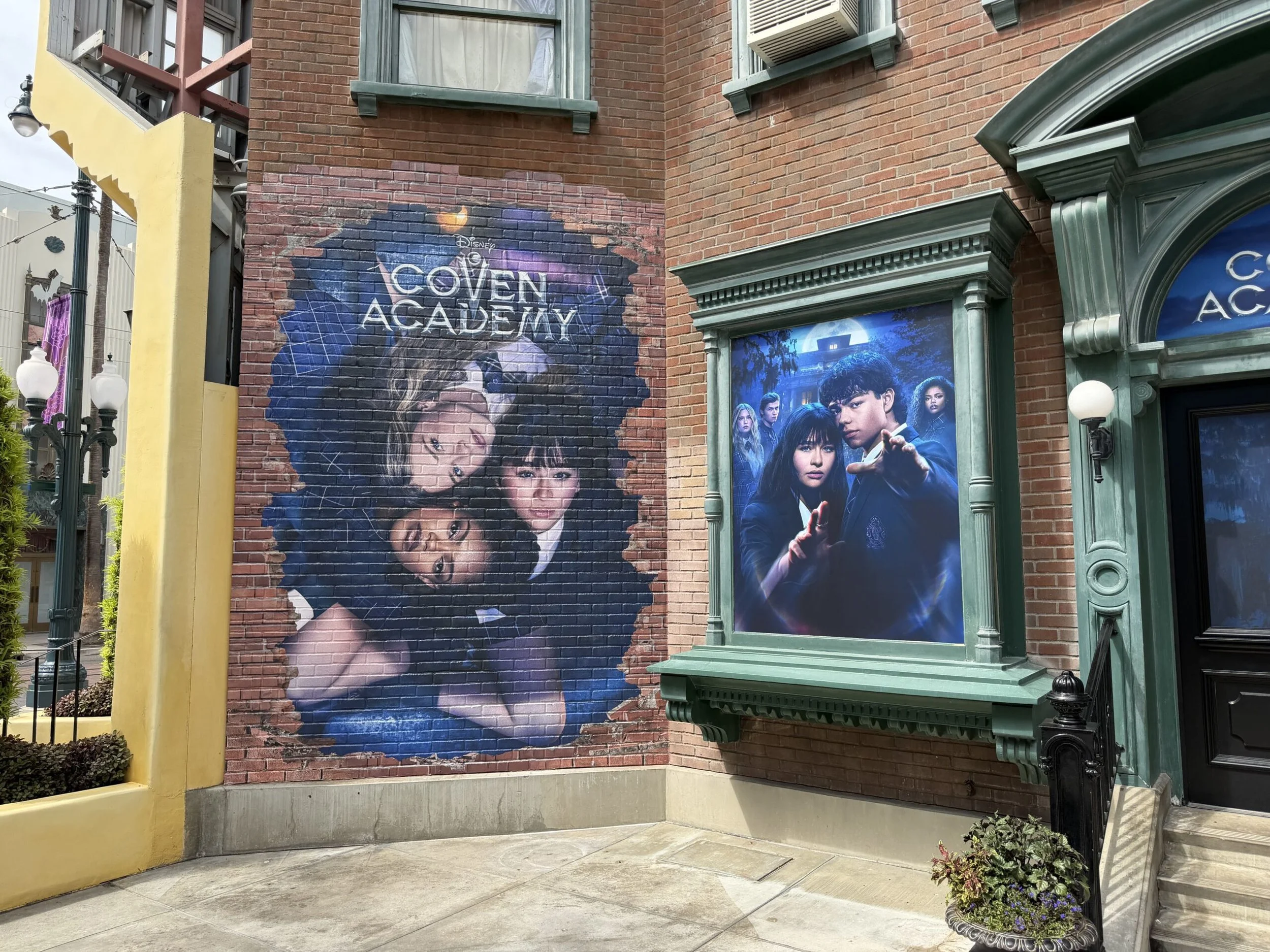
Next-Gen Witches: How Coven Academy Carries On the Tradition of Trashy Teen TV
Written by Daphne Bryant
*Spoilers Ahead!
Just in time for spooky season, Tim Federle’s Coven Academy has made its official debut on Freeform, Hulu and Disney+. The supernatural comedy-drama follows teen witch apprentices and warlock peers at a magic boarding school. It doesn’t reinvent the wheel, but the series is a fast-paced, stylish blend of mystery and classic boarding-school drama. Admittedly, I was feeling the buzz.
The series unabashedly leans into classic YA tropes. Drawing inspiration from media such as The Vampire Diaries and The Craft, the plot weaves together witches, vampires, dark ancient rituals, and high-school politics. I appreciate that Coven Academy establishes a nasty rift between witches and any creature deemed“ demon-blooded”; this hostility adds real friction to the social hierarchy, driving several of the season’s core mysteries. Its central murder mystery, that of who killed the main character Briar’s mother, is a strong forward-moving engine for many episodes, though seasoned genre fans may find a few of the major twists fairly predictable. Nevertheless, the series excels at creating an high-stakes environment where every corridor seems to hide a new secret.

Briar, played by Malina Weissman, is a“ troubled girl” full of spunk and a tangible distaste for authority. Personally, I think Weissman does a great job leading the show. Briar balances a sarcastic, guarded exterior with raw vulnerability as she uncovers her late mother’s history at the academy. Though at first the narrative thrusts her into impulsive, eye-rolling decisions, the more she opens up to other characters, the more likable and grounded Briar becomes.
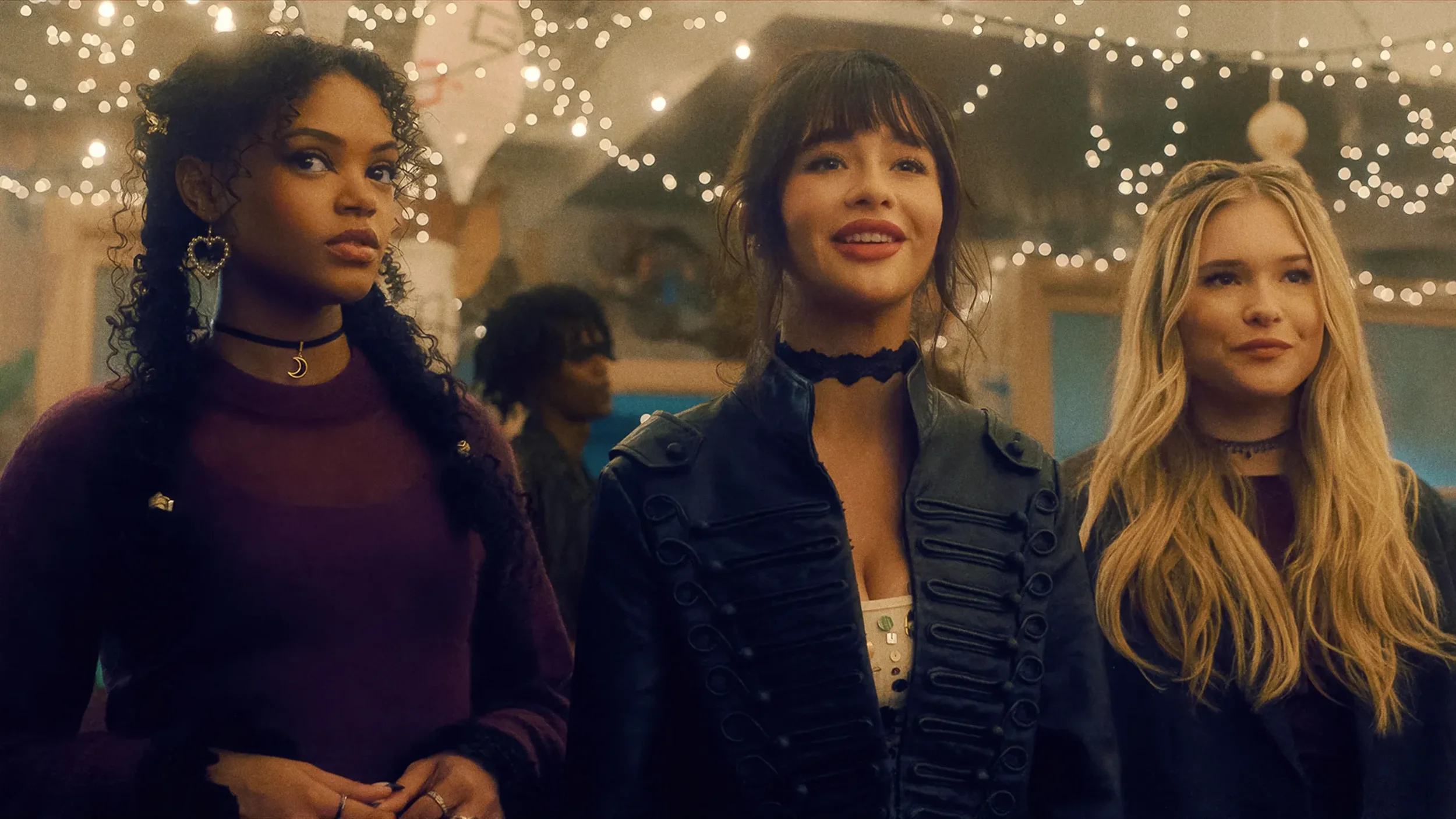
While some of the show’s dialogue and acting can be extremely cheesy, the head-turning twists and emotional core keeps viewers engaged. A diverse group of female directors stepped in across the season, bringing flair and sensitivity to specific character-driven episodes. Sisterhood is, arguably, one of the most resonant and enjoyable parts of the show. The core trio: Briar, Sasha (Jordan Leftwich), and Tegan (Ora Duplass) share a complex bond as an aspiring coven, and navigate ups and downs together—both as witches and friends. It is their girlhood and chemistry that anchors Coven Academy.
“Sisterhood is, arguably, one of the most resonant and enjoyable parts of the show. The core trio: Briar, Sasha (Jordan Leftwich), and Tegan (Ora Duplass) share a complex bond as an aspiring coven, and navigate ups and downs together—both as witches and friends. It is their girlhood and chemistry that anchors Coven Academy.”
Something else I thoroughly enjoy is the emphasis on family, identity and unpacking the two. Throughout the show, the characters navigate trauma and their relationships with deceased or overbearing parents, the emotional fallout of family secrets passed down through generations, all while trying to master volatile powers. Family is so crucial, but so complicated, and I think that the series does a really great job of illustrating that for a younger audience.
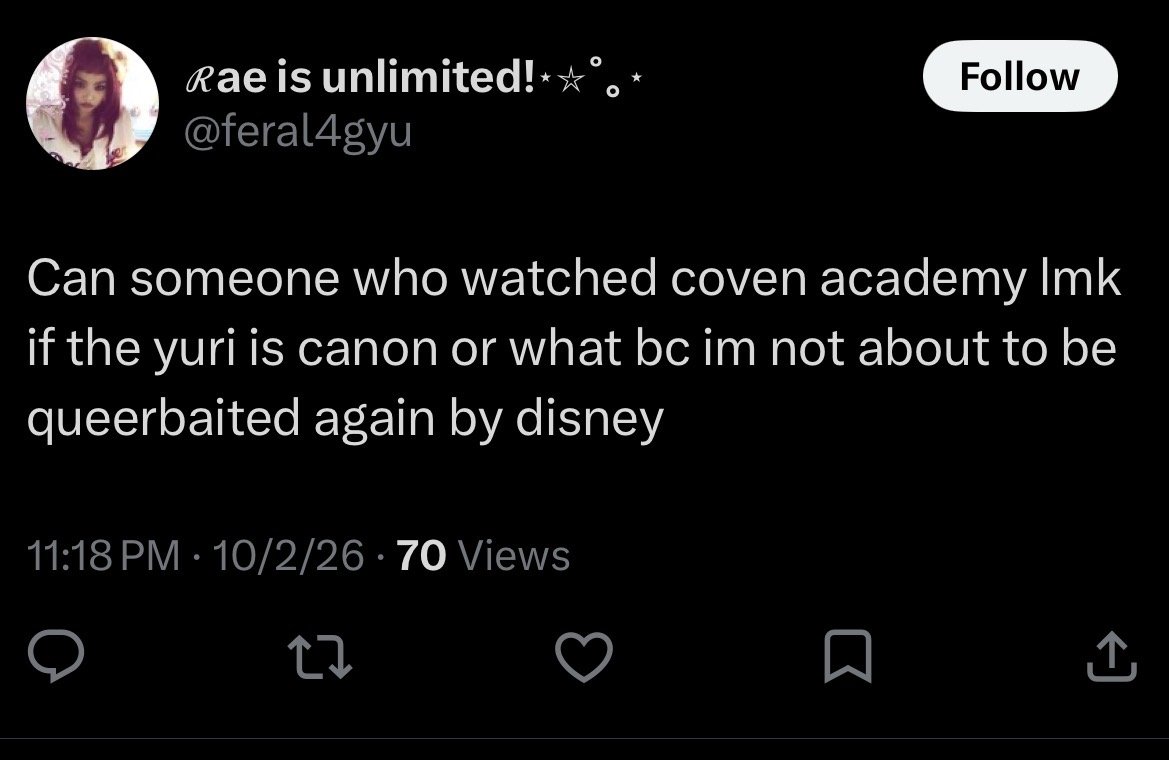
Conversely, I found the love triangles vexing. The writers rely on tired formulas that drain time away from the more compelling dynamic of the girls mastering their unique, individual powers. And by the way, none of the canon romantic pairings moved me. It’s telling that I felt most intrigued by what could potentially be queered as homoerotic tension between Ollie (Louis Thresher) and Jake (Malachi Barton), or by the incredibly subtle connection between Mr. Cole (Devon Sawa) and Miss Graves (Tiffani Thiessen). It’s also telling that the show’s only sapphic subplot, that of Tegan and Swayam Bhatia’s character McKenna’s slow-burn, came as a complete surprise to me. Not only does their build-up feel largely platonic, but it takes the entire season for them to even realize their feelings—when McKenna asks Tegan if she needs to“ spell it out for her”, I looked at the screen, cocked my head and thought:“ actually yeah! You need to spell it out for me too.” It’s frustrating that so much attention was given to the straight romances in the show, whereas Tegan and McKenna’s romance felt somewhat underbaked. I guess I’ll give them a pat on the back for including yuri at all, but still…truly such odd execution.
Now, it’s important for me to acknowledge that Coven Academy falls victim to the“ disposable black GF” trope. When it’s revealed that Jake and Sasha are exes—with a lowkey charged dynamic—the news serves only as a temporary obstacle. Sasha’s feelings are discarded in favor of Jake’s burgeoning connection with Briar, and I was left with an uneasy feeling in my stomach. Ditch this RACIST trope…I beg of you! But hey, while we’re talking about race, let’s also talk about the fact that Sasha is one of the only Black characters in a witch TV show set in MF New Orleans, Louisiana.
Don’t get me wrong, I loved the choice of location. The rich history, aesthetic, and supernatural folklore of New Orleans provide an incredible backdrop, but ignoring its deep, vibrant Black witch and Voodoo heritage—while relegating Black characters to the extreme sidelines—feels like a missed opportunity.
“The rich history, aesthetic, and supernatural folklore of New Orleans provide an incredible backdrop, but ignoring its deep, vibrant Black witch and Voodoo heritage—while relegating Black characters to the extreme sidelines—feels like a missed opportunity.”
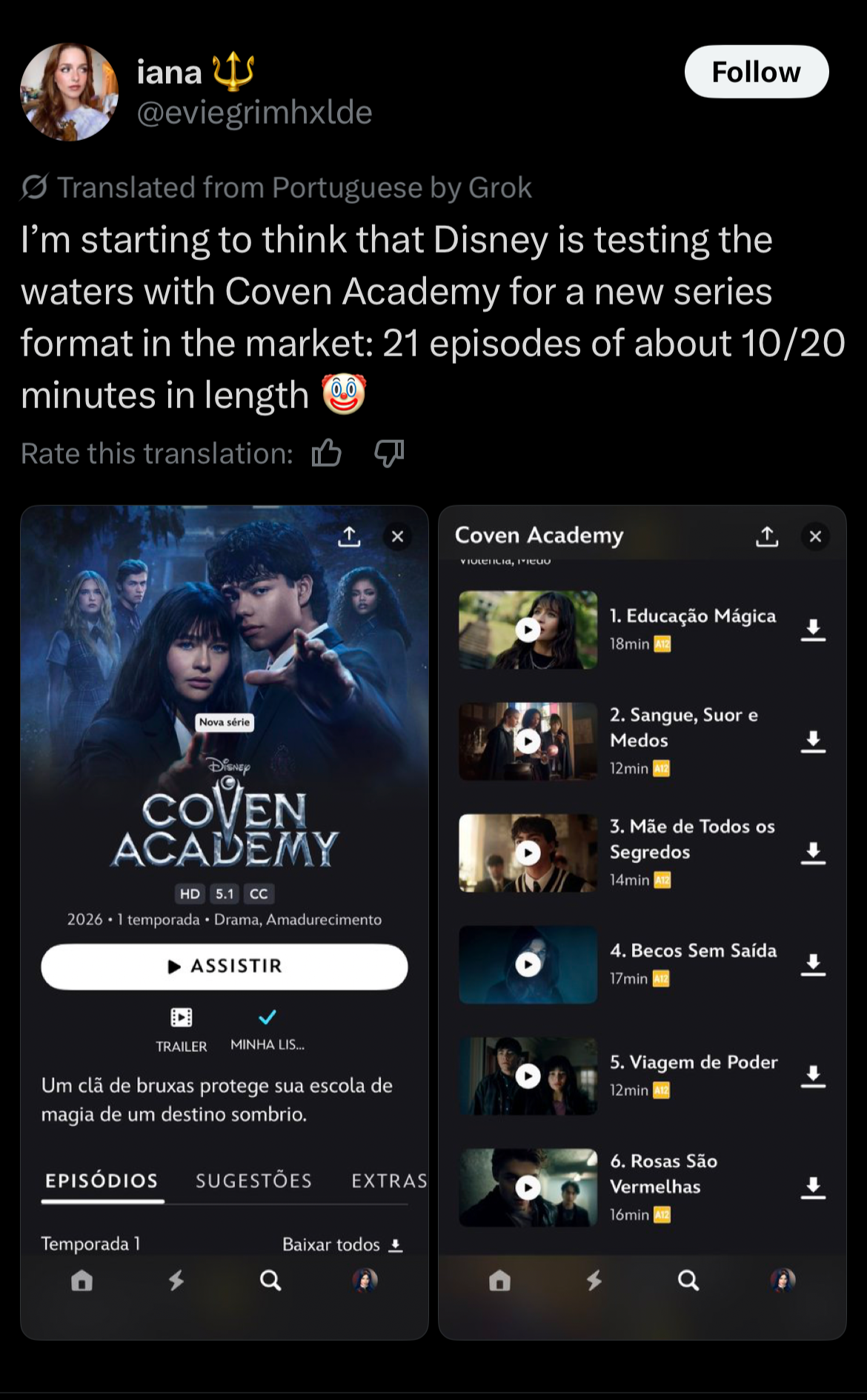
Interestingly enough, the episode runtimes have been a point of contention amongst viewers. On Disney+ and Hulu, Coven Academy is divided into 21 chapter-based parts lasting between 10 and 22 minutes each (with an average of roughly 15 to 16 minutes per chapter), while on Freeform it is broadcast in a 10-episode format with episodes running between 25 and 43 minutes. Twitter user @eviegrimhxlde has a theory about the bite-sized chapter structure being a direct reflection of shorter attention spans in the TikTok era. These runtimes cater to viewers who prefer rapid micro-doses of drama over long-form storytelling, and @eviegrimhxlde suspects that this will become an increasingly common series format: 21 episodes of about 10/20 minutes in length. While I don’t disagree, what is apparent to me is that the show is built for rapid binge-watching. I finished everything in a day, and cliffhangers arrive early and often, preventing the mid-season lulls that plague longer-form dramas. However, the brisk pacing has its flaws. Emotional beats are rushed, and certain developmental arcs feel unearned.
Though I’ve seen critic complaints about the visual effects and production, I actually think these looked great. I love the spellwork, lighting and much of the CGI, which brings a nostalgic early-2000s charm without coming off as utterly cheap. Also, the set design is absolutely gorgeous—shoutout to the art department FR. Coven Academy feels lush and cozy and authentic, drawing you right into the haunting, gothic atmosphere of the school.
Spoiler alert (not that there hasn’t already been so many in this article), but the first season ends on a massive bombshell: Briar’s birth mother is actually Miss Graves. This is the one reveal I genuinely didn’t see coming. Such a game-changing plot twist recontextualizes the entire school dynamic, and perfectly sets up a second season. While reactions to and reviews of Coven Academy have certainly been mixed, I think it has the potential to become a really, really good show—if everyone involved takes in the feedback and critique earnestly. A second season would be most welcome.
Say what you want about Coven Academy, but the series knows what it is: a fun, fast, and atmospheric melodrama about supernatural creatures. If you’re over the age of eighteen and hating on it simply for being a little ass, you’ve likely forgotten just how cheesy the shows we grew up on were. For example, most of us would probably say that My Babysitter’s a Vampire was an iconic and masterful teen drama, but the truth is that a kid watching MBAV now might not find much of a difference between it and Coven Academy.
“If you’re over the age of eighteen and hating on [coven academy] simply for being a little ass, you’ve likely forgotten just how cheesy the shows we grew up on were.”
Seriously, there’s no harm in making, or consuming, trashy teen TV. In fact, I’d say it’s almost a fundamental rite of passage. In a social-media world where young people are growing up so, so fast, I’m glad that Gen Alpha now has a campy witch show to obsess over and make bad fanfiction or edits about. Let the kids reheat our House of Anubis nachos! After all, isn’t that what being a pre-teen/tween/teen is all about?