My Gender is Dyke: Discovering Femme Lesbian Gender
Written by Leah (Bunny) Overstreet
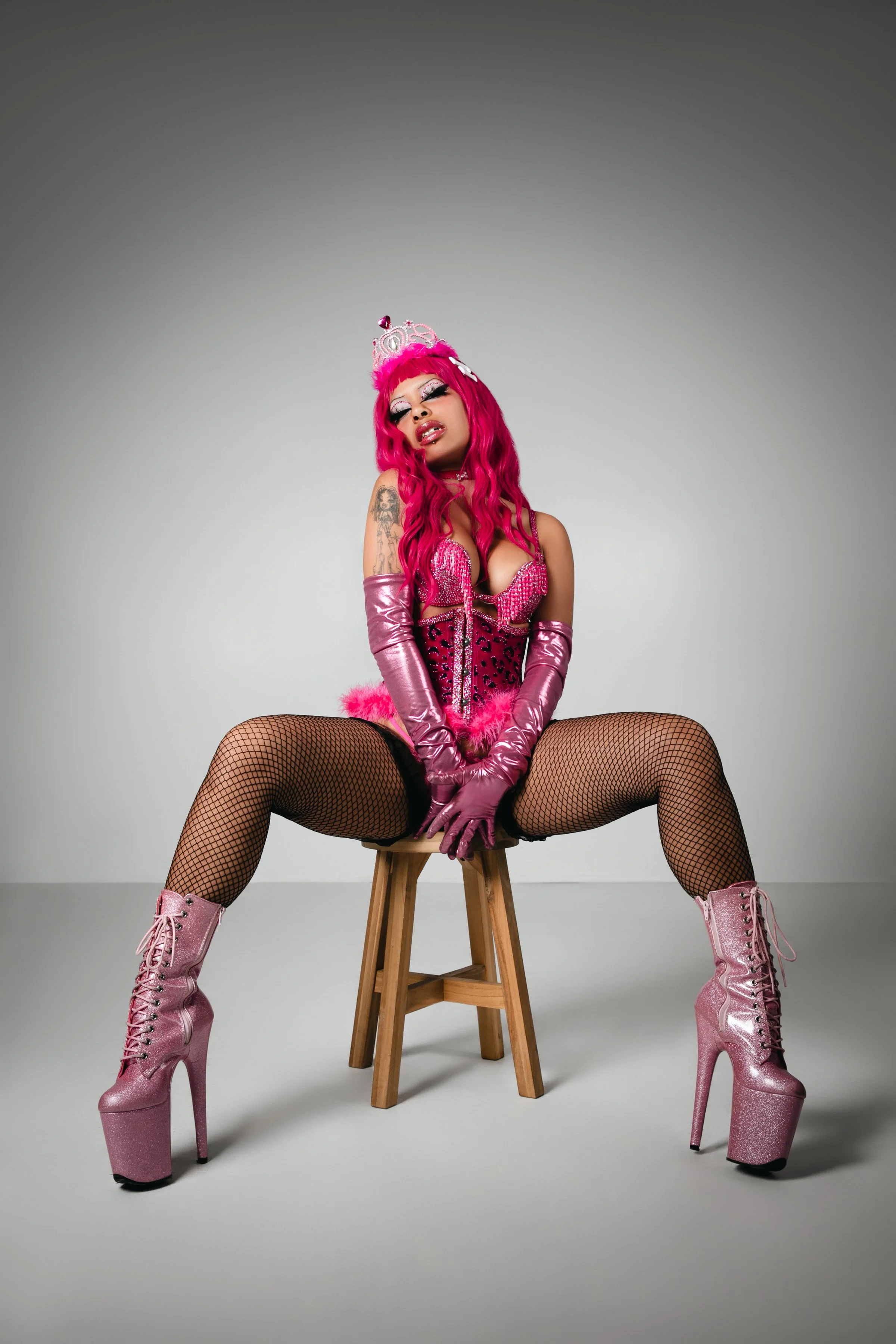
Image courtesy of @leobrooklynbaby
As a Femme lesbian, femininity has been my lifelong muse. I’ve written endless essays, dedicated poems, and styled entire photoshoots around this inexplicably deep love I have for my femininity. I’ve studied it, I’ve obsessed over it, I’ve worshipped it! I now understand this love affair with femininity as inextricable from my fabulously Femme lesbian identity; however, this began long before I even realized I was a Femme.
Back in 2021, I wrote an essay on girlhood highlighting my connection to femininity as a Black woman, with an emphasis on defiant femininity that existed outside of the male gaze. In this essay I wrote:“ I enjoy taking femininity to the extreme with the goal to be an exaggerated caricature of girl,” and“ I strive to be feminine in a way that makes the white patriarchy shit itself and go: NO NO WE DIDN'T MEAN LIKE THAT!” I wrote about connecting with a femininity that paid homage to the eccentric and alternative women I grew up idolizing and that was distinctly not for men (famously one of the distinguishing features of a femme lesbian). However, this was all while believing myself to be a (non-practicing) bisexual at the time. Little did I know, I was merely reinventing the femme lesbian wheel.
Looking back, I’m fascinated by how engulfed I felt in the gender expression of a femme lesbian before realizing that’s what I was. I always assumed lesbian gender was a more conscious process – where how you presented reflected your lived reality and that a femme’s gender expression was contrary to male desire because it was an active and conscious effort to attract other dykes. I think this can still be the case for other people, and it certainly contributes to the way I present now, but I’m surprised by how much of this connection to what I now consider my lesbian gender formed before I fully realized and understood my lesbian sexuality.
When I did finally realized I was a lesbian, everything about who I was just clicked: the way I moved through the world, my gender expression, my desires. However, it took time for me to get where I am today. I once told my (LGBTQ friendly) therapist that I was deeply anxious about getting my sexuality wrong. It had taken over a year for me to start openly identifying as a lesbian—partially because I didn’t want to go through the humiliation of taking it back— and it had taken me years to even identify as queer back in high school for similar reasons. But when it came to the lesbian label, I was not just scared of being wrong; I was also scared of losing that feeling of euphoria that dykedom gave me (perhaps an obvious sign that I was definitely a lesbian).
I hadn’t realized how ill fitting bisexuality had been for me until I connected with other dykes and found a community with other lesbians. No shade to the bisexuals and gay men who metaphorically raised me, but I truly found my home in lesbianism.
Beyond connecting with lesbianism as a sexuality, I felt like I finally understood myself just as a person. Eventually I had to admit to myself— and my therapist— that, if (heaven forbid!) I turned out not to be a lesbian, I wouldn’t understand my gender anymore.
As someone who identifies with the gender I was assigned at birth, it took me a minute to connect the dots between the way I present and my gender identity. Despite my friends frequently referring to my daily makeup and eccentric dressing as my“ drag”, it wasn’t until I started identifying as a lesbian and learned more about Butch/Femme dynamics and their history that I began to self-diagnose myself as a femme lesbian.
I realized that the way I’d identified and expressed myself for so long was not at all unique to me. And honestly, what a relief that was!
I’d naively disqualified my experience with gender from being a part of my queerness because it was not entirely contrary to what I’d already been assigned. However, I now recognize my femme-ness to be one of the queerest things about me. Rather than merely adhering to the gender assigned to me, my femme gender doubles down— reimagining it through a queer lens and nourishing femininity specifically in conversation with other Dyke genders.
“I’d naively disqualified my experience with gender from being a part of my queerness because it was not entirely contrary to what I’d already been assigned. However, I now recognize my femme-ness to be one of the queerest things about me.”
That being said, my gender expression does not put me in danger in the same way that the gender expression of an effeminate gay man, a stud, or a trans woman would. It is a privilege to present as I do. I benefit from the ignorance of heterosexual men who still manage to look through my maximalist, overtly saccharine, femininity and still see me as something to inflict their own desire onto.
As annoying as it is, my gender expression is rarely seen as queer outside of the community—where it is usually sooo obvious— and this does undeniably protect me from specific forms of violence. Nevertheless, I know many lesbians who would claim“ dyke” as their gender and who recognize Femme for the undeniably queer gender that it is.
I can’t help but be amused by the naïve fumbling in the dark that was the discovery of my Femme identity. It is hilarious to think of all of the many ways I once tried to rationalize a way of being that, in the context of lesbianism, is so obvious and so familiar. I love how queerness can be such a singular yet deeply universal experience.
I am frequently delighted to be just like other lesbians. I am constantly reminded that I am part of a long and rich history. It is my greatest joy to follow in the stilettoed footsteps of the Femmes before me.