Marion’s Reading List
Written by Marion Johnson
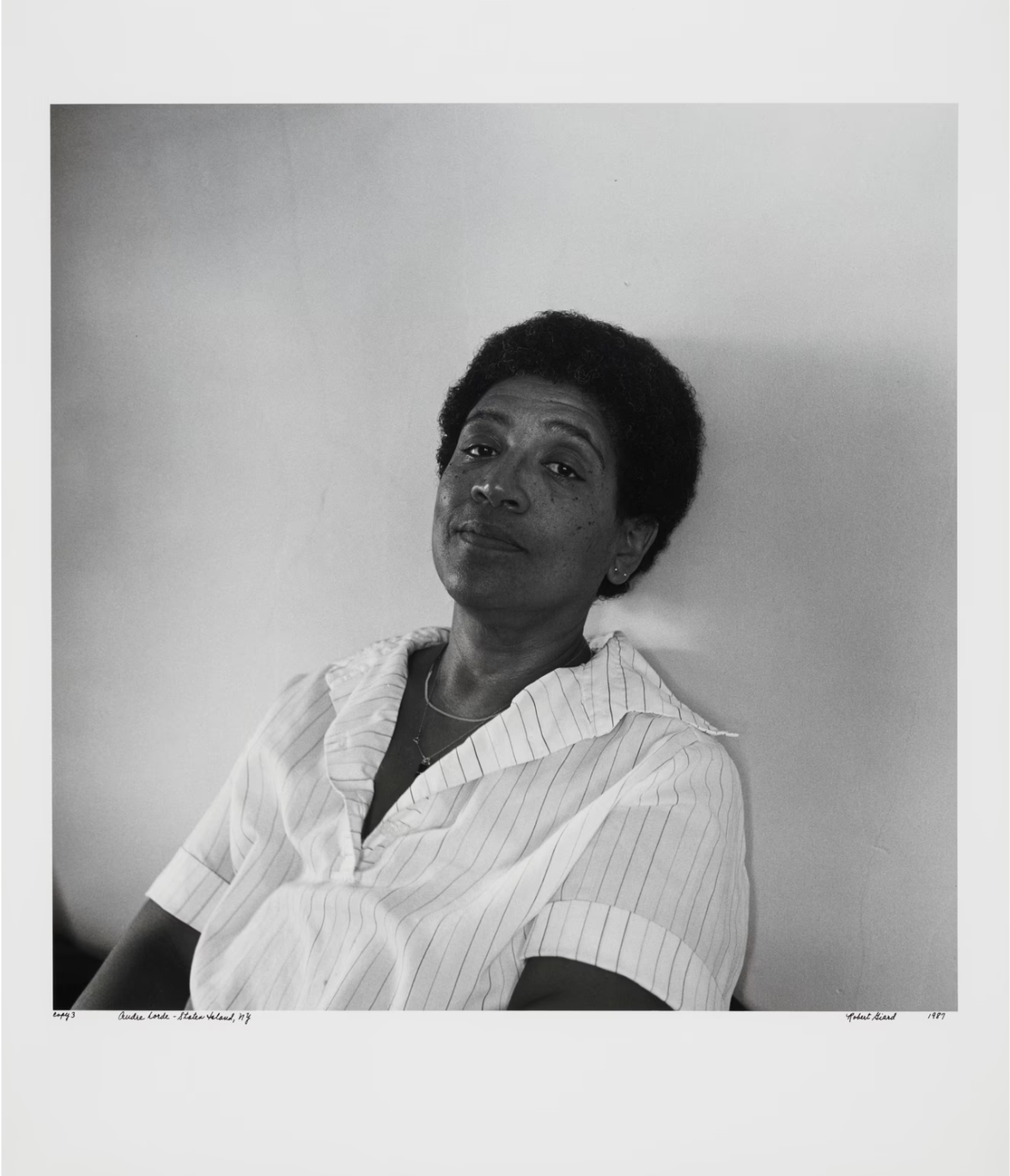
Image courtesy of Robert Giard / Estate of Robert Giard
Black History Month in February is back-to-back with Women’s History Month in March, which leads directly into National Poetry Month in April; how lucky are we!? For me, there is no better way to honor these occasions than to celebrate the amazing work written by Black women about girlhood and womanhood. Because there’s so much great literature, I know that figuring out where to start can be overwhelming. That’s why I have compiled a selection of four amazing works by Black women that are easily accessible online, short, and worth your while.
“Uses of the Erotic: The Erotic as Power” by Audre Lorde
“The erotic is a resource within each of us that lies in a deeply female and spiritual plane, firmly rooted in the power of our unexpressed or unrecognized feeling. In order to perpetuate itself, every oppression must corrupt or distort those various sources of power within the culture of the oppressed that can provide energy for change. For women, this has meant a suppression of the erotic as a considered source of power and information within our lives.” - Audre Lorde
This passage comes from a seven-page essay that reclaims the erotic as a liberatory power. Audre Lorde, the prolific Black lesbian writer, wanted women to understand the erotic as a liberating experience that can be used to get in touch with pleasure in all aspects of life. Lorde argued that artificial eroticism and the commercial sexualization of women have been used as a deliberate form of patriarchal control. But in reclaiming the erotic, women harbor a revolutionary power that has suppressed their energy to fight oppression, seek pleasure, and free themselves from the male power structure. In the essay, Lorde explains that the erotic praises feeling, prioritizes love, and empowers the emotional, physical, and spiritual sensations that women experience.
If you enjoy“ Uses of the Erotic: The Erotic as Power,” I recommend you check out Audre Lorde’s iconic collection of essays in Sister Outsider.
“Woman’s Poem” by Nikki Giovanni
“i wish i knew how it would feel / to be free” - Nikki Giovanni
Poet, writer, and activist Nikki Giovanni was an icon in the Black Arts Movement.“ Woman’s Poem” is a testament to her versatility; it explores the reality of Black femininity amid societal pressures and stereotypes about Black women. Giovanni portrays Black girlhood and womanhood as a series of contradictions and negotiations. This is a timeless must-read poem that effortlessly blends the personal and the political.
If you like“ Woman’s Poem,” I recommend you read The Black Woman: An Anthology, edited by Toni Cade Bambara, which features this piece among other works by brilliant Black women authors.
“Working Women, Black Women, and the History of the Suffrage Movement” by Angela Davis
“Of the eight million women in the labor force during the first decade of the twentieth century, more than two million were Black. As women who suffered the combined disabilities of sex, class and race, they possessed a powerful argument for the right to vote. But racism ran so deep within the woman suffrage movement that the doors were never really opened to Black women.” - Angela Davis
If you want a short 7-page deep dive into the racial complexities of the suffrage movement, I cannot recommend this text enough. The chapter from Angela Davis’ Women, Race, and Class lays out how the campaign for women’s suffrage, which advocated for women’s right to vote, was organized by white leaders who consistently denied Black women participation in the movement. Davis includes the stories of well-known Black suffragists such as Ida B. Wells and their male counterparts, like W.E.B. Du Bois, who vocally supported Black women’s right to vote despite pushback. This one is a bit more on the history side of literature, but it is well worth the read.
If you enjoy this chapter, I recommend reading more from Women, Race, and Class by Angela Davis.
“For Women Who Are Difficult To Love” - Warsan Shire
you are terrifying / and strange and beautiful / something not everyone knows how to love.” - Warsan Shire.
This poem, like most of Warsan Shire’s work, is deeply personal. Relatability in“ For Women Who Are Difficult To Love” functions as a mirror, not of self-criticism, but of self-acceptance. This piece is for the people who have felt like they’re too much, and for my girls who cannot stop asking,“ Are you mad at me?” This poem is there to interject and remind you that you are not alone and you are worthy of love.
Warsan Shire is a Somali British author and poet who writes about womanhood and cultural heritage. If you like this poem, read some of her other works here.