I Just Watched Love Island USA For the Second Time…and I’m Relieved
Written by Sharon Hamza
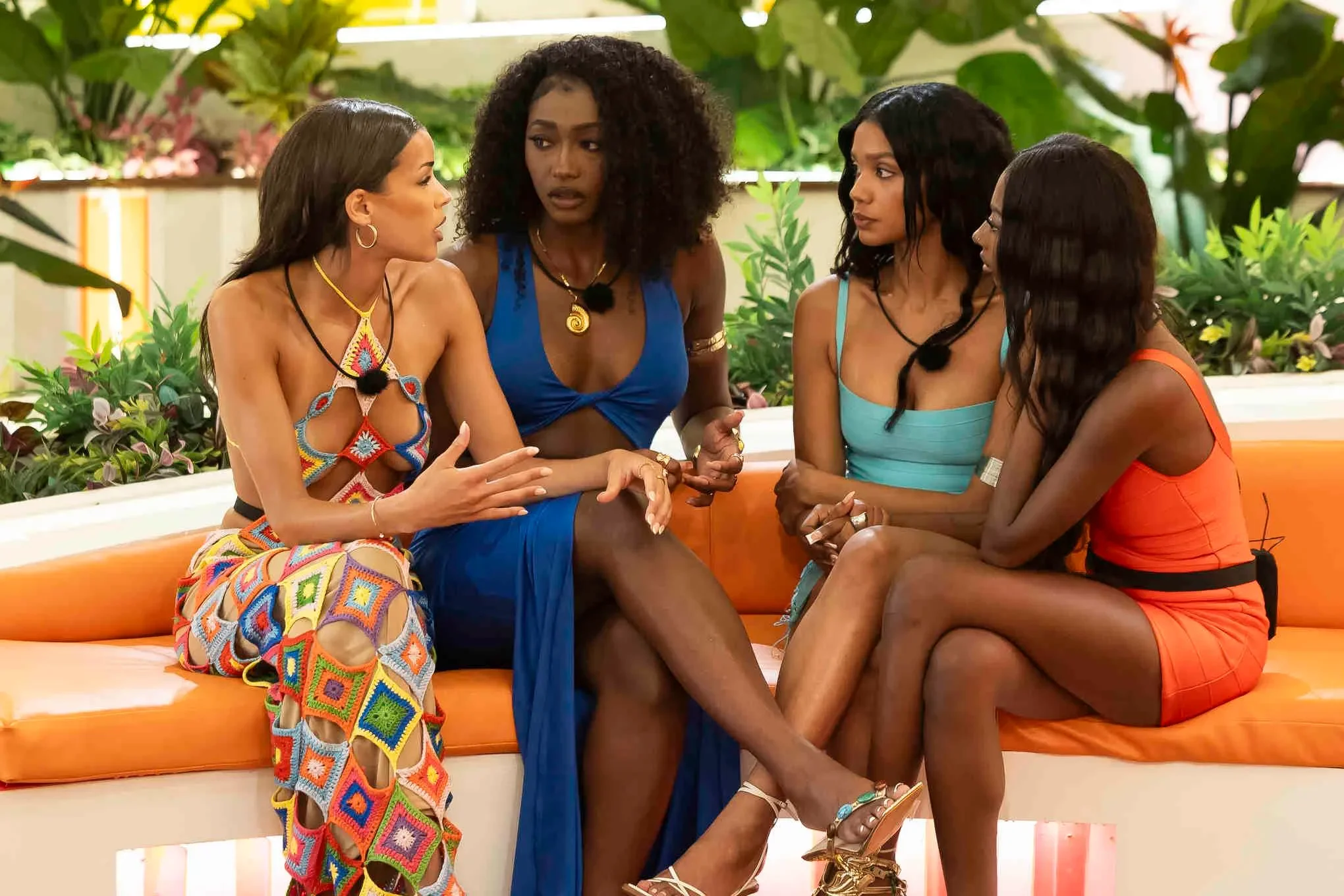
All images courtesy of Love Island USA
I told myself I wouldn’t watch Love Island USA again after whatever the heck season seven was, but I’m a nosy person, and I need to know what’s going on. So, despite my fears, I gave in, braved season eight, and it was actually… enjoyable?

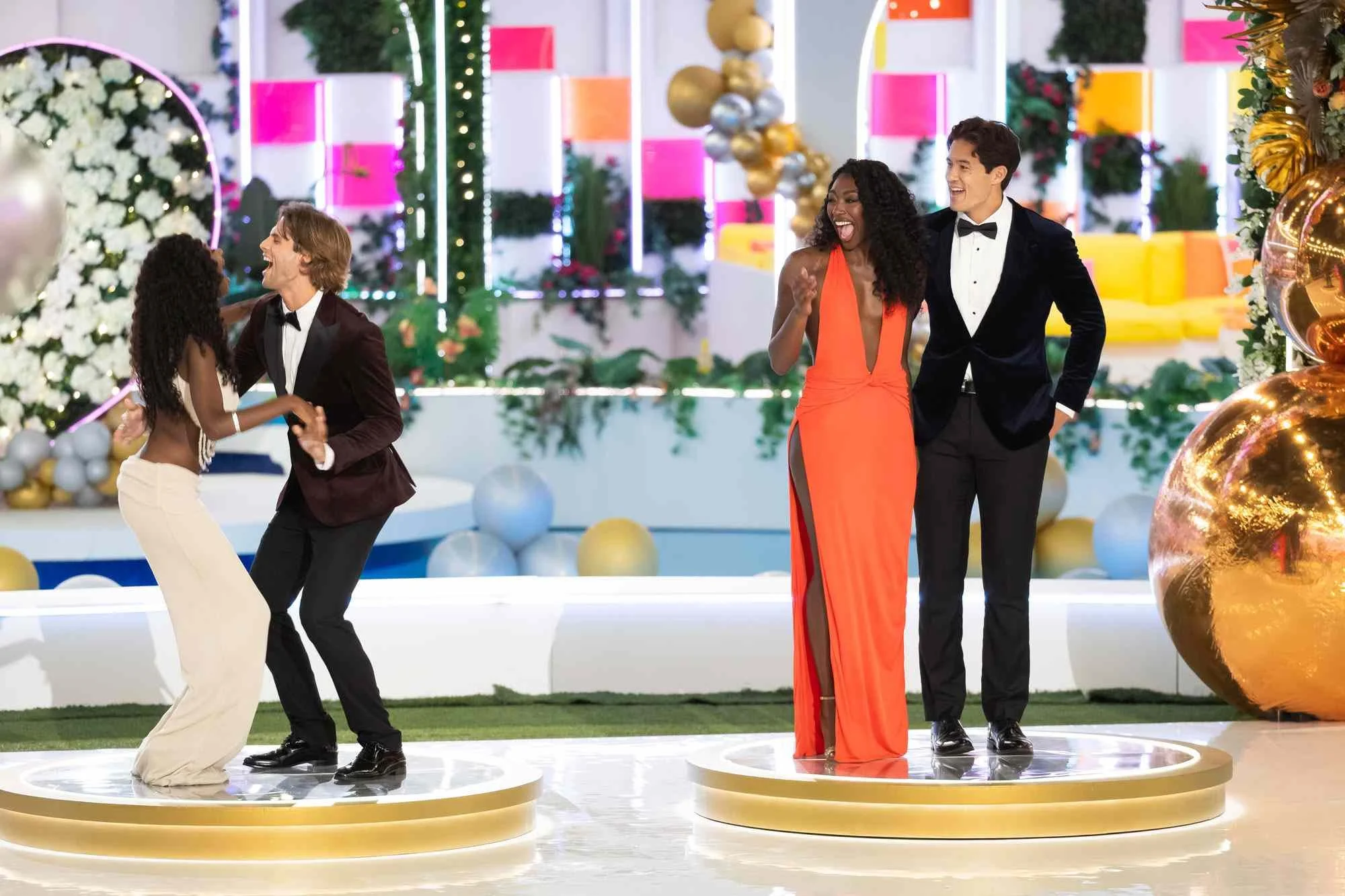
This year’s installation graced our screens in early June, and I couldn’t help but brace for impact. In my last article on season seven, I expressed my unfamiliarity with toxic fandom culture, the way it reaches unfathomable heights with this show and often results in the mistreatment of Black female contestants. Yet, in season eight, Black women snagged all of the spots in the finale, with Kayda Bosse and Zach Georgiou in fourth place, Melanie Moreno and Sincere Rhea in third place, Aniya Harvey and Carl Schmidt in second, and Trinity Tatum and Bryce Dettloff as the season’s winners. For the first time in the history of Love Island USA, Black women topped the leaderboard.
“For the first time in the history of Love Island USA, Black women topped the leaderboard.”
The previous season made me apprehensive for season eight, not just because I feared Internet reactions, but because I genuinely worried for the well-being and safety of any Black woman going into the Villa. Black women had become hypervisible, especially after the success story of Olandria Carthen and her amazing endeavours post-show. Attentive eyes trailed the footsteps of each Black woman walking through those gates, and many were anticipating the next Olandria (or should I say, the first Trinity?)
With Trinity, Aniya, Melanie and Kayda being part of this journey from the very start, I naturally grew fond of them. Watching the Core Four on my screen as single people was a delight. Watching them in their couples was less delightful and more stress-inducing, but hey, it’s Love Island.
Cast chemistry was solid, of course, save a dose of expected drama. Clear misunderstandings resolved quite maturely, although Sincere fumbled BAD, and the breakup between Aniya and KC Chandler proved that even when a Black woman is very clearly wronged, she is criticised for advocating for herself. This was evident by the public reaction to KC’s return from Casa Amor with Tierra (Titi) Davis, and how Aniya responded. In this moment, Aniya voiced her feelings of anger and regret, asking herself why she hadn’t put herself first, and why she’d sacrificed her connection with Carl.
This was a hard watch for so many reasons; I kept thinking back to Olandria in season seven. When she was“ dumped” from the island due to her connection Taylor Williams picking Clarke Carraway after Casa Amor, she told her fellow cast members that she couldn’t be sad because“ ain’t nobody else gonna be strong for me”. This moment was deeply resonant, as when I looked at social media’s reaction to the recoupling, there was a mountain of netizens blaming Aniya for“ pushing KC away”. Some celebrities even chimed in and sided with KC’s treatment of Aniya.
When you are a Black woman, you are expected to self-regulate even at your most vulnerable. Seeing that vulnerable side of Aniya following the recoupling, surrounded by the support of her girls, was undeniably necessary. As she swore, cried and shouted, she had people that stood with her and defended her. What season eight understood better than its predecessor was that vulnerability is not weakness, especially when it comes to Black women.
“What season eight understood better than its predecessor was that vulnerability is not weakness, especially when it comes to Black women.”
I can only count on one hand the amount of times that Olandria spoke out against her mistreatment, in fact, on one finger, because it only happened once. In that one moment, Olandria was thought to be“ doing too much”. But Aniya's raw heartbreak after Casa Amor challenged the expectation that Black women should quietly absorb disappointment.
A couple who also had their rocky moments but ended up winning the whole thing further proved that vulnerability is strength. I am of course talking about Trinity and Bryce! Truthfully, I was very tense watching another interracial couple on my screen. As someone who has watched more of Love Island UK, interracial couples tend to skirt around conversations regarding race. You hear phrases like“ She’s not my usual type” a lot, but nothing beyond that. What made watching Trinity and Bryce’s story so beautiful to see was that for the first time, this conversation finally happened on-screen.
In the confessionals, Trinity and Bryce both talked about their anxieties over someone of their partner’s“ type” walking in the Villa and“ stealing them away”. Trinity even explicitly expressed to Bryce that this was her first time dating outside of her race. This was a glaringly important conversation, and maybe I haven’t watched enough reality dating shows, or enough seasons of Love Island, but it came as a total surprise to me.
As more seasons of Love Island air, Trinity and Bryce’s flourishing relationship, as well as Carl and Aniya’s steadfast connection, should serve as a reminder that love is multifaceted. It involves revealing every part of yourself to another person (both figuratively and literally) and hoping that they can accept all of you. This vulnerability is often intensified in interracial dating, as it may be the first difference a couple faces together.
“Trinity and Bryce’s flourishing relationship should serve as a reminder that love is multifaceted. It involves revealing every part of yourself to another person (both figuratively and literally) and hoping that they can accept all of you.”
A warming example of acceptance and vulnerability in this season can be found in the fleeting relationship between Paralympian Beatriz Hatz and Gabriel Vansconcelos. In a moment before she exited the Villa, she spoke to Gabriel in Spanish, thanking him for making her feel“ like a normal person”.
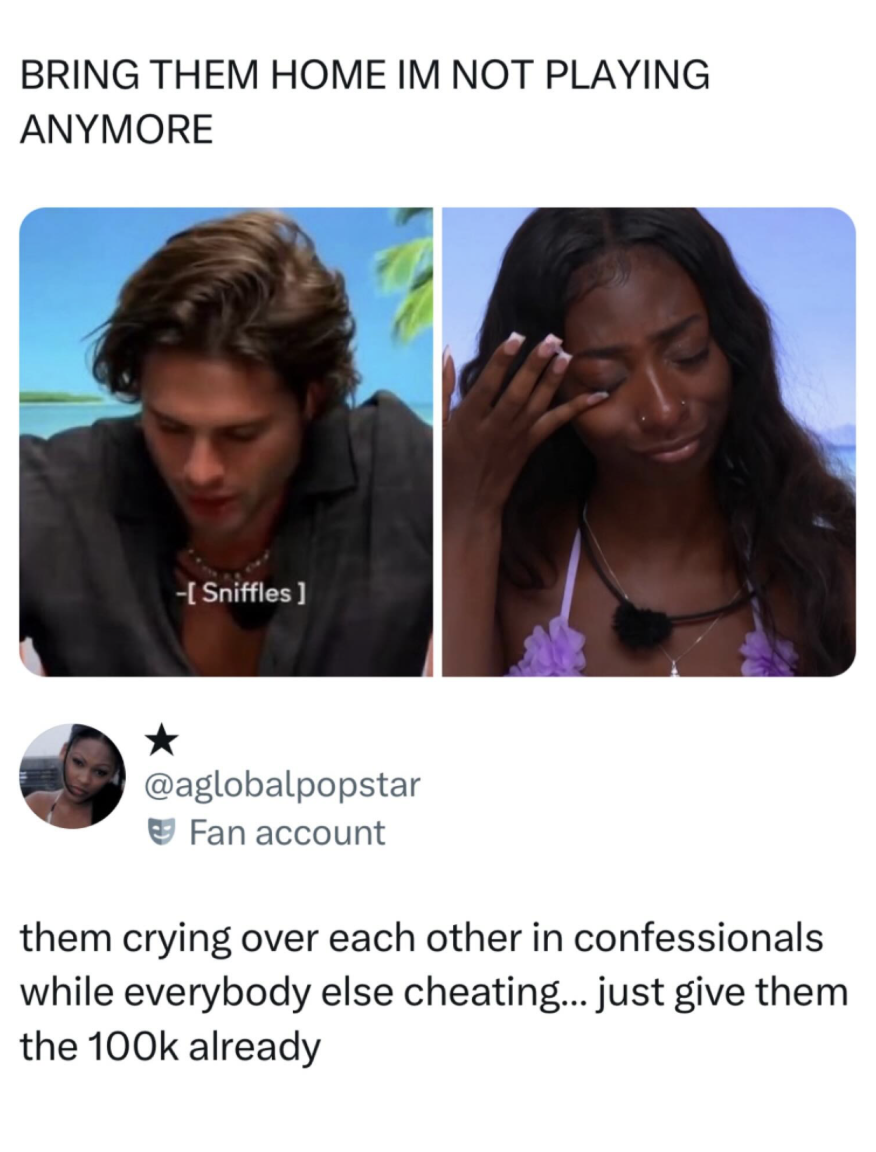
Tears. Literal tears.
On dating shows like Love Island, it is very easy for the meaning and intentionality involved in cultivating a relationship to be blurred and reduced to physical attraction and “ chats”. Putting yourself in a position of vulnerability is very difficult to do, especially when it will be televised to a large portion of the world. This is what made season eight feel more real and tangible; it was that Serena and Kordell kinda buzz.
This is a franchise that has historically rewarded emotional restraint from Black women while criticising their vulnerability. Season eight felt refreshingly different. It reminded us that authenticity, not perfection, is what makes people worth rooting for.