Finding Emily: A Modern Rom-Com for the Morally Gray
Written by Daphne Bryant
All images courtesy of Focus Features
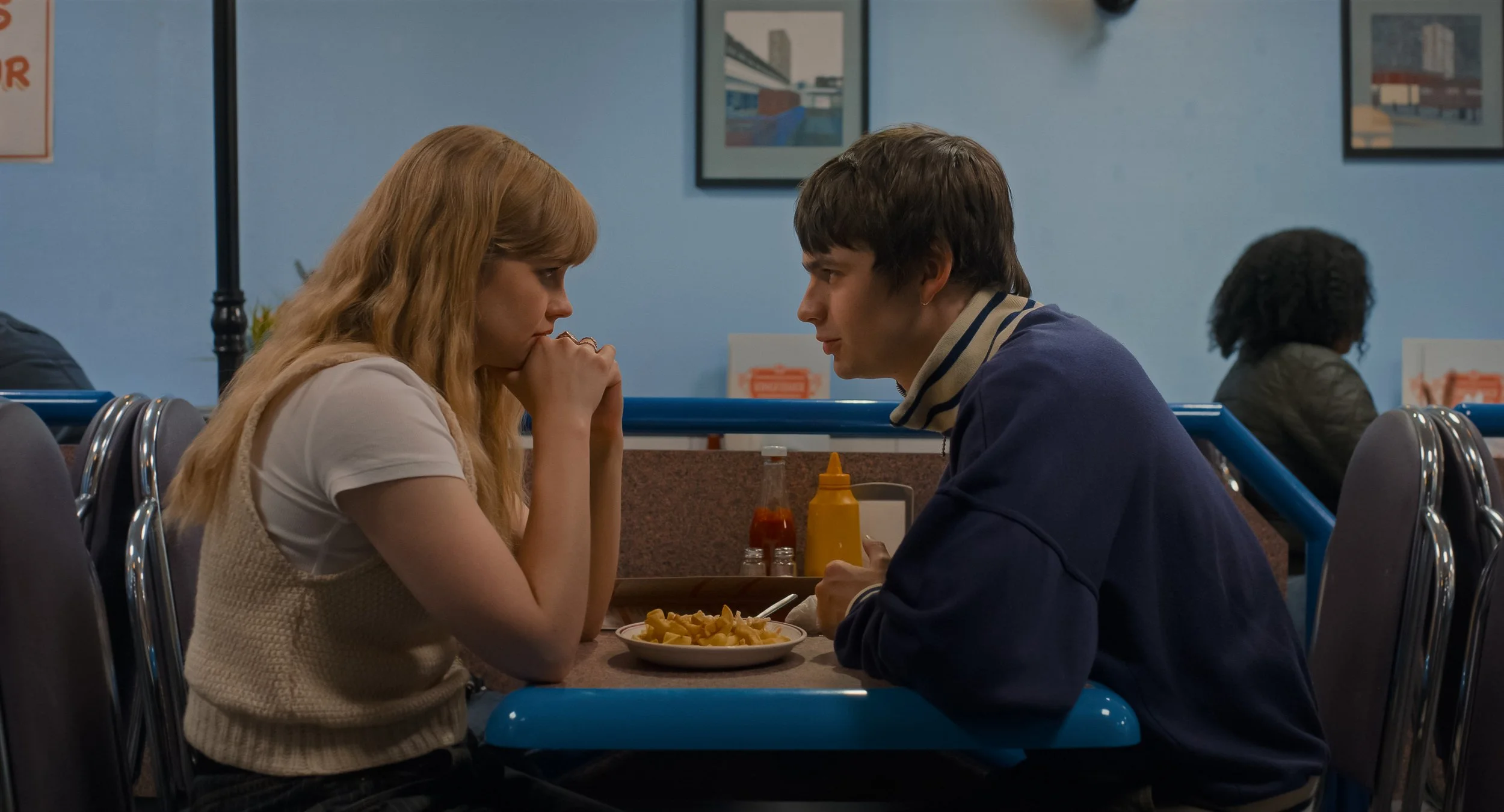
As director Alicia MacDonald would put it, Finding Emily is“ a political thriller in the Trojan Horse of a rom-com.” The 2026 film follows Owen (Spike Fearn), a 23-year old sound engineer working at a student union bar in Manchester. One night he meets a girl and falls in love with her, but before she leaves, all he can get is her first name,“ Emily”, and her phone number. The next morning, Owen tries to text Emily, only to find that she mistyped her number, which sets him on a classic quest to find the girl of his dreams—with the help of a psychology student coincidentally named Emily (Angourie Rice). While the British romantic comedy has all the elements of a traditional narrative, it’s really more a collection of coming-of-age stories, an adventure about living and learning more so than it is about“ conquering” the manic pixie dream girl (more on that later).
“As director Alicia MacDonald would put it, Finding Emily is “a political thriller in the Trojan horse of a rom-com.”
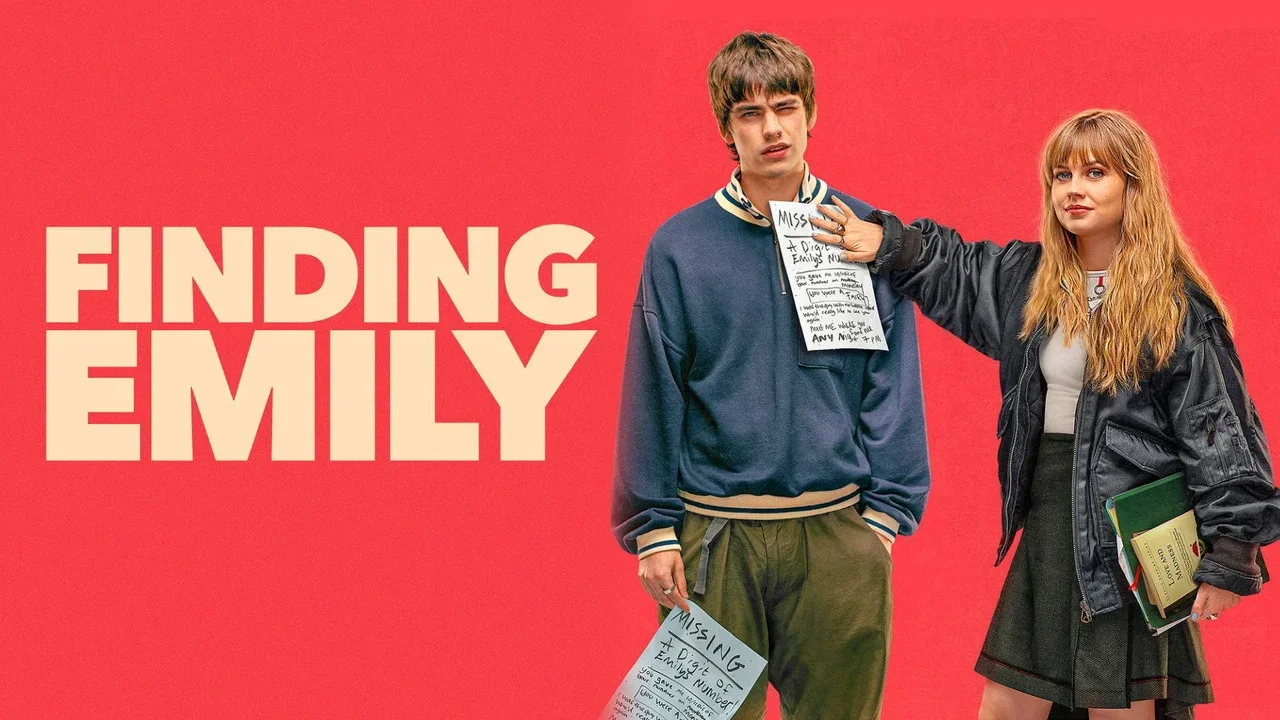
Ten days ago I was invited to watch an early screening of the film in DTLA, which was followed by a Q&A with MacDonald, Fearn and Rice. When I arrived inside the theater I was greeted by plenty of little goodies: each seat had a sign on it that said RESERVED FOR EMILY, and each attendee received a hat with the words I HEART EMILY on it. Chef’s kiss! If there’s one thing I adore about a movie, it’s good marketing. Before the film even started (and I went in largely blind), I knew I was in for a chaotic story about an obsessive guy on the hunt for true love. And, while the plot itself is not particularly revolutionary (or feminist), the way the script addresses it 100% is.
Finding Emily calls attention to a myriad of things that we as humans, especially women, have to consider when dating in such a digital era: from privacy and tech (what information to divulge, how to divulge it, how to protect oneself against creeps and catfishes) to cancel culture. What does it mean to be a romantic in this day and age? Is Owen a weirdo for hopping from queer club to queer club, paying bartenders and bouncers for any information on the girl he met? Does he cross a line when he contacts hundreds of students, all in the hopes of finding his Mrs. Right? Is Emily a bad person for giving him those emails, and well, manufacturing the entire search and secretly making Owen her case study in the first place? These are the questions and things one immediately wrestles with while watching, and the themes propel the movie beyond standard fluff. Finding Emily is a sharp and timely critique of ethics and personal boundaries.
The film also makes a mockery of tired genre (and IRL) tropes, from the“ sentimental guy with a guitar” cliché (that the 2023 Barbie film also ridicules) to the idea of a manic pixie dream girl, an archetype that Emily initially fits, but that is ultimately wrecked when“ Owen’s” real Emily—whose name is actually Amelie—goes on a date with Owen and is freaked out by the campus-wide, and then eventually global, social media spectacle. Amelie is far from a whimsical muse (no deadass, she was dressed like a fairy), and even though she drove much of the story up until this point, she decides not to pursue a relationship with Owen, as she has her own life, career and needs to worry about. By stripping away the idealized fantasy that so many old-school rom-coms play up, the film allows every character the dignity of real human agency.
“By stripping away the idealized fantasy that so many old-school rom-coms play up, the film allows every character the dignity of real human agency.”
For example, even though Owen is searching for“ Amelie”, his search becomes less and less relentless as time goes on. It becomes clear to the audience that he’s actually catching feelings for psychology student Emily, and Emily is reciprocating. Of course, this is a very sick and twisted turn of events, considering Emily’s been studying Owen in an obsessive, manipulative, investigation-board way that is not all that different from Owen’s own obsession. Surprisingly, even though they both make incredibly questionable decisions, I found myself rooting for Owen and Emily’s burgeoning romance the way I did Zach Siler and Laney Boggs in 1999’s She’s All That. And on the topic of the“ bet” trope, Finding Emily totally flips it on its head. Whereas plots like this usually center a popular guy betting that he can woo or“ smash” a geeky and unpopular girl on the fringes of society, this film follows a beautiful (but nerdy) girl betting that she can turn a cute (but nerdy) guy into the ultimate case study for her thesis. Emily uses him and his hopeless romanticism, but Owen essentially uses her too, relying on her calculated strategy, data-scraping skills, and campus access. Neither of them is entering their eventual partnership with entirely clean hands, which makes their evolving dynamic so fascinating to watch on-screen.
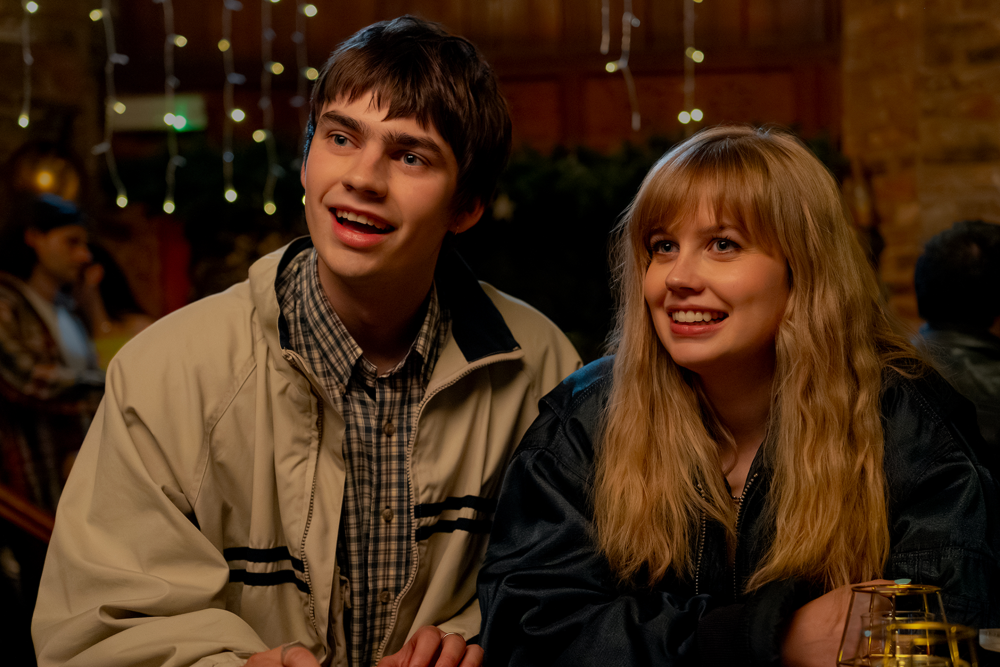
What helps immensely that Rice and Fearn have incredible chemistry together, despite maintaining two totally different processes for getting into their characters and building tension. For Rice, she’s very similar to Emily, who is meticulous and detail-oriented. She makes a lot of notes in the margins of the script, journals, and studies intensely. On the other hand, Fearn is more spontaneous, and goes with the feeling as opposed to bogging himself down with specific tips and tricks. Working on Finding Emily marked a genuine shift for both actors.“ Now I run lines!” says Fearn during the Q&A,“ and now I improvise!” says Rice. Speaking of improvisation, there are multiple moments throughout the film that are completely improvised, or flat-out mistakes, that made the final cut because of their authenticity. In my humble opinion, this is another reason why Finding Emily feels so different and real and raw. Owen is a clumsy optimist who ultimately just wants to find his person, and Emily is a guarded pragmatist who finally discovers that not all love can be explained away in a thesis.
It is worth noting that women make up most of the major creative roles on Finding Emily. With a script written by Rachel Hirons, MacDonald directing, cinematographer Rachel Clark behind the camera and (phenomenal) music by Morgan Kibby, the film carries the distinct nuance of the female gaze. It ensures that Owen’s obsession is never framed as this sweeping, undeniable romance; there is always someone interrogating him, questioning him with humor and skepticism. The narrative never excuses male entitlement or treats women as passive prizes, which I appreciated more than you know. At the same time, the film refuses to chalk Owen up into some unforgivable, misogynist villain. He’s sweet and endearing, someone who just lost their mother but whose glass is genuinely half-full at damn near all times, and he deserves love just like the rest of us fuckers. Finding Emily definitely holds Owen accountable while holding space for his vulnerability, resulting in a rare, deeply empathetic film. During the Q&A, Fearn revealed that while filming, no one on set looked at it as a“ rom-com”; instead they focused on developing full-fledged characters with significant weaknesses and strengths, characters that would make you smile but also piss you clean off.
“women make up most of the major creative roles on Finding Emily. With a script written by Rachel Hirons, MacDonald directing, cinematographer Rachel Clark behind the camera and (phenomenal) music by Morgan Kibby, the film carries the distinct nuance of the female gaze. The narrative never excuses male entitlement or treats women as passive prizes, which I appreciated more than you know. At the same time, the film refuses to chalk Owen up into some unforgivable, misogynist villain. He’s sweet and endearing, someone who just lost their mother but whose glass is genuinely half-full at damn near all times, and he deserves love just like the rest of us fuckers.”
By centering human messiness, Alicia MacDonald delivers a film that manages to be wildly funny, occasionally infuriating, and surprisingly tender all at once. It takes the high-stakes obsession of a horror flick (wink), wraps it in the familiar warmth of a British comedy, and uses its main characters to dismantle the concept of constructing ideal partners, emphasizing the importance of building real connections in the wild (even if the way you stumble upon them is a bit strange). Finding Emily doesn’t just offer a refreshing, subversively witty look at modern dating. It serves as a gentle reminder that you don’t need to engineer a fairytale, or rationalize your feelings. Sometimes, true love is wonderfully flawed, and right in front of you.