Written by Rhea Krishna
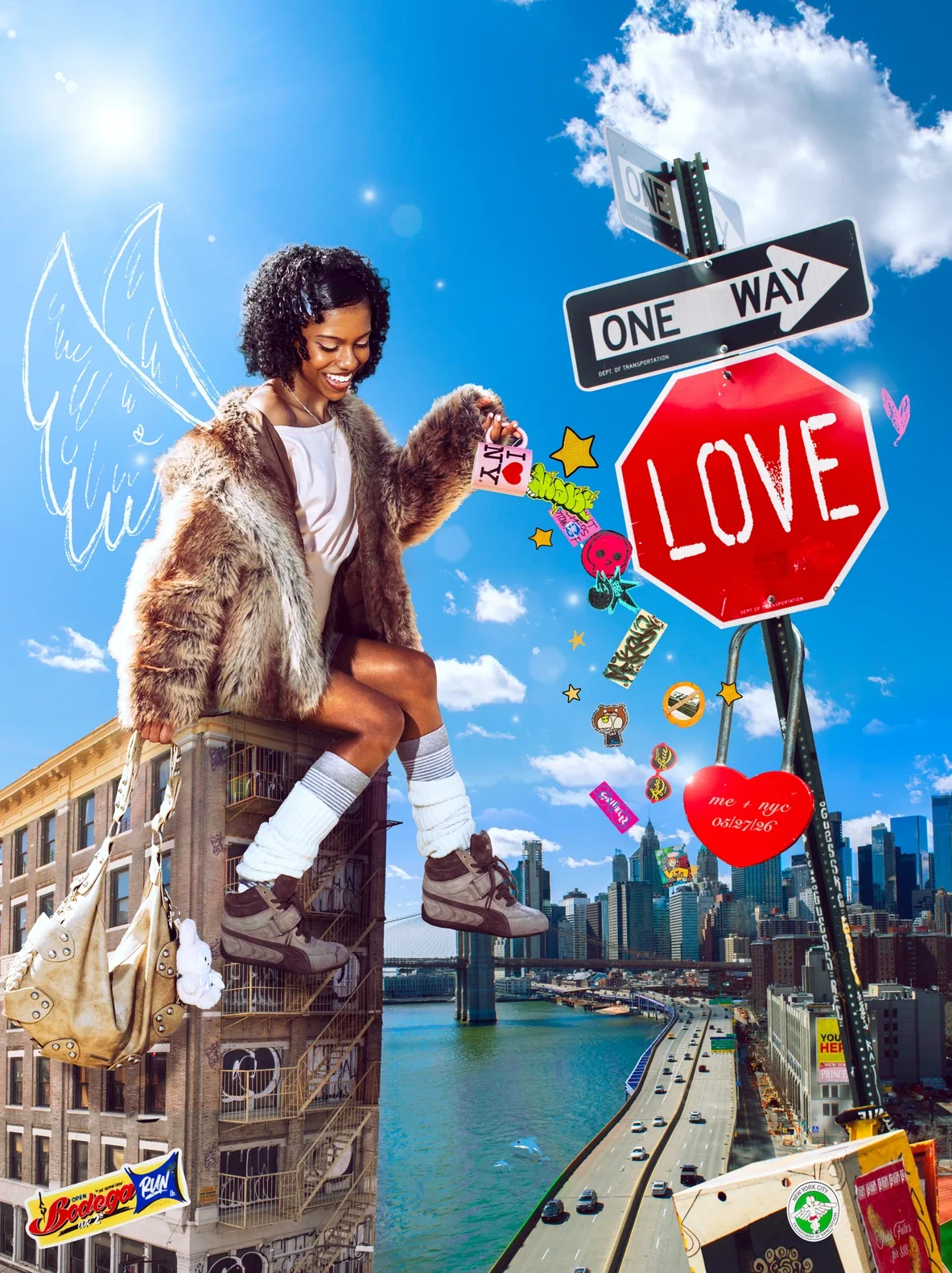
Image courtesy of Jessie Heller
Gone are the days where someone magically stands out in a crowd and suddenly, all you see is tunnel vision. Time moves in slow motion and you feel this instinctive impulse to say“ Hello”. These days almost all dating commences via a structured online screening process. We seem to have replaced intuition with calculation. Before we see a person’s demeanour, their laugh or their intrinsic quirks, we see the quality of their phone camera, the potency of their fashion sense and the diversity of their friend group. Dating has become less about spontaneity and more about curated appearances, which in a way is pleasing to the eye, but if you don’t know how to appropriately market yourself on these apps, can you actually find love? And what does this say about relationships today? Do we idolise people and conjure up image centric obsessions rather than form authentic bonds?
This realisation dawned upon me one night when I was listlessly scrolling through Hinge, X-ing my way through almost every profile that showed up until my friend said:‘ Rhea, if someone like that came up to you in the club, you would so say yes’. And then it hit me: it is really hard to feel an all-consuming impulse through the screen. You’re literally flattened from a real person into a two-dimensional blue light image and devoid of all the little things that make you you. I think of all the times I’ve felt that surge of a feeling with people in my life and realised that it is so very random. It cannot be pinpointed, it is quite literally the opposite of the calculated algorithm on dating apps. Sometimes someone scrunches up their eyes kinda cute, sometimes they uncontrollably snort when they laugh, sometimes they whisper things with a certain inflection, and you definitely cannot convey or experience any of these things through 3 prompts, especially not when everyone is out here copy-pasting prompts (if I see one more man with an‘ arguing in missionary’ prompt I am going to rage-quit). In theory, Hinge seems like an optimisation: a personalised experience with an algorithm that will deliver endless streams of options on a silver platter. We seem to have all the information at once: the person, their nationality, their substance of choice, whether they want kids. But all this abundance actually makes dating an overcomplicated marketing game. Added factors like lighting, clarity and camera angles tell you absolutely nothing about whether or not someone will go on to be your greatest love, but for some reason they play such a pivotal role in the selection process. If you are not culturally fluent in the unspoken visual cues and unable to aesthetically curate yourself, you probably won’t find love. It’s no longer about being inherently attractive as yourself, and instead about fitting someone else’s idea of attractiveness.
“We seem to have all the information at once: the person, their nationality, their substance of choice, whether they want kids. But all this abundance actually makes dating an overcomplicated marketing game. Added factors like lighting, clarity and camera angles tell you absolutely nothing about whether or not someone will go on to be your greatest love, but for some reason they play such a pivotal role in the selection process.”
With so much emphasis on images and profiles, I really have to ask: are we attracted to ideas, concepts and something weirdly abstract, instead of actual people? The cliché: ‘ you’re not in love with me, you’re in love with the idea of me’ may bear a jarring sense of credibility in today’s dating sphere. All those pictures and text on someone’s Hinge profile are actually just prompts for your imagination; they allow you to ideate who someone might be. Most men have actually caught onto this image-driven significance and gotten remarkably better at curating their profile. They’ll choose a picture with a kid to communicate wholesome, they’ll choose a picture with a book to communicate well-read, they’ll choose a picture with a backflip off a cliff to communicate adventure! travel! thrill seeker! And, they’ll choose a picture with low-waist baggy jeans to communicate fashion killer (in the words of A$AP Rocky). The thing is, admiring someone for their taste and actually being attracted to them are two very different things. Ultimately, you’re not fucking their jeans, you’re fucking the person wearing them, and that person is not this weird array of ideas and symbols that you’ve strung together into your head. We may see what we want to see online, but what happens when you finally go on a date and those low waisted baggy jeans from that one picture are actually the only one-hit-wonder interesting piece of clothing in their entire wardrobe? What if they wear them performatively, as in they don’t actually care for fashion but they care for the attention that fashion brings them? What happens when the person is actually the exact opposite of what the images prompted you to imagine? Like, they’re not really wholesome even though they were holding a bunny in one of their pictures, because they’re actually quite rude and dismissive to the wait staff. Some of the so-called“ hottest” people on Hinge are really just good at marketing and PR. We try to manufacture attraction, but these tactics can only go so far. These algorithms, formulas and social cues may make it easier to find people, but that was never the hard part. Holding on to them is. The entire purpose of love—nurturing something profound amongst the ordinary—is reduced to a repetitive spectacle and consequently lost.
“Some of the so-called“ hottest” people on Hinge are really just good at marketing and PR. We try to manufacture attraction, but these tactics can only go so far. These algorithms, formulas and social cues may make it easier to find people, but that was never the hard part. Holding on to them is. The entire purpose of love—nurturing something profound amongst the ordinary—is reduced to a repetitive spectacle.”
Speaking of monotony, amongst the stomach-curling and tedious‘ I want my babies to have your eyes’ comments that men would leave on my Hinge, I started to realise that I was also being idolised for my image, not my actual self. I found out the hard way that a lot of people I went out with liked me for what I represented, not who I was, so much so that I myself had started to subconsciously conform to this idea that it was only my superficial physical features that made me wholly attractive. In fact, I freaked out when one of my situationships requested to follow my spam account because I suddenly felt like my real self was actually an alter ego to all my talking stages—they were seeing a completely different person than the real me. All the other parts became things I longed to hide away because they were not visually alluring or interesting in an aesthetic sense. I started to compartmentalise myself into that two-dimensional being. That’s what’s scary about online culture these days. You’ll think that you’re just passively observing a phenomenon, but you’re actively participating in it and subconsciously moulding yourself to play by the rules.