Black Humor: Discussing Diversity in Comedy, the Star Canon Show, and Much More with Sophie Canon
Written by Erin Norton
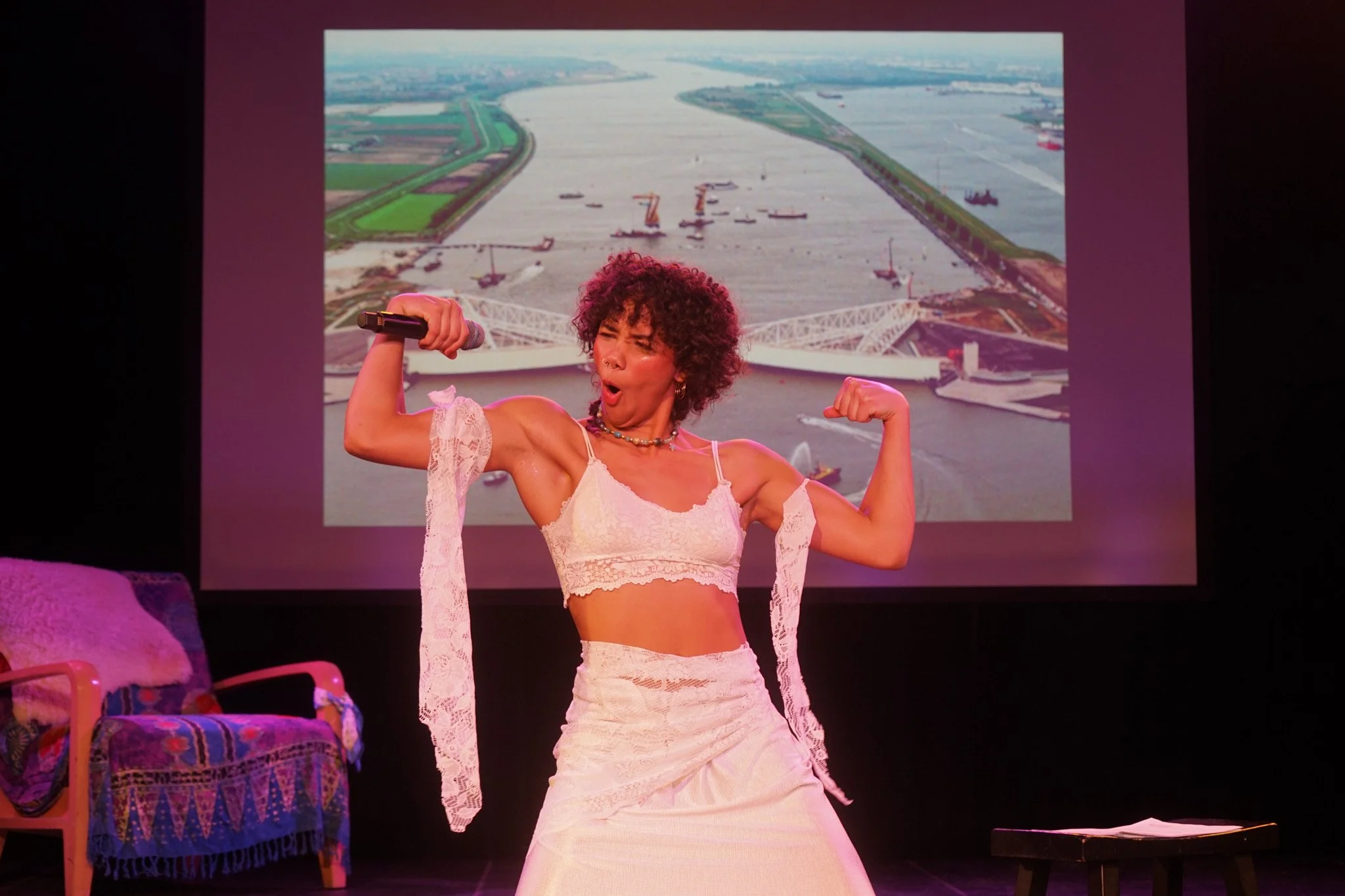
Image courtesy of @shoots.by.sof
Note from the interviewer: I had the pleasure of getting to know Sophie Canon in high school and serendipitously end up at the same college with them. To say that I have the utmost appreciation and admiration for Sophie would be an understatement. Always outspoken, hilarious, and enthralling, Sophie has a prowess for comedy and community building. They are a comic who uses humor to cope with and educate audiences on the realities of racism. Sophie has just completed their first solo show, the Star Canon Show, an amalgamation of Black history and how their own life fits into the bigger picture. They are currently working on The Barking Puppy series with their godmother, author Lori Lobenstine. I’m so grateful to know Sophie, to call them a good friend and collaborator, and to have had the opportunity to interview them for Dreamworldgirl Zine.
E: What is your first memory of clowns, did you feel inspired at first sight?
S: My first memory of clowns was seeing pictures of my mother at the same age I was at the time. I was about eight years old. She was in the Enthusiasts, led by Gary Scalzo. She would juggle, do acrobatics, and unicycle. She’s awesome. When I was eight, she taught me all of those skills too. I learned to do handstands, walk on my hands, do acrobatics, juggle, and unicycle. I love my mother. She’s the queen. She had this huge bag from her days in the Enthusiasts when she was younger, which was throughout her childhood up until she went to Brown University, [and] she would keep all of these juggling rings, clubs, torches, and circus costumes. My mom could juggle fire. I still can’t. I gotta work on that again. I was trying to learn during COVID, to get really good at the clubs so I could transition to lighting them on fire, but I haven’t gotten there yet. That’s next on the docket. It’s time to start acquiring some new tricks up my sleeve.
E: Can you explain the importance of Comics Of Color, both the comedy troupe at Emerson College, and quite literally, comics of color in our world?!
S: The Comics Of Color keep my heart beating, always. This is because the comedy industry is overrun and literally drowning in white comics. People of color try to swim and break the surface, but even then they are drowning in a sea of white comedy. It’s just impossible. At Emerson, the space Comics Of Color, is so healing and unlike any other group I’ve ever been in. The audience at the shows and the energy is very unique.
It sucks to be the only person of color in a whole set of white people. Like why is no one talking about racism? It also kind of sucks to be in a writers room with a bunch of white people. You want to joke about things that can help you heal. You want to talk about things that matter. A lot of white writers can’t take it there. There’s also the safety factor. Being understood. The no judgement zones. That’s why the Comics Of Color writers rooms are the best. Also when the audience comes, they know what they’re going to see. So we’re able to lean into it. Like: white people sit in the back, woke people sit in the front. I had this bit:“ white people reach under your chair, there’s a chicken under there from the woke cafe. If you get five punches on your woke card, you get a free melon and sandwich. Black people in the audience reach under your chair and there’s free weed for life on behalf of Emerson College.” It’s just lots of that. For years and years, people have lined up and filled the theatre for Comics Of Color. The people crave it and we love to give it.
[After] having Comics Of Color at Emerson, it’s going to be hard to go back to the white world. I’m not very interested in anything in the market that doesn’t have to do with what’s important. We need to be talking about racism! We have so many things to do and comedy is a wonderful way to teach, to catch audiences by surprise, and in that surprise, help them to learn and realize. That’s why comedy is such a good method to talk about racism. If we’re not using comedy productively, I’m just not interested.
If we don’t make our own space to thrive and to do what makes our hearts beat, we are going to be swallowed up in the sea of white comedy. They love to not make room for us. That’s why we have to make room for ourselves and then exclude everyone else. They’ve been doing that for too long anyways, and we can take it there too. It’s better anyway!
“If we don’t make our own space to thrive and to do what makes our hearts beat, we are going to be swallowed up in the sea of white comedy.”
E: Was the Star Canon Show your first solo show? If not, tell us about your trajectory and how you’ve grown into yourself as a comic.
S: The Star Canon Show was my first solo show. YAY! I was totally building up to it for four years. I wanted to do it earlier, but I wasn’t ready. I had to wait for the right time. I had to develop as a performer and be ready to do an hour and a half on stage. I had three different stand up portions in it that were all about twenty minutes and then to intertwine them, I had films I had made between 2022 and now shown. This tied everything together thematically. There was lots of tap dancing, of course. Definitely some dyke burlesque. Definitely some unicycling. Definitely some singing and some crowd work. There was someone beatboxing in the crowd, thank you crowd. I literally made the crowd sing, so that was awesome. It was the most beautiful vibe in the room, it was a community. It was the best thing I’d ever done and the best night of my life. I was performing to all of my wonderful friends and family and people that support me. There were a bunch of people there that I didn’t know too. Thanks for pulling up. Next thing on the docket is trying to do the Star Canon Show in LA.
The first portion was that stand up I did back in 2022, talking about my high school and [an] incident with [a] Black Lives Matter sign. I kept reworking that stand up, updating it to the times. It transformed from when I did the four minute version back in high school, into twenty minutes. I just built it out so much. The first portion of the show was highlighting my past and why we’re here. Talking about the racist hate crimes of the past. Vermont, New York, and the difference. Also, of course, having the white beatboxer in the crowd perform“ This Is America” by Childish Gambino after telling a bunch of jokes about it. You know how it goes, because white people like to use that song performatively. If I see any of that during Black History Month, I’m going to be pissed.
The second part of the show was more about the present because it was about Emerson College. It was about going to Kasteel Well. I did this stand up portion for Comics Of Color and I was talking about how crazy the racism was there. How they would just touch your hair without asking and much more. There were so many people who went to the castle in the audience. It was wonderful to look out to them specifically to see if they remembered that. I was sending a message to Emerson College. You know, clocking the tea. We are doing a show at Emerson College, so we’re going to be present. We are going to be relevant.
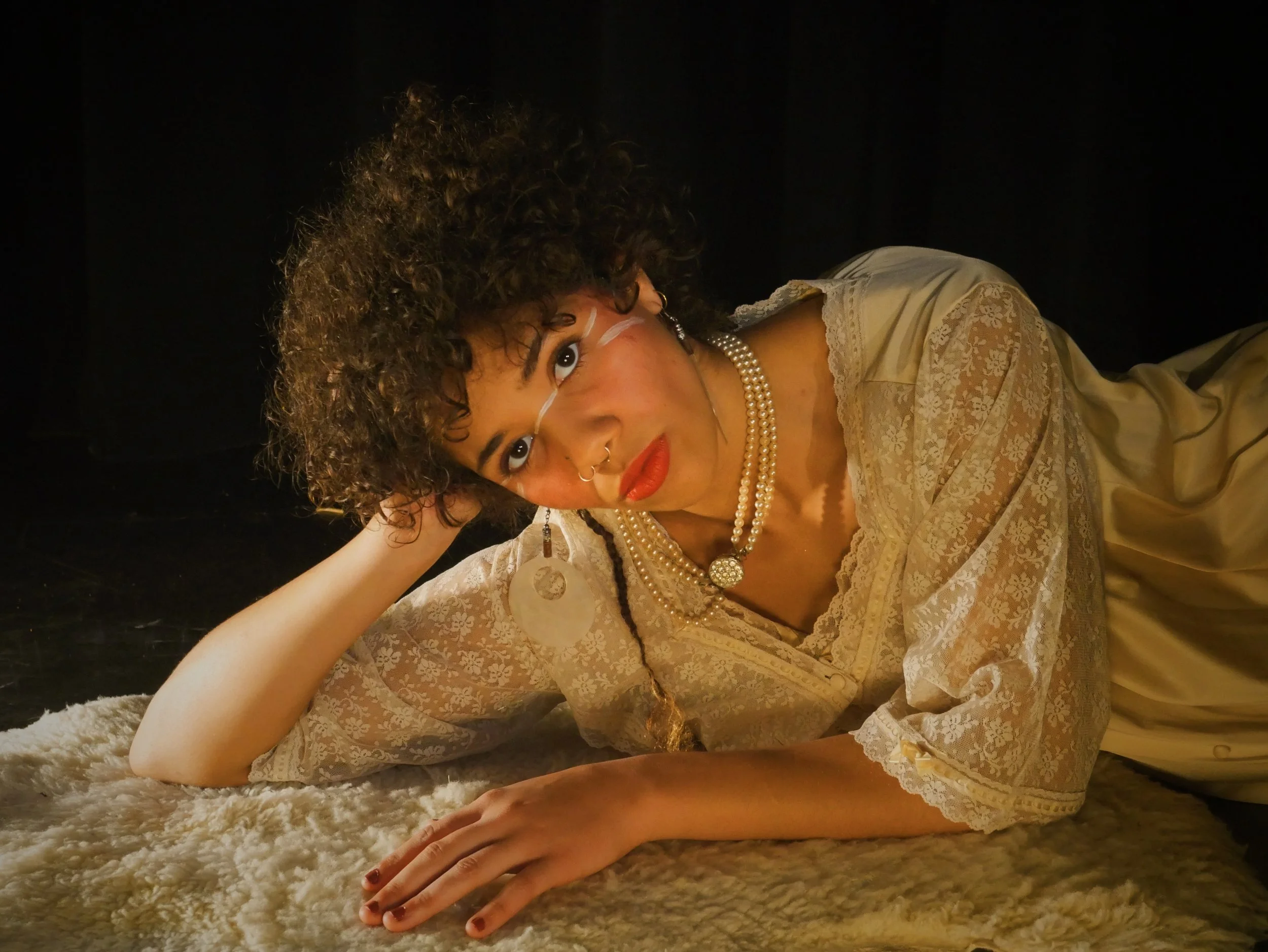
The final part of the show was everything bigger than me. It was past, the present, then the diaspora reaching beyond. It was exploring a bunch of Black women tap dancers from the past and talking about how much Black history has been erased and forgotten on purpose. Because of what? The evil white agenda... I also talk about my history of tap dancing too. How I thought Hollywood was responsible for its creation, but tap dancing was invented during slavery with the djembe drum from West Africa. It was history lesson time, thinking of everything bigger than us, and being thankful. I have this awesome video of me tap dancing on the table, which we filmed at Mountain Campus. Then I tap danced live in front of it. I was tap dancing with myself. It was really fun.
And more burlesque happened throughout. Duh. We had Bird Up return for the introduction. I started by showing the final Bird Up I made during high school. Then it cuts to a more updated version at Emerson. The birds came downstairs, they banged on the Judee Theatre doors in the video and in real life. Then the birds took over the Judee Theatre. Then I ceremoniously unzipped from the bird uniform. Burlesque number one. Then I’m dressed by dyke, Avery Stallings,, on stage. Thank you Avery Stallings. I always have to have hype beginnings.
The Star Canon Show ended with me tap dancing to“ Inner City Blues.” Finn Meyer made the beautiful b-roll that played behind me. It had Angela Davis in it and MLK. So much diasporic footage from the 60s to today. With stuff from Design Studio for Social Intervention as well. There was footage of hair braiding on the street, dance circles, and, of course, civil rights footage. I kind of entered a different space for that. We had to pay thanks, we had to get real serious with it. I saw this tap dancer at Jacob’s Pillow years ago that said there was a drum in the Black body, and I believe that. That’s what the tap dancers used.
One more thing to touch on in terms of my trajectory: I really started stand up comedy to figure out how to talk about what happened in senior year of high school, when my peers came to my house and burned the Black Lives Matter sign. I was like, wait, how do I address this? How do I cope with this? I guess I’ll have to do stand up comedy about it! We were in the middle of Vermont at the time, so it’s not like I could have done it live. I had to bring the audience together and invite enough friends. Then I put together a film crew together to film a Netflix style stand up special. That’s how I knew it would get out there. And that’s how it all started. I’m kind of thankful because it showed me the way.
The ringleaders manifesto was my final stand up for Comics Of Color. I told that story again. The message was being a person of color in a predominantly white state makes you really crazy. It can make you do crazy things, like stand up comedy. I needed a way to speak up and I just haven’t stopped. The beautiful thing about what I’ve chosen is that life will forever give me material because unfortunately everybody loves to microaggress and be racist.
“The message was being a person of color in a predominantly white state makes you really crazy. It can make you do crazy things, like stand up comedy. I needed a way to speak up and I just haven’t stopped.”
E: What was it like doing stand up in London? Has traveling around as much as you have influenced your material?
S: Doing stand up in London was really awesome. I did stand up this past summer in July, on the 31st. It was at the Angel Comedy Club, AKA the Bill Murry comedy club. It was super cute. I went with Emerson College bitties over there. I talked about, in my stand up, European racism. Traveling abroad has definitely given me so much more scope. Living in America is one thing. Living in Vermont, New York City, and Boston, they have given me a lot of insight into how people handle race in their lives. Of course, Vermont was the worst because it was predominately white, cloistered, and very stuck in a certain mindset… There’s not a lot of diversity in Vermont. So when there is diversity in Vermont, then you have to wake everybody up. And that’s a lot of work! Then you have to educate everybody; it’s not people of color’s job to educate everybody. Then there’s living in Harlem, where there's a lot of people of color, and [a decent amount of] people of color struggling. It was interesting being there as a child, and then revisiting. It’s almost time for me to move back, but we’ll see.
I thought Vermont was pretty gaggy in terms of the hate crimes, the microaggressions, the racism, the unawareness. Then you go to Europe and remember: oh right, they invented racism. Even amongst the Europeans, the British are more on the better side of the scale, they are less racist. There were just a lot of microaggressions there. I went to the castle, Kasteel Well, in fall 2023 and that gave me so much insight. Woah. They were macro-agressing over there. During my semester, Emerson College sent 61% students of color to the castle for an admitted experiment to see how the Dutch would react, including the townspeople, the faculty, the professors—they’re all Dutch at the castle. The answer: it was not that well. The kids in the town got their motorcycles out. They would circle students. They would call white kids the n-word. Talk about inclusivity! They hit one of my friends with their motorcycles. They were getting really violent. And Emerson was definitely trying to cover that up. I did some stand up in Comics Of Color about the experience in spring 2024, because stand up is my favorite way to talk about things that are hard. AKA racism. It’s a great way to wake people up, catch them by surprise, get them to laugh, and learn. That’s why I do stand up comedy.
E: Fuck, marry, kill: Stand up, sketch, and improv.
S: Okay, I love stand up, it’s my favorite. But I’m going to have to kill stand up because of what people think of when they think of stand up. I don’t like it. I think we need to change the game of stand up. It’s called stand up, but it shouldn’t just be you standing up on stage anymore just holding a mic. You gotta give something to look at. Let’s put on a show! I say kill stand up for what it is right now. I guess, lowkey marry improv because you’re going to do improv in everything, always. It’s always going to make its way into everything and you’re always going to want it by your side. Then you gotta fuck sketch! You literally have to fuck sketch, because you have to get intimate with sketch sometimes. But to have it as a consistent part of your life sounds exhausting. It’s a good one to fuck on the side every once in a while, whenever you’re getting a little horny for sketch, I guess.
“you gotta fuck sketch! You literally have to fuck sketch, because you have to get intimate with sketch sometimes. But to have it as a consistent part of your life sounds exhausting. It’s a good one to fuck on the side every once in a while, whenever you’re getting a little horny for sketch, I guess.”
E: Do you have a favorite hobby that you’ve incorporated into your material? I’m recalling your tap dancing and unicycling prowess.
S: My favorite part about stand up is building up to a surprise. When you’re talking about racism in stand up, of course punch lines provide relief, but sometimes it’s good to literally give a breather. Now here’s something to look at instead! Like me juggling, unicycling, tap dancing, or doing some acrobatics. I love to do a handstand up in there. Again, when you fuck sketch, add a bit of those elements to the stand up, it’s going to be multimodal. I definitely need to get some new things, new secrets, new tricks up my sleeve. I have to be a lifelong learner. It’s time to start rebuilding, I’m in the rebuilding era. I’m not sure how yet, but I must brainstorm the steps.
E: On top of everything you already do, you’re an author too! Why did you and Lori Lobenstine decide to write The Barking Puppy for middle grade as opposed to other ages?
S: Lori is my wonderful godmother and my mother’s best friend. When I was ten she came up to take care of me for a week during winter break. We were wondering about how to pass the time and then we thought: what if we made a“ by dogs for dogs” newspaper. The dog community seems to not have a lot of representation or any news outlets that are serving them.
Lori and I decided to write The Barking Puppy for middle grade readers because I was in that age range when we originally started the newspaper, which is what the series is about. It’s about me, as a younger kid, creating this series. It’s realistic fiction, so there’s some fun things added in.
E: I heard that we’re getting a second The Barking Puppy! What is to be expected in this new chapter?
S: There is a second The Barking Puppy coming out. There’s even a third coming out, we’re writing it right now. The illustrator is working on the second right now, it’s called Dog Circus Block Party. It’s totally taking a step up in villainary levels. We’re dealing with themes of gentrification, especially with“ no pooping” signs. They’re a sign of gentrification in the neighborhood. Also, fighting Sophie’s school closing is a huge theme in the book. And there’s a dog circus block party! How can these two things come together to support one another? Mutual aid! For the third one, Sophie’s Nana comes to visit and there’s some themes of dementia.
I’m excited to narrate the audiobooks for number two and number three. Doing number one was really fun and I’m excited to get even better at it. That’s the best part of getting older and doing things again. I really felt in my element. It felt so right because I was having so much fun. But then I listen back and think of so many things I could do better, time to take it to the next level.
E: Speaking of new chapters: what’s next for you? When are you planning your world domination?! Please say during this BHM <3
Sophie’s docket:
learning to juggle fire.
writing and audiobook narrating the latest The Barking Puppy books.
deciding where to live post-grad, think“ Cities” by the Talking Heads
bringing the Star Canon Show to Los Angeles.
Taking things to the next level, including acquiring new tricks and secrets.
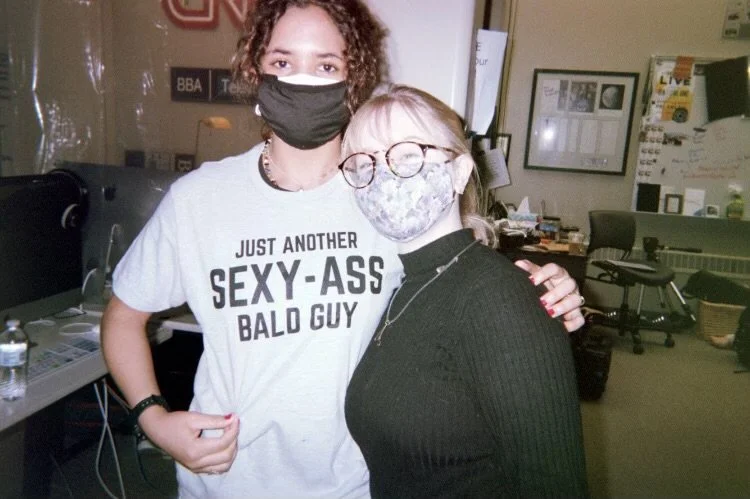
Sophie and Erin in High School Together