Are We Really Going Analog?
Written by Bella Tabak
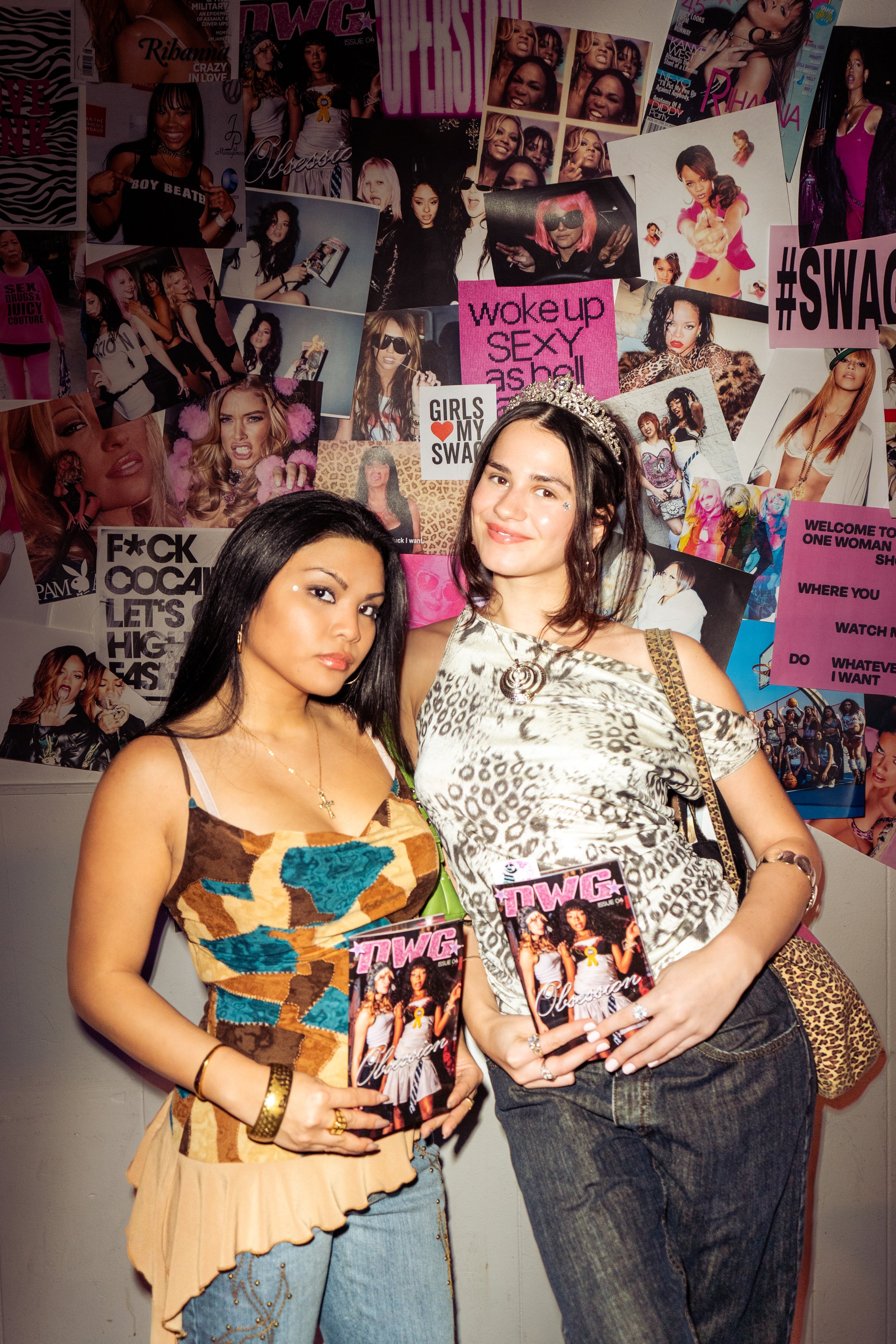
Image courtesy of Laura Valentine
A metal magazine rack sits right next to the TV in my living room. It’s packed full of printed covers alternating in publication, size and page count. I collect print magazines. It’s an easy habit to fall into when you're studying magazine journalism. Throughout my college years, I was surrounded and enamored by printed content. Syracuse University’s student publications — like University Girl, Jerk, Zipped, and Baked Magazine — regularly produce physical media.
I started with picking up student magazines on campus, usually slipping them into my bag to read later. Eventually, I started buying vintage editions of Playboy secondhand from the Syracuse Antique Exchange. Yes, I actually do read them for the literature. The December 1981 edition I have includes writing from James Baldwin. When I visit New York City, I tend to grab newer content. Casa Magazines has the widest selection of print magazines I’ve ever seen in person. I usually gravitate to publications like Cosmopolitan, Interview and Vanity Fair.
It’s harder for me to look at digital content. My attention is swept much too quickly into the social media algorithm. Sometimes I scroll on Instagram reels for hours in an endless loop of minute long videos. Apparently, there’s a name for this: digital fatigue. I hate it. I don’t want to be sucked into an algorithm that knows how to keep me distracted. My Gen Z peers agree; 76% of them want to cut back on screen time.
That isn’t to say I am anti-digital. I do have some subscriptions to digital publications, like The Cut, but reading printed content just feels different. Maybe it’s the weight of the magazine in your hands, or the tangible act of flipping through paper pages. I like to look at magazines with my phone in another room. Without notifications distracting me, I can read a copy front to back. Turning the last page certainly feels more rewarding than hours of scrolling.
“Turning the last page certainly feels more rewarding than hours of scrolling.”
I ended up seeking out physical media as an escape from digital, and always thought of my interest as niche. Surely no one else wanted to hear about my stacks of magazines, right?
Scanclub, a Substack page run by creative and marketing agency Arcade, is pointing to a resurgence of physical media. Their 2026 digital trend report calls it“ analog.” We are intrigued by what's happening offline. But there’s also a clear need to share online what we discovered while we were gone.
The revival of physical media can be seen through social media specifically. Zara McIntosh is on Instagram holding her nonfiction book recommendations in a sizable stack, or flipping through a copy of Hot Girl Cooking Club, a print only food publication with bold graphics. @Cray on TikTok tells us about VHS tapes. @Saintvirgil.mp3 on Instagram shows us how to buy the best CD player.
I never thought about posting my collection online, but it turns out a lot of other people are. It seems ironic to talk about what you're doing offline, online. It could, in theory, become another consumerist trend. Maybe CDs will be the next Labubus. I had to find out what’s really going on. What do physical media content creators really think about the analog trend?
★
At 25, Angeline Richard, based in Raleigh, North Carolina, is on the older end of Generation Z. She grew up alongside the rapid advancement of cell phone technology, but also has a millennial older brother. He was the type to wait at GameStop for the new PlayStation. Richard grew up playing with him, and she borrowed other consoles at summer camp, like the Nintendo Game Boy Advance SP.“ I’ve definitely been a gamer girl for a very long time,” says Richard.
The silver Nintendo DS Lite was her first handheld console. She liked trading game cartridges with her friends and eventually ended up with games I also enjoyed playing as a kid, like Cooking Mama and Tinkerbell.
She’s still playing Cooking Mama today on her silver Nintendo DS Lite. Richard had to buy the console again secondhand since the screen peeled off her original. She also posts about her gaming on social media, along with her physical collections of CDs, DVDs and VHS tapes.
Even though Richard is a full time content creator, her screen time is surprisingly low for her job title. She only really uses her phone to record, edit and post. The rest of her free time is spent watching movies, or playing on her physical gaming consoles.
There is a little irony here; some of her videos do lean into performance. Curated bookshelves full of physical media are enticing and attention grabbing. Sometimes aesthetic gaming videos will lead to comments assuming she doesn’t know how to play.“ You think I’m actually playing?” says Richard.“ I’m just taking 10 minutes to do a video. Like dang, let me be.”
These visually appealing videos aren’t the only ones she makes. If I’d missed her physical media hauls, I might have diagnosed Richard’s account as performative, too.
In her videos, Richard flips through rectangular DVD cases, showing off her most recent finds from Walmart and eBay. Colorful plastic flashes across the screen. Richard shares her excitement at finding movies like the original Care Bears.
The haul videos seem more educational. Richard collects slowly and mindfully, purchasing media she’s truly interested in using. She never gatekeeps where or when she bought something, or how much the shipping was.
A majority of her finds are also secondhand, since technology like VCR combos are no longer in mass production. She pops in VHS tapes to make sure the screens still work when shopping in person. To me, picking up secondhand technology that’s in working condition seems like a great way to prevent e-waste.
After making a habit of collecting and using physical media, Richard also wonders why technology has evolved any farther than the 2000s. Richard, like many of us, has grown frustrated with almost all digital media having subscription fees. Her parents are feeling the same way, and even started building their physical media collections again.
“My dad is kind of just like,‘ You know, I never had a problem with Blu-ray,’” says Richard.
★
Lis Torres, who goes by Gothika Grief online, is also feeling the streaming service fatigue. She’s sworn off almost every single one. Well, other than HBO. She loves Hacks and has to finish the recent season. Otherwise, she doesn’t want to keep lining the pockets of every streaming service CEOs; owning the content physically has become much more appealing.
“Why would you give someone money every month to maybe watch something,” says Grief, “instead of paying for the thing once and watching it whenever you want for the rest of your life?”
Grief grew up in the 90s. She’s always loved the horror genre. You could find her watching anything from classics like The Addams Family, to horror comedies like Idle Hands. Today, she considers anything she can hold in her hands as physical media, from books to comics.
She focuses on collecting horror and gothic CDs, DVDs and VHS tapes specifically, since she grew up using them.
A few VHS and physical media stores have opened where Grief lives in Milwaukee, Wisconsin. However, she prefers to add to her collection via thrifting at family owned stores. These are her favorite places to find physical media. They are cluttered, unorganized spaces with dust that will stir up Grief’s allergies. Curated vintage stores may be cleaner, but they usually don’t have the same gems. Thrifting becomes a treasure hunt. It’s all about that moment when you find a DVD, or stumble upon a whole media wall.
Like me, she originally kept her collection private.“ How do I sound if I’m promoting physical media, but I’m going on my phone online on a social platform to share and say,‘ Hey, go watch this physical movie,’” says Grief.
Watching other creators grow their collections and communities online made Grief feel comfortable enough to start posting. Now, she shares her physical media collection to Instagram and TikTok. Grief thinks making social media content helps keep physical media alive and relevant.
Say you stumble onto a video of Grief watching the 2003 film Gothika. She takes the movie’s silver disc out of its plastic case and pops it into her portable DVD player. Clips from the film flash across the screen. Even if you’ve never watched Gothika, you could remember going to buy a movie on DVD, or realize you’ve never watched a movie on DVD.“ I’m here, just reminding you that you can take time to slow down in your life,” says Grief.“ Yeah, you’re watching this video right now, but I hope this video can take you back to a place where things weren’t so intense constantly.”
Grief is only a part-time content creator. She is also a muli-media artist, and has a full-time job working with embroidery and leatherwork. Recording and editing videos is something she looks forward to doing in her free time.
★
Rio Alvia, or @thebrooklynbruja on Instagram, makes content about their DVD, CD and physical gaming collection. They are also pen pals with Grief; the two connected online over their shared interest in physical media. Alvia is mutuals with other content creators like Richard, too.
Alvia also connects with people online who are simply interested in physical media, not just content creators. Viewers tell Alvia their content inspired them to buy a CD player, or watch DVDs more often.
They also answer questions new users may have, like what CD player is the best to start with.“ I had somebody just reach out to me the other day to show me that they had found a compilation of different Nickelodeon shows and episodes on DVD,” says Alvia.“ I was giving them advice on how to reduce the scratches on the disc.”
Alvia is a Brooklyn, New York native who grew up on physical media in the 90s. They collected Spice Girls CDs and played on their Game Boy Advance, even when all their friends switched to the Wii. Today — in addition to making content about their physical media collection — they sell nostalgic and vintage items on WhatNot and Depop.
They try to balance their relationship between physical and digital media, but share my negative feelings about consuming online. If they try to listen to music on Spotify, they end up redirected to scrolling on TikTok. You can’t get lost like this while listening to music with a CD player.
The experience listening to music on CDs is also completely different than using digital streaming services. Alvia quit using Spotify after ditching their subscription. The app crashes and they were sick of listening to advertisements in between songs. It may take more effort to create a mixtape over a playlist, but at least CDs aren’t always trying to sell you something else.“ I’ve also noticed that certain CDs I have, if you let them play after the last song long enough, there’s a hidden track,” says Alvia. A fun secret indeed!
“It may take more effort to create a mixtape over a playlist, but at least CDs aren’t always trying to sell you something else.”
When going out Alvia likes to pack a bag filled with their physical media, but also always includes their phone. They could need to edit a video or message an online friend back. No matter how nostalgic they are for the past, they know technology will continue to evolve.
Ever-evolving technology doesn’t mean we have to let digital content consume us. Some viewers of Alvia’s content have claimed their content is performative. But Alvia isn’t posting for the validation of strangers.
“We let our entire days be dictated by social media,” says Alvia. “I want to inspire people to hold onto [older forms of media] as a way of preserving our own human history. And to remind especially younger generations that you don’t have to solely rely on your phone.”